

Dali Guide (2026): Erhai Lake, Old Town & Cangshan
The Dali guide — Erhai Lake cycling, the old town, Cangshan Mountain cable cars and Bai villages. How many days, when to go and how to get there.
OpenStreetMap Google Maps (opens externally)
Dali, on the shores of Erhai Lake beneath the Cangshan Mountains, is the most laid-back of Yunnan’s famous stops — an old town, a big lake and a line of snowy peaks.
It’s the middle point of the classic Yunnan route between Kunming and Lijiang, and for many travelers the highlight: less crowded than Lijiang, slower than the cities, and full of good coffee, Bai villages and lake views. This guide covers what to do and how to plan it.
Overview
Dali is a region as much as a town. The historic core is the walled old town at the foot of Cangshan, rebuilt and now packed with guesthouses, shops and restaurants. Around it spread the Bai minority’s traditional villages, and below it stretches Erhai Lake — one of the largest highland lakes in China, ringed by farmland and backed by mountains.
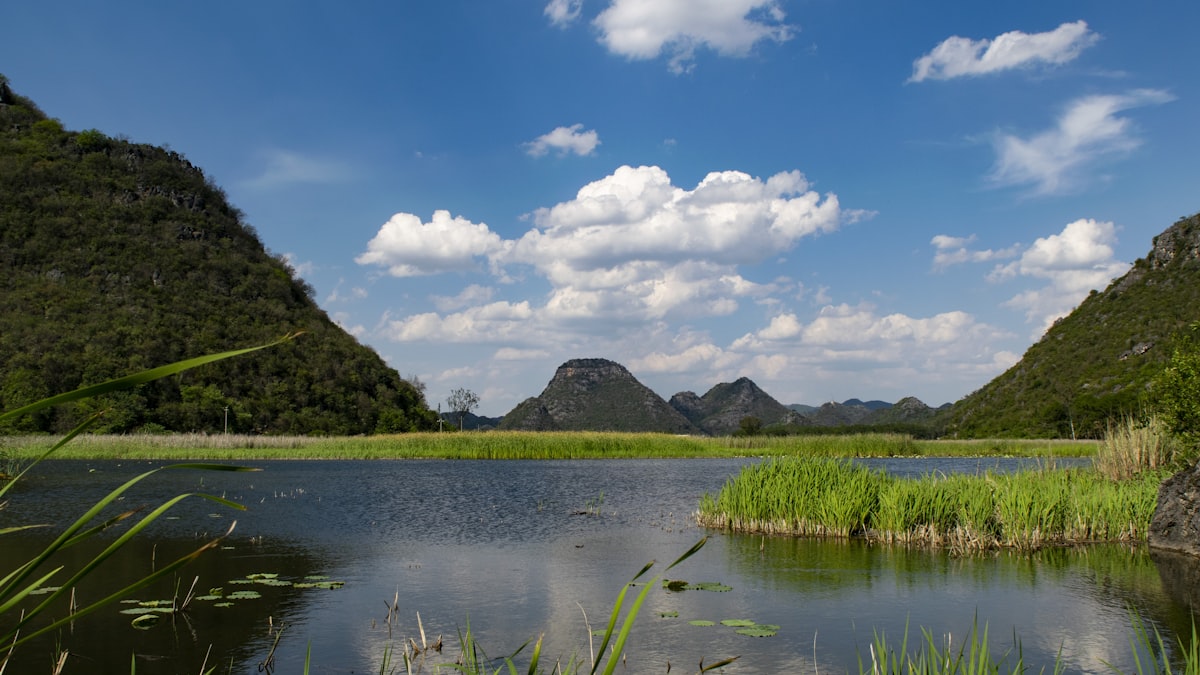
Erhai Lake stretches below the Cangshan ridgeline, ringed by farmland and the white-walled houses of Bai villages.
The local flavor is Bai, one of Yunnan’s largest minority groups, and their distinctive white-walled houses with painted decorations line the roads between the villages. It’s a gentle, bicycle-friendly corner of China that rewards an unhurried couple of days. The food is a highlight too — Bai-style “three-course tea,” rose-petal pastries from the market at Xizhou, and local fish from Erhai served in the lakeside restaurants.
How many days
Two to three days fits the classic Yunnan itinerary. A workable plan:
- Day 1: arrive, wander the old town, and watch sunset from a café rooftop over the old roofs.
- Day 2: Cangshan cable car and the Three Pagodas in the morning, lakeside villages in the afternoon.
- Day 3: a relaxed Erhai morning — cycle a section or visit Xizhou village — then continue to Lijiang. The bus and rail connections make the onward leg to Lijiang straightforward, so you don’t need to rush the morning.
Suggested itinerary
A 2-day plan:
- Day 1 — Old Town & the lake: Dali Old Town in the morning, then cycle or drive the west shore of Erhai Lake through Xizhou and the fishermen’s villages.
- Day 2 — Mountains & pagodas: the Three Pagodas at Chongsheng Temple, then the Cangshan cable car for views over the lake.
Have more time? Add a third day to go deeper into Erhai’s east shore or visit Shaxi. Dali is a classic stop on a Yunnan route.
Best time to visit
- March–April: spring weather, blossoms and clear views of the snowy Cangshan ridgeline.
- September–November: the best all-round window — dry, warm days and crisp evenings.
- Summer (June–August): the rainy season; showers arrive most afternoons but mornings are often clear.
- Winter (December–February): dry, sunny and cold at night, with the best chance of snow-capped mountains.
Top sights
- Erhai Lake — the vast lake east of town, best appreciated from the lakeside road between Xizhou and Shuanglang, or from a village guesthouse at sunrise. A morning walk along the water at Xizhou is the quietest version of the view.
- Dali Old Town — stone lanes, the old city gates, Bai courtyard houses and a famously relaxed café scene.
- Cangshan Mountain — the ridgeline above town, reached by cable car, with trails and views across the lake.
- Three Pagodas (Chongsheng Temple) — the classic Dali postcard: three Tang-dynasty pagodas against the mountain backdrop.
- Xizhou & the Bai villages — traditional Bai architecture, morning markets and the best spot for a lakeside lunch.
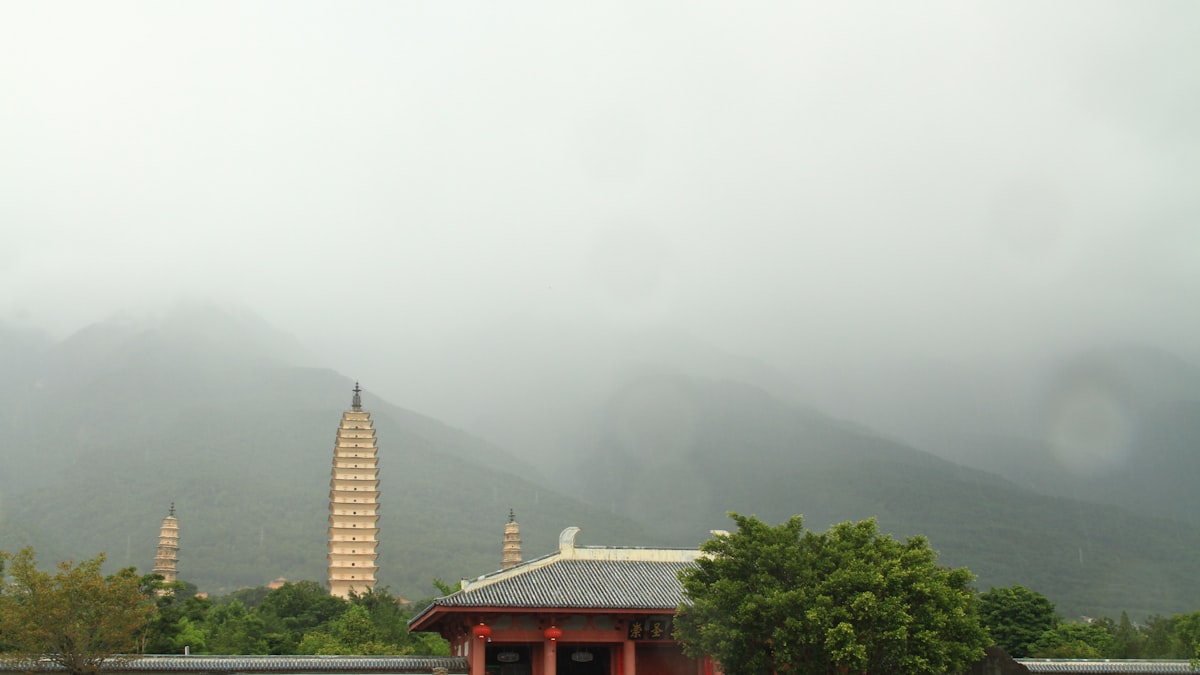
The Three Pagodas at Chongsheng Temple are Dali’s classic postcard view — three Tang-dynasty towers against the Cangshan mountain backdrop.
Budget
Dali is gentle on the wallet — one of the most affordable stops on a Yunnan route. Rough daily figures for planning (per person, CNY, and prices change):
- Accommodation: guesthouses from about ¥100–200/night in the old town, lakeside options ¥200–450.
- Attractions: the old town is free to wander; the Three Pagodas are roughly ¥70–120; the Cangshan cable car and Erhai boat rides are extra.
- Food: Bai and Yunnan dishes are ¥30–70 per dish; street snacks and the Xizhou market are cheap.
- Transport: bicycles and e-bikes are the classic way around — rentals are a few tens of yuan a day.
Carry a little cash as backup, but pay by Alipay almost everywhere.
Getting there
- By rail: high-speed trains run from Kunming (about 2 hours) and Lijiang (about 1.5–2 hours). Book with your passport — see our train guide.
- By air: Dali Airport (DLU) has flights from major Chinese cities, though the train is usually easier.
Getting around
- E-bikes and bicycles are the classic way to explore the lake and villages.
- Didi and taxis cover the town and lakeside stops.
- Tourist buses run between the old town, the cable-car stations and the lake villages on busy routes. On summer weekends, expect the lake road to be busy with cars and tour coaches — go early for the quiet stretches.
Day trips & nearby
Dali is a gentle base for exploring Yunnan’s lake-and-mountain country. Xizhou, about 20 minutes north, has the best-preserved Bai courtyard houses and a lively morning market. Shuanglang, on the east shore of Erhai, is a photogenic lakeside village popular for its water views. Jianchuan, about 1.5 hours north, is a historic town on the old tea-horse road with quiet lanes and markets. The classic pairing is the Dali–Lijiang loop to the north — a few hours by train, and the natural next step on a Yunnan route.
Cycling Erhai
The classic Dali experience is a slow ride around Erhai Lake — or at least along its western shore. The lakeside road between Xizhou and Shuanglang is the most scenic stretch: rice fields on one side, the vast blue lake on the other, and the Cangshan mountains rising behind. Rental e-bikes make the ~50km loop doable in a day for most riders. Break it with a lake fish lunch at a village restaurant, the Bai ‘three-course tea’ in Xizhou, and a stop at Shuanglang’s waterfront cafés. It’s gentle, photogenic and quietly one of the best rides in China.

The Cangshan ridgeline rises above Dali — reached by cable car for trails and sweeping views across Erhai Lake.
Practical tips
- Book the cable car early — queues build by mid-morning on weekends and holidays, and the summit car can pause in wind.
- Dress in layers — the lake shore is mild, but Cangshan’s ridgeline runs noticeably cooler, and rain arrives quickly.
- Stay by the lake for one night if sunrise matters to you — the old town is convenient, but the lake villages win at dawn.
- Set up Alipay before you arrive — bike rentals, cafés and market stalls all take mobile payments.
- Where to stay: the old town is the convenient, atmospheric base, but a guesthouse on the lakeshore east of town wins for sunrise views over Erhai.
- What to eat: try Bai “three-course tea,” rose-petal pastries from the Xizhou market, and the grilled river fish served along the lake.
Where to go next
Dali sits at the center of the Yunnan triangle: from here you can head north to Lijiang, south back to Kunming, or onward to Chengdu and the rest of Sichuan. For the classic first-timer loop through China’s history, connect onward to Xi’an and Beijing — or pair Yunnan with the karst scenery of Guilin for a longer southwest trip.
What to eat in Dali
Dali’s food is a Bai and Yunnan mix with its own distinctive flavors. The signature experience is Bai “three-course tea” — a formal tasting of three infusions: bitter, sweet and aftertaste, served with small pastries; the Xizhou market and several old-town teahouses offer it. From the same market come rose-petal pastries, a local specialty worth carrying home. For meals, look for grilled river fish from Erhai, Yunnan’s steam-pot chicken and the region’s wild mushroom dishes in season. The old town’s restaurants serve a mild, herb-forward cooking that suits most palates — a welcome change after spicier provinces. Street snacks like rice-noodle rolls and grilled local cheese (ru shan, the dairy threads that are a Bai specialty) fill the lanes. Prices are low: snacks 10–30 RMB, a full meal 30–70 RMB per person.
Common mistakes to avoid
The most common Dali mistake is trying to cycle the whole of Erhai Lake — the full loop is around 100 km, so most travelers e-bike a scenic stretch on the west shore or take a car for the long way around. Skipping the cable-car timing is the second: queues build by mid-morning and the summit car can pause in wind, so book early. Staying only in the old town and missing the lake villages means missing Dali’s best view — a sunrise at Xizhou or Shuanglang is the classic moment. Underestimating the altitude — at roughly 1,900 meters the town is mild, but the Cangshan ridgeline is much cooler; dress in layers. And assuming the weather is stable — rain arrives quickly in summer, so carry a light jacket and enjoy the clear mornings.
Last updated: August 2026. Cable-car operations and seasonal weather change — confirm before you go.
Frequently Asked Questions
How many days should I spend in Dali?
Two to three days is right: a day around Erhai Lake, a day on Cangshan Mountain and the Three Pagodas, and time to wander the old town. Many travelers stop for two nights on the way between Kunming and Lijiang, which fits the classic Yunnan route.
Should I cycle or drive around Erhai Lake?
A full lake loop is long — around 100 kilometers — so most people drive, take a tour, or e-bike a section along the lake's east shore near Shuanglang. For a relaxed day, rent an e-bike for a stretch of the lakeside road and stop at the villages.
Is the old town of Dali worth staying in?
Yes, for at least one night. The old town is larger and more laid-back than Lijiang's, with stone lanes, Bai-style architecture, cafés and a quieter evening scene. For sunrise over Erhai, stay in a village on the lake instead.
How do I get up Cangshan Mountain?
Cangshan has a couple of cable cars — the longer Gantong line goes up to the high ridges with views over the lake and the old town. Weather changes fast on the mountain, so check conditions and carry a jacket. In strong wind or heavy cloud, the summit cable car may pause.
Can I combine Dali with Lijiang and Kunming?
Easily — it's the classic Yunnan triangle. Kunming to Dali is about 2 hours by high-speed rail, and Dali to Lijiang about 1.5–2 hours. A one-week Yunnan loop is very doable. Book rail tickets with your passport — see our train guide.
Do I need a visa for Dali?
The same mainland China rules apply — many passports are visa-free for up to 30 days, and others can use the 240-hour transit scheme. Check your situation before booking.
More in Yunnan
Yunnan Travel Guide (2026) — Yunnan travel guide