
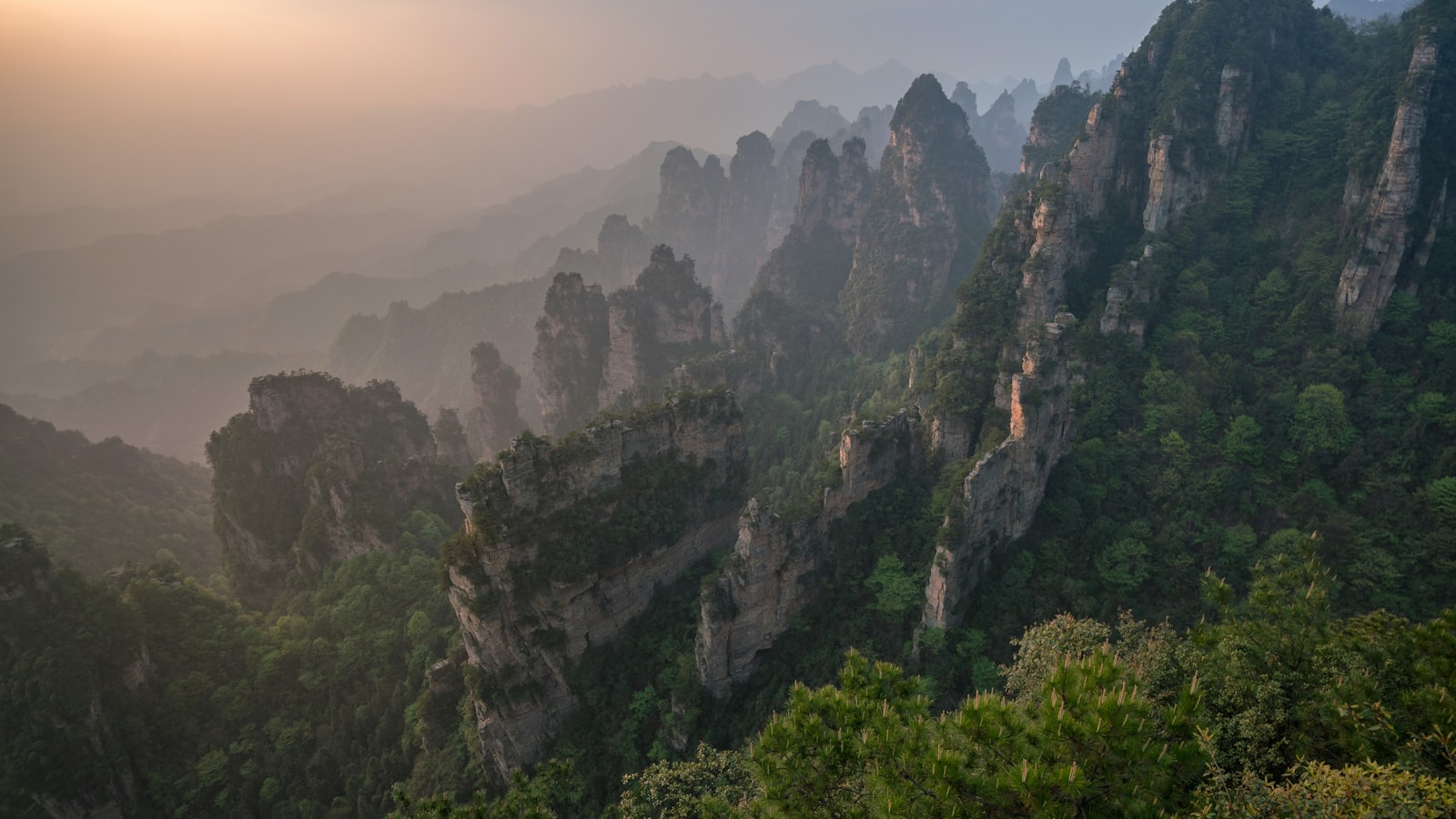
Zhangjiajie & Guilin: An 8-Day Scenery Double Bill
Two of China's most jaw-dropping landscapes in one trip — the Avatar mountains of Zhangjiajie and the karst peaks of Guilin and Yangshuo. A day-by-day 8-day plan.
OpenStreetMap Google Maps (opens externally)
If China could only show you two landscapes, they’d be these — the pillar forests of Zhangjiajie and the misty karst of the Li River. This eight-day route pairs the two great scenery destinations, with one short flight and a lot of walking in between.
The route at a glance
| Day | Destination | Focus |
|---|---|---|
| 1 | Zhangjiajie | Arrive, settle in |
| 2 | Zhangjiajie | Yuanjiajie, Hallelujah Mountain |
| 3 | Zhangjiajie | Golden Whip Stream, glass bridge |
| 4 | Travel day | Fly to Guilin |
| 5 | Guilin | Reed Flute Cave, lake |
| 6 | Li River → Yangshuo | The 4-hour cruise |
| 7 | Yangshuo | Yulong River, countryside |
| 8 | Yangshuo / Longji | Terraces or depart |
Day 1 — Arrive in Zhangjiajie
Fly into Zhangjiajie Hehua Airport and settle into Wulingyuan town (the gateway to the national park). Keep it easy — the park is tomorrow’s effort. Full guide: Zhangjiajie.
Day 2 — Yuanjiajie & Tianzi Mountain
- Morning: the Bailong Elevator up the cliff, then the mountaintop loop to the Hallelujah Mountain viewpoint (the “Avatar” rock).
- Afternoon: the Tianzi Mountain cable car and its viewpoints.
- Tip: the cable cars and elevator have long queues — go early or take the less-used shuttles.
Day 3 — Golden Whip Stream & the glass bridge
- Morning: walk Golden Whip Stream — the gentle, forested valley trail, best in the morning light.
- Afternoon: the Zhangjiajie Grand Canyon glass bridge, or a second look at the park if the weather was against you yesterday.
Day 4 — Fly to Guilin
Take the morning flight to Guilin (about 1.5 hours), then a relaxed afternoon along the Two Rivers and Four Lakes or the riverside park. Full guide: Guilin.
Day 5 — Guilin city
- Morning: Reed Flute Cave — the glittering limestone cavern just outside town.
- Afternoon: Elephant Trunk Hill and the lakeside promenade.
- Evening: prepare for tomorrow’s cruise.
Day 6 — The Li River to Yangshuo
The classic Li River cruise from Guilin to Yangshuo (about 4 hours) — the karst scenery from the ¥20 note, best done on a morning with mist. Evening: West Street and the riverfront. Full guide: Yangshuo.
Day 7 — Yangshuo countryside
- Morning: a Yulong River bamboo raft — the calm, close-up version of the karst.
- Afternoon: cycle or e-bike the Ten-Mile Gallery (Shili Gallery) through the rice paddies.
Day 8 — Longji terraces or depart
If you have the day, the Longji Rice Terraces are a two-hour trip from Yangshuo — most dramatic at sunrise and during harvest (late September–October). Otherwise, head to Guilin airport for your onward flight.
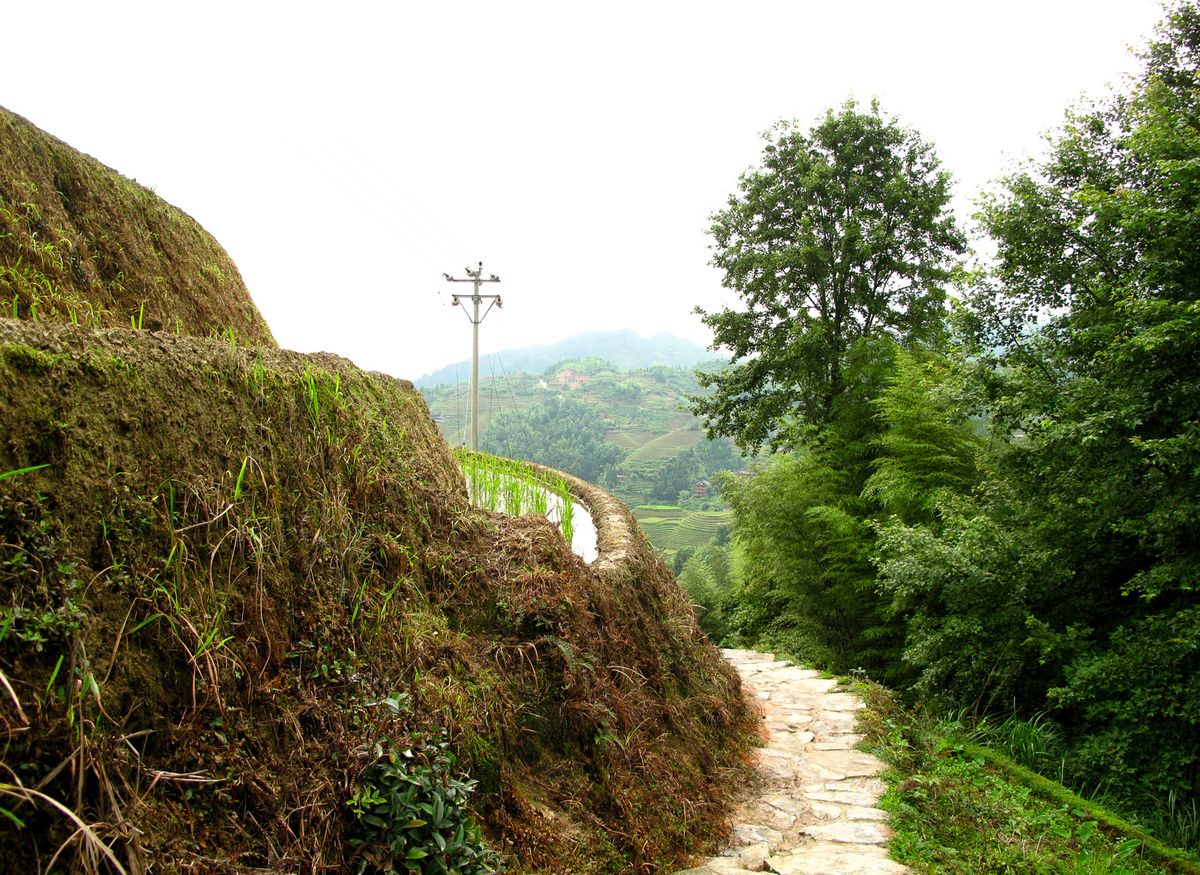
The Longji (Dragon’s Backbone) rice terraces were carved into the mountains by Zhuang and Yao villagers — golden at harvest in late September–October.
Short on time? Cut Zhangjiajie to two full days and the route to six. With a full two weeks, add the classic Beijing–Xi’an–Shanghai line before this — see our two-week route or the 14-day plan.
Zhangjiajie in depth
Zhangjiajie’s Wulingyuan area (a UNESCO World Heritage Site since 1992) is made of the sandstone pillars that made the “Avatar” name famous: more than 3,000 quartz-sandstone columns and peaks, some rising 200 meters or more, left behind as the softer rock around them eroded over hundreds of millions of years. The film connection is real — James Cameron’s design team has cited the pillars as inspiration for the floating Hallelujah Mountain — and the viewpoint of the same name in Yuanjiajie is where everyone takes the “Avatar” photo. It’s spectacular, and the crowds reflect it.
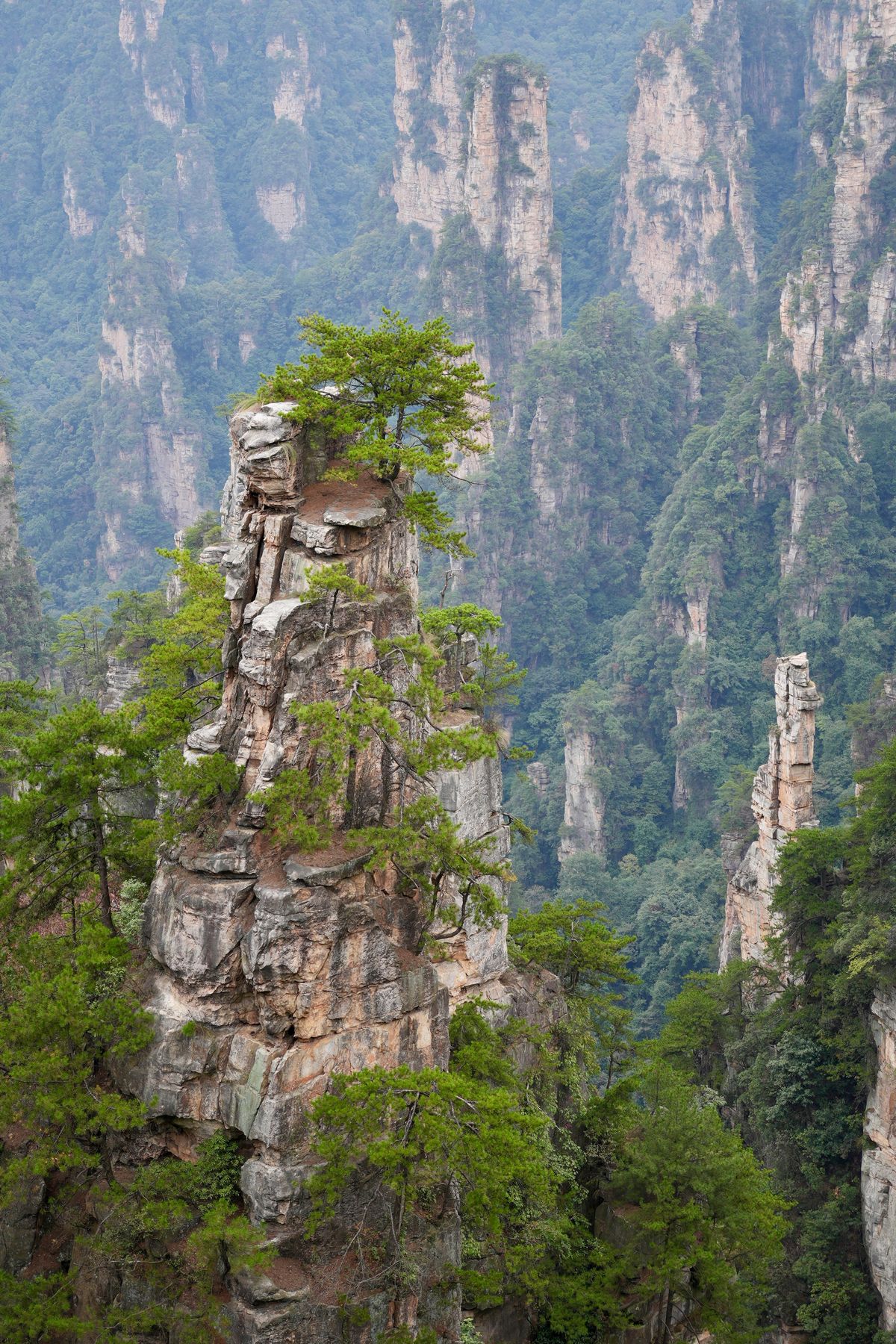
Zhangjiajie’s 3,000-plus sandstone pillars rise out of the forest of Wulingyuan — the landscape behind the floating mountains of Avatar.
The two engineering icons are part of the experience. The Bailong Elevator is a glass lift that climbs 326 meters up the face of a cliff, depositing you onto the mountaintop platforms — a wonder, but a queued one; go early. The Zhangjiajie Grand Canyon glass bridge opened in 2016 as the longest and highest glass-bottomed bridge in the world, spanning 430 meters over a 300-meter drop. It is genuinely thrilling and genuinely busy.
Golden Whip Stream is the other side of the park: a 7.5-kilometer valley trail along a clear stream between the pillars, flat and forested, and the best place to escape the mountaintop crowds. Do the stream in the morning, when the light is soft, and the elevator-and-cable-car loop in the afternoon. Entry to Wulingyuan is a multi-day park ticket, but the cable cars, the elevator and the glass bridge are all separate fees — budget for them.
Guilin & Yangshuo in depth
Where Zhangjiajie is vertical, Guilin is horizontal: the karst peaks here are rounded limestone cones rising out of flat plains and rice paddies, and the classic way to see them is from the water. The Li River cruise from Guilin to Yangshuo takes about four hours and threads between the peaks that appear on the ¥20 banknote — bring one for the compare photo near Xingping. The cruise is comfortable and crowded in season; the alternative is a quieter bamboo-style raft on a stretch of the river for a close-up version.
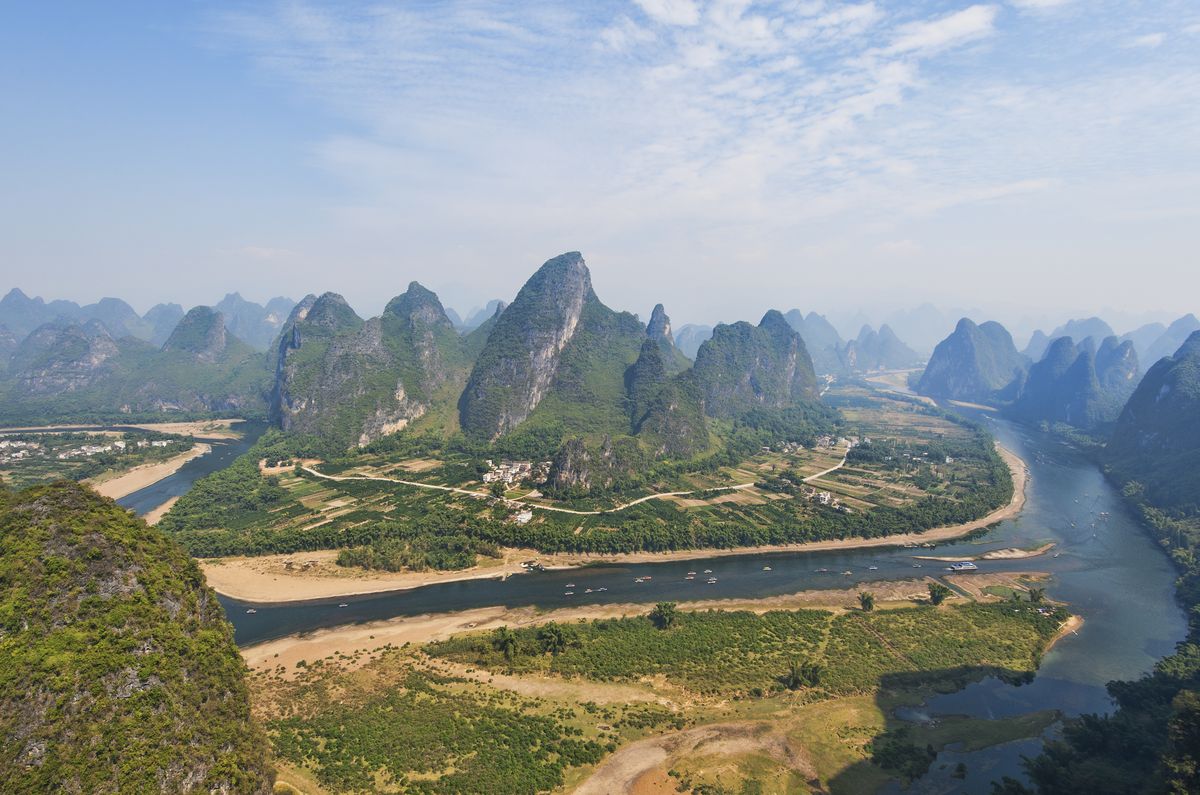
The four-hour Li River cruise between Guilin and Yangshuo passes the karst peaks printed on the ¥20 banknote — book it the day you arrive.
The karst is everywhere, but the essential Guilin-specific sights are the Reed Flute Cave — a limestone cavern named for the reeds at its entrance (long used to make flutes), lit with colored lights in the grotto tradition — and Elephant Trunk Hill, the rock arch at the river bend that is the city’s symbol. Yangshuo itself, an hour’s cruise downstream, is the countryside base: Yulong River rafting (the calm, paddled version of the karst), the Ten-Mile Gallery ride through the paddies, and West Street for the evening.
The optional extra is the Longji (Dragon’s Backbone) Rice Terraces, about two hours from Yangshuo, carved into the mountainsides by Zhuang and Yao villagers over centuries. They are most dramatic at sunrise and during the golden harvest in late September–October. It’s a long day, but for many travelers it’s the single best photograph of the trip.
When to go, season by season
- April–June (spring): lush green, misty mornings, and the classic “Avatar mountains in the clouds” look. Rain is common but part of the scenery. May’s Labour Day holiday is crowded.
- July–August (summer): hot, humid and busy, with afternoon storms. The park’s altitude keeps Zhangjiajie a few degrees cooler; Yangshuo is hot but the river and rafts help.
- September–October (autumn): the other sweet spot — clear skies, crisp air, and the Longji terraces turning gold. October’s National Day week is to be avoided.
- November–March (winter): cold and quiet, with low cloud common at Zhangjiajie and the terraces bare after harvest. Cheaper and emptier, but the scenery needs clear days to show off — check the forecast before committing.
A realistic budget
Both regions are affordable; the costs concentrate in the park fees and the internal flight.
- Sights: Wulingyuan park ticket about ¥225 (valid several days) plus cable cars, the Bailong Elevator (
¥70) and the glass bridge (¥130–140); Guilin’s Reed Flute Cave about ¥90; the Li River cruise ¥350–500; Yulong raft ¥150–300; Longji terraces about ¥80 plus transport. Allow ¥1,200–1,800 total. - Transport: the Zhangjiajie–Guilin flight ¥400–800 if booked ahead; airport transfers and local shuttles ¥100–300. Total ¥600–1,200.
- Hotels: Wulingyuan town ¥250–500; Guilin ¥250–500; a countryside guesthouse in Yangshuo ¥300–700 (the splurge that makes the scenery worth it). Seven nights roughly ¥2,500–4,500.
- Food: ¥50–120 per person for proper meals; Yangshuo’s local dishes are the highlight. Budget ¥120–200 per day.
A realistic 8-day mid-range total, excluding international flights, is roughly ¥5,000–8,500 per person. All figures are estimates — confirm current park and cruise prices.
Common mistakes to avoid
- Doing Zhangjiajie in one day. The park is enormous, the queues eat hours, and two days is the minimum to see the pillars and the stream both.
- Skipping the advance bookings. The Zhangjiajie cable cars, the elevator and the glass bridge all have real capacity limits in peak season — book online ahead.
- Booking the Li River cruise for a rainy afternoon. Morning light is the classic look, and the cruise sells out in season; book the day you arrive in Guilin.
- Scheduling the internal flight too tightly. Zhangjiajie’s airport is small and weather can delay departures; don’t book your Guilin onward plans for the same day.
- Treating the rafting and the cruise as interchangeable. The cruise is the wide, grand view; the Yulong raft is the quiet close-up. Most travelers want both.
- Forgetting that the mist is the point. Both regions look best with a little cloud in the valleys — don’t cancel a day over weather that will probably make the photos better.
Practical tips
- Book flights and cable cars ahead — Zhangjiajie’s elevator and cable cars sell out in peak season, and the Zhangjiajie–Guilin flight needs an advance ticket.
- Weather is part of the scenery: misty mornings are the classic look for both — don’t cancel over rain.
- Pace yourself: Zhangjiajie is a physical slog; Guilin is the recovery half of this trip.
- Set up payment and data before you fly: Alipay, eSIM, and train booking for any rail legs.
Where this route fits
This is the perfect “scenery finale” after the cities of a first China trip — start from our first-timer planner to build the full trip around it.
FAQ highlights
- Can I do it on a budget? Yes — both areas are affordable, especially Yangshuo. The flight is the main extra cost.
- Do I need a guide? No — both parks have clear trails and English signage, and shuttles/cable cars do the heavy lifting.
- Best season? Spring (April–June) for lush green, autumn (September–October) for clear skies and the golden terraces.
Last updated: August 2026. Flight and cable car schedules change — confirm before you travel.
Frequently Asked Questions
Is Zhangjiajie plus Guilin too much scenery in one trip?
They're very different scenery — Zhangjiajie is vertical sandstone pillars you walk among, Guilin is river karst you drift past. Most travelers find the combination fantastic, and the flight between them is short. If you only have a week, do Guilin alone and save Zhangjiajie for a longer trip.
How do I get from Zhangjiajie to Guilin?
The quickest way is the direct flight from Zhangjiajie Hehua Airport to Guilin (about 1.5 hours). By rail you'd change trains in Changsha, which costs most of a day. Flights run most days — book ahead in peak season.
How many days should I give each?
Three days for Zhangjiajie (Wulingyuan's two parks plus the glass bridge) and four for Guilin and Yangshuo (the Li River cruise, a day in Yangshuo, and a day for the Longji terraces) works well. See our [Zhangjiajie guide](https://chinotrips.com/zhangjiajie/) and [Guilin guide](https://chinotrips.com/guilin/).
Which is better, Zhangjiajie or Guilin?
If you must choose: Zhangjiajie is more spectacular and more physically demanding; Guilin is gentler and arguably more photogenic from the water. Our [Guilin vs Zhangjiajie comparison](https://chinotrips.com/destinations/guilin-vs-zhangjiajie/) breaks down the differences.
Is this route suitable for children or older travelers?
Guilin and Yangshuo are easy — flat, gentle, with bamboo rafts and bikes. Zhangjiajie is harder: long cable car queues, big stair sets and steep trails. Book the Zhangjiajie cable cars ahead and take the shuttle options where they exist.