

Yangshuo Guide (2026): Yulong River & Shili Gallery
The full Yangshuo guide — Yulong River bamboo rafting, the Ten-Mile Gallery cycle, West Street, and how many days to plan.
OpenStreetMap Google Maps (opens externally)
Yangshuo is the town travelers mean when they say “Guilin scenery” — a compact county surrounded by karst peaks, rice paddies and a slow green river.
For many visitors this is the most relaxed part of a China trip: no monuments to rush, just scenery, cycling and slow evenings. This guide covers the essentials — the Yulong River rafts, the Ten-Mile Gallery cycle, West Street at night, and a realistic plan for your days.
Overview
Yangshuo sits on the Li River, about an hour downstream from Guilin in Guangxi province. The town itself is small — one main street, a riverside promenade and a warren of lanes — but it is the gateway to the landscape printed on the back of China’s ¥20 note. Karst peaks rise abruptly from flat farmland, and the countryside between them is threaded with the Yulong River and a network of quiet lanes that are perfect on two wheels.
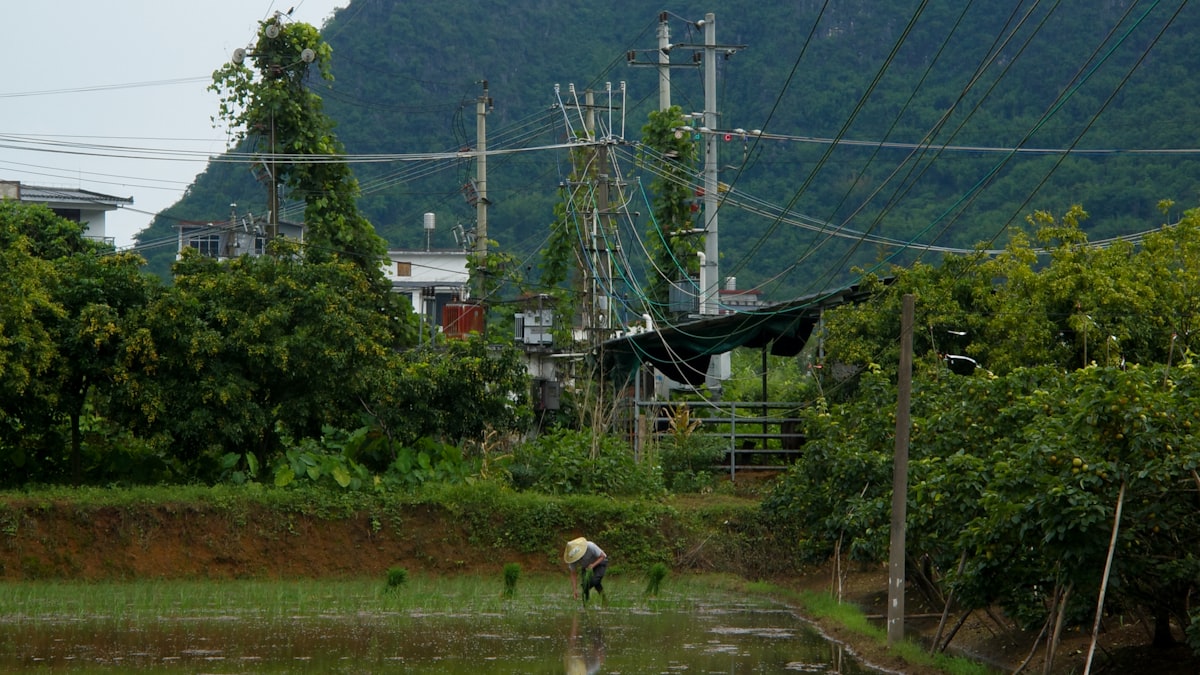
Karst peaks rise abruptly from the rice paddies that ring Yangshuo — the quiet countryside that makes this corner of Guangxi so photogenic.
It’s the antidote to China’s big cities: a place where the plan is to have no plan. Most travelers arrive from Guilin, spend two or three days cycling and floating between the peaks, then move on. Because the scenery is the attraction, the town rewards slow travel more than almost any other stop in China.
How many days
Two to three days suits most itineraries, though a full week is genuinely nice here. A workable plan:
- Day 1: arrive from Guilin, settle in, walk the riverfront, and save energy for West Street in the evening.
- Day 2: Yulong River bamboo raft in the morning, then the Ten-Mile Gallery by e-bike in the afternoon.
- Day 3: a morning trip to Xingping old town and the ¥20-note viewpoint, then continue to your next stop.
If you have more time, add a second morning on the river, a sunrise at Xianggong Hill, or a day drifting through the village lanes west of the town.
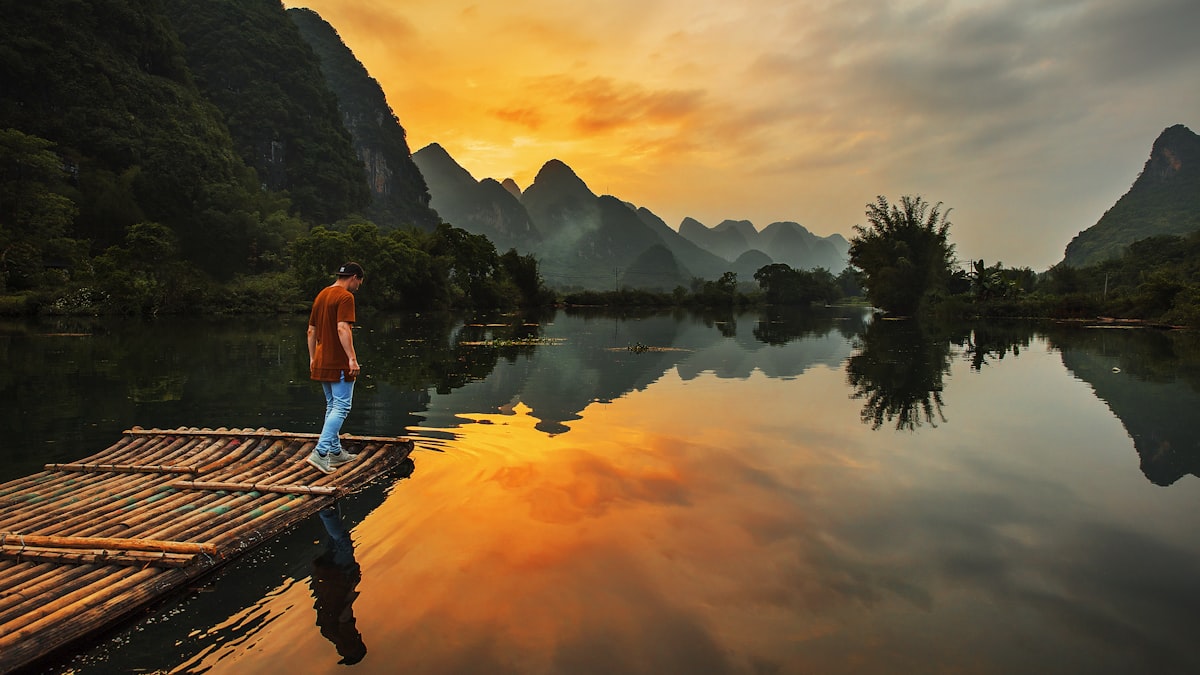
A bamboo raft on the Yulong River follows the water between karst peaks and rice paddies — the classic close-up way to see the scenery.
Suggested itinerary
A 2-day plan:
- Day 1 — The river & the town: a morning on the Yulong River bamboo rafts, then the lanes of West Street (Xijie) and the riverside in the evening.
- Day 2 — The countryside: cycle or e-bike the Ten-Mile Gallery (Shili Gallery), and catch the view from Xingping — the picture on the ¥20 note.
Have more time? Add a day for the Longji Rice Terraces or a quieter day in the karst fields. Yangshuo is the scenic heart of a Guilin route.
Best time to visit
- Spring (April–June): the paddies are flooded and vivid green, with warm days and the classic misty-morning look that photographers chase.
- Autumn (September–October): the sweet spot — clear skies, comfortable temperatures and golden rice harvests.
- Summer (July–August): hot, humid and prone to afternoon storms; beautiful but busy on weekends and holidays.
- Winter (November–March): mild, quiet and affordable, but the landscapes are more brown than green.
Top sights
- Yulong River bamboo rafts — the gentle, close-up way to see the karst scenery. Rafts follow the river between villages, and the two-hour stretch is the classic booking.
- Ten-Mile Gallery (Shili Gallery) — a scenic road that runs between the peaks south of town, best explored by e-bike or bicycle with stops at Moon Hill and the local viewpoints.
- West Street (Xijie) — the old street of the town, lined with cafés, bars and souvenir shops; liveliest after dark.
- Xingping & the ¥20-note viewpoint — the exact scenery on the banknote, a short drive or train away. Photographers head to nearby Xianggong Hill for sunrise.
- Moon Hill & the countryside loop — an optional climb through a natural arch and the classic cycling loop around the quiet village lanes.
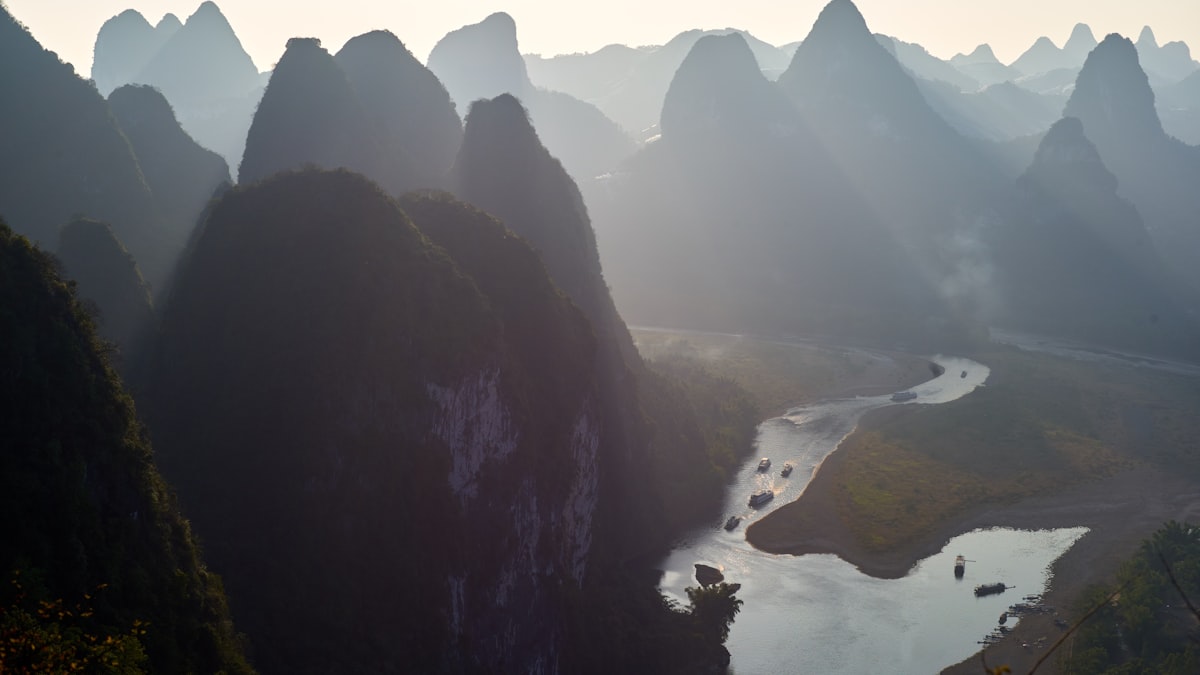
The karst scene between Yangshuo and Xingping is the exact picture printed on China’s ¥20 note.
Getting there
- From Guilin: high-speed rail to Yangshuo station in about 30–40 minutes, then a bus or taxi into town. Book with your passport — see our train guide.
- By river: the four-hour Li River cruise from Guilin ends in Yangshuo — easily the most scenic arrival.
- By air: fly into Guilin Liangjiang International Airport (KWL), then continue by train or road.
Getting around
- E-bikes and bicycles are the classic way to explore — rental shops are everywhere in town, and most hotels arrange bikes too.
- Didi and taxis cover the town and the villages for non-cyclists.
- Tourist buses run to Xingping and the bigger sights from the central bus station.
- Set up Alipay before you arrive — most bike rentals, cafés and shops take mobile payments, and many places barely touch cash.
The karst landscape in depth
The scenery around Yangshuo is one of the world’s great examples of karst — a landscape shaped by the slow dissolution of limestone. Hundreds of millions of years ago, the region lay under a shallow tropical sea, and the remains of marine organisms accumulated into thick layers of carbonate rock. Uplift exposed the limestone, and rain, made slightly acidic by dissolved carbon dioxide, began to eat into it along joints and cracks, carving the rock into the steep, isolated towers that now rise abruptly from the floodplain.
The Li River and its tributaries did the finishing work, widening valleys and leaving the resistant towers standing. Today the towers are honeycombed with caves — Reed Flute Cave near Guilin is the famous example, and the region holds thousands more, some not yet fully explored. The paddies and villages between the peaks sit on fertile alluvial soil, which is why this landscape has been farmed for centuries. The famous “misty morning” look is a weather effect: warm, damp air meets the cool river valleys and condenses into low cloud that wraps the peaks — photographers plan for it because it makes the karst look almost weightless.
A realistic budget
Yangshuo is a low-cost destination by Chinese standards, and the biggest single outlay is the raft trip.
- Getting there: the high-speed train from Guilin to Yangshuo is roughly ¥20–40 in second class, then a short bus or taxi into town; the Li River cruise from Guilin runs about ¥300–400 per person and is the scenic (and pricier) arrival.
- Rafts: the Yulong River raft is around ¥150–250 per raft for the classic two-hour section, with prices varying by stretch and season — book ahead on weekends.
- Cycling: bike rental is ¥20–50 for the day; an e-bike runs ¥50–100 and makes the Ten-Mile Gallery far easier.
- Hotels: ¥150–400 per night is comfortable, with guesthouses cheaper and riverside resorts pricier; staying slightly out of town gets you quiet at a lower rate.
- Food: ¥40–80 per day at local restaurants; West Street is touristy and prices show it, but the surrounding lanes stay cheap.
Common mistakes to avoid
- Visiting during National Day. The October 1–7 week is the busiest of the year; the river, roads and West Street all fill up.
- Riding the Ten-Mile Gallery at midday. Tour buses pack the road from mid-morning; go early or late and you get the lanes almost to yourself.
- Skipping advance raft bookings on weekends. The popular Yulong River sections sell out early in the morning on weekends and holidays.
- Staying only on West Street. The town center is fun but noisy; the quiet countryside lanes are the real Yangshuo, and they are minutes away by bike.
- Forgetting rain gear. The misty-morning look comes with showers; a light rain jacket is essential in spring.
- Relying on cash. Most of Yangshuo runs on mobile payments — set up Alipay before you arrive.
- Planning too much. Yangshuo is built for slowing down; a schedule of one activity a day beats a packed checklist.
Xingping and the ¥20-note view in detail
Xingping, a few stops downriver from Yangshuo, is where the banknote scenery actually sits. The town itself is a compact old settlement on the Li River, and the famous viewpoint is a short walk or electric cart from the ferry dock — a stone bank where the karst peaks of the ¥20 note line up across the water. Photographers head to nearby Xianggong Hill for the elevated panorama, best at sunrise. The trip is easy as a half-day: a high-speed train or taxi from Yangshuo, an hour or two in Xingping, and a return in time for dinner. It is one of the few sights in the area where an early start genuinely matters, because the light and the crowds both change fast after 9am.
Practical tips
- Book raft tickets ahead on weekends and holidays — the two-hour Yulong River sections sell out early in the morning.
- Ride early or late on the Ten-Mile Gallery road to dodge tour buses at midday.
- Pack for rain — the classic misty look often comes with showers, so a light rain jacket earns its place in the bag.
- Stay a little out of the center if you want the quiet countryside version of Yangshuo rather than the party version.
- Carry your passport — hotels register foreign guests at check-in, and some attractions need it for tickets.
Where to go next
Yangshuo is usually a stop within a Guilin loop — head back upriver for the Longji rice terraces, or continue east to Zhangjiajie in Hunan for the Avatar pillars. If you’re traveling onward across China, Chengdu is a natural next stop for pandas and Sichuan food.
Last updated: August 2026. Raft prices, river levels and bike-rental rates change — confirm before you go.
Frequently Asked Questions
How many days should I spend in Yangshuo?
Two to three days is the sweet spot — a day for the Yulong River rafts and the Ten-Mile Gallery, a morning for Xingping and the ¥20-note viewpoint, and time to slow down in the evenings. Many travelers stay a full week and never run out of lanes to cycle.
Should I take the Yulong River bamboo raft?
Yes — it's the calm, close-up version of the Guilin scenery, drifting through karst peaks and rice paddies. Rafts are generally motorized for parts of the trip now, but the two-hour sections remain the classic choice. Book ahead on weekends and holidays, when rafts sell out early.
How do I get from Guilin to Yangshuo?
The high-speed train from Guilin takes about 30–40 minutes to Yangshuo station, then a short bus or taxi into town. The other classic option is the four-hour Li River cruise, which ends in Yangshuo. Book rail tickets with your passport — see our train ticket guide.
Is West Street worth the hype?
It's busy, touristy and full of bars and souvenir shops — but it's also the social heart of the town and a fine place to wander at night. For the quieter side of Yangshuo, stay a little out of the center and explore the countryside lanes instead.
Can I cycle the Ten-Mile Gallery myself?
Yes — renting an e-bike or bicycle for the day is the standard way to do it. Go early in the morning or late afternoon to avoid the tour-bus traffic on the main road, and don't expect it to be a loop; most people ride out and back with stops.
Do I need a visa for Yangshuo?
The same entry rules as the rest of mainland China apply — many passports are visa-free for up to 30 days, and others can use the 240-hour transit scheme. Check your situation before booking, and carry your passport for hotel check-in.
More in Guangxi
Guangxi Travel Guide (2026) — Guangxi travel guide