
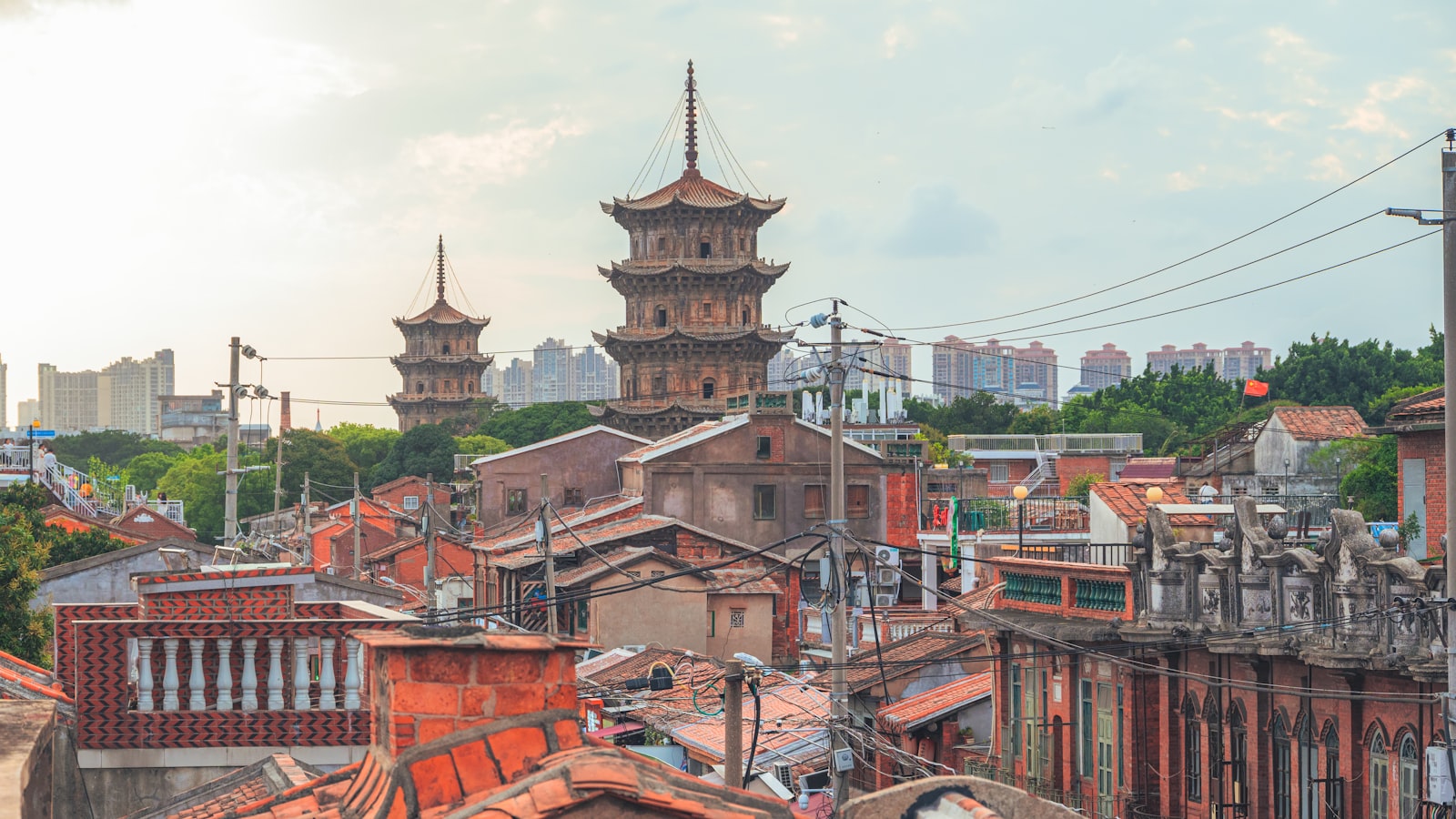
Quanzhou Travel Guide (2026): Maritime Silk Road & Old Temples
Quanzhou — the medieval maritime capital: the Kaiyuan Temple, the oldest mosques and bridges in China, and Fujian's temple-dense old city.
Quanzhou, Fujian, China
Open an external map for this location.
OpenStreetMap Google Maps (opens externally)
Quanzhou is China’s medieval maritime capital — the port where the Silk Road met the sea, and a city still dense with ancient temples, mosques and bridges. Here’s how to visit it in 2026.
Overview
For much of the medieval period, Quanzhou was the greatest port in the world — the eastern terminus of the Maritime Silk Road, where Arab, Persian, Indian and Southeast Asian traders gathered. That extraordinary history survives in a remarkably intact old city: the Kaiyuan Temple with its twin pagodas, one of the oldest mosques in China, ancient stone bridges and city walls. UNESCO recognized the site, and walking Quanzhou feels like stepping into the medieval world in a way few Chinese cities still offer.
How many days
1–2 days. A day covers the old city’s temples and lanes; a second adds the Luoyang Bridge and the surrounding sites. It’s an easy side trip from Xiamen (about 40 minutes by rail), so it works as a day trip or a relaxed short stop.
Suggested itinerary
A 1-day plan:
- Morning: the Kaiyuan Temple and the old city lanes.
- Afternoon: the Qingjing Mosque, the city walls, and the museum on the maritime history.
- Evening: the food streets for Fujian seafood.
A 2-day version adds the Luoyang Bridge and the outlying temples.
Best time to visit
- Spring (March–May) and autumn (September–November): the best windows — mild and dry.
- Summer (June–August): hot and humid, with typhoon season.
- Winter (December–February): mild and quiet — a pleasant off-peak visit.
- The temple lanes are comfortable year-round; the heat of summer is the main consideration.
Top sights
- Kaiyuan Temple — one of China’s great Buddhist complexes, with the twin stone pagodas.
- Qingjing Mosque — one of the oldest mosques in China, from the Song dynasty.
- Luoyang Bridge — the grand Song-dynasty stone bridge across the river.
- The old city lanes — the dense, temple-filled quarters.
- The maritime history museum — the story of the Silk Road at sea.
Getting there & around
- High-speed rail: about 40 minutes from Xiamen — the easy way in. Book with your passport — see our train guide.
- Flights: Quanzhou Jinjiang (JJN) has domestic routes; most visitors come via Xiamen.
- Within the city: walking and taxis; the old city is compact.
- To the Luoyang Bridge: a short taxi or bus ride.
Food & the coastal cuisine
- Oyster omelet and seafood — the coastal staples.
- Mianxianhu — the soupy noodle dish, a Quanzhou specialty.
- Fish-ball soups — the local favorite.
- Where: the food streets and the temple lanes.
Practical tips
- Set up Alipay and an eSIM before you arrive.
- The temples close early — start your day at the Kaiyuan Temple.
- Wear comfortable shoes — the old city is best on foot.
- Respect the mosques and temples — they’re working places of worship.
Where to go next
Quanzhou pairs naturally with Xiamen (an hour south) on a Fujian coastal trip. From there, the route continues to Fuzhou or across to the interior. See our Xiamen guide and the Fujian guide for how the province fits together.
The religious crossroads, in depth
Quanzhou’s medieval fame was as a religious crossroads — the port where Arab, Persian, Indian and Chinese traders met, and where their faiths left lasting monuments. Alongside the Buddhist Kaiyuan Temple stand one of the oldest mosques in China, a Manichean temple (a rare survival of that faith), Hindu traces, and Taoist shrines. UNESCO recognized this remarkable tolerance. Walking the old city, you pass centuries of different faiths within a few streets — a genuinely unique religious landscape in China.
The Maritime Silk Road story
Quanzhou’s place in history is bigger than its current size suggests. For much of the Song and Yuan dynasties it was the greatest port in the world — the eastern end of the Maritime Silk Road, where the goods of China, Southeast Asia, India and the Middle East exchanged. The Maritime Museum tells this story, and the Luoyang Bridge (a grand Song-dynasty stone span) is a relic of that era’s wealth. Understanding Quanzhou as a maritime capital gives the old city its meaning.
Practical notes
- The temples close early — start at the Kaiyuan Temple in the morning.
- It’s an easy side trip — about 40 minutes from Xiamen by rail.
- Wear comfortable shoes — the old city is best on foot.
- Respect the working temples — the mosques and shrines are places of worship.
- Set up Alipay before you arrive.
A budget for Quanzhou
Quanzhou is an affordable, compact city. Rough daily figures for planning (per person, CNY, and prices change): accommodation budget ¥150–250/night, mid-range ¥300–500; attractions the Kaiyuan Temple and most temples are a few tens of yuan or free, the museum modest; food Fujian seafood and the local specialties ¥50–100 for a good meal, snacks cheap; transport walking covers the old city, taxis cheap for the Luoyang Bridge. It’s an easy, low-cost side trip from Xiamen.
The old city, on foot
Quanzhou’s old city is its strength, and the best way to see it is on foot. The lanes around the Kaiyuan Temple are dense with temples, shrines and old houses — a working old city, not a tourist reconstruction. The religious sites are close together: the Buddhist temple, the old mosque, the Taoist shrine within a few streets. Allow a morning to walk it slowly, then take a taxi out to the Luoyang Bridge. The city rewards pace over checking boxes.
When to go and what to expect
- Spring (March–May) and autumn (September–November): the best windows — mild and dry.
- Summer: hot and humid, with typhoon season; the temples are still enjoyable.
- Winter: mild and quiet — a pleasant off-peak visit.
- Expect few foreign tourists — Quanzhou is underrated abroad, which is part of its charm. The temples are busy with local worshippers, not tour groups.
A quick comparison: Quanzhou vs Xiamen
The two Fujian cities are easy to confuse and genuinely different. Xiamen is the modern island city an hour south — Gulangyu, cafés, and a younger, trendier energy. Quanzhou is the older, deeper-history port — the medieval temples, mosques and bridges, with far fewer tourists. They’re an ideal pair: a day in each gives you both the modern and the ancient Fujian coast. Most travelers do Xiamen first and add Quanzhou as the history-rich counterpoint. See our Xiamen guide for the other half. And for travelers who love history, Quanzhou is one of China’s most rewarding — and most overlooked — old cities. Come for a day, and the medieval port city will stay with you longer than most destinations twice the size. A short rail hop from the modern coast, it delivers a history lesson most travelers miss — and that alone makes it worth the detour. And with the Kaiyuan Temple’s twin pagodas at its heart, it’s a place you’ll remember long after the train rolls south.
Last updated: August 2026. Attraction prices and hours change — confirm before you go.
The Maritime Silk Road
Quanzhou was one of the world’s great ports during the Song and Yuan dynasties, when ships carried silk, porcelain and tea from here across Asia and beyond. That history left a unique mix of mosques, temples, churches and merchant traditions that earned the city UNESCO World Heritage status. It is a quieter, more layered alternative to China’s more famous old towns.
Frequently Asked Questions
Why visit Quanzhou?
Quanzhou was the greatest port in the medieval world — the start of the Maritime Silk Road, where traders from across Asia and the Middle East gathered. That history left an extraordinary religious and architectural legacy: the Kaiyuan Temple, one of the oldest mosques in China, ancient bridges and city walls. It's a UNESCO-listed old city, temple-dense and completely different from the modern coastal cities nearby.
How many days do I need in Quanzhou?
One to two days: a day for the old city's temples and lanes, and a second for the Luoyang Bridge and the surrounding sites. It's an easy high-speed rail stop from Xiamen (about 40 minutes), so it works as a day trip or a short stop.
Is Quanzhou the same as the famous temple city Xiamen?
No — Xiamen is the modern coastal city an hour south, known for Gulangyu and its café scene. Quanzhou is the older, deeper-history port city with the medieval temples and mosques. They're different places, and Quanzhou is the one with the UNESCO history. See our [Xiamen guide](https://chinotrips.com/xiamen/) for the other.
What should I not miss in Quanzhou?
The Kaiyuan Temple (one of China's great Buddhist complexes, with twin pagodas), the Qingjing Mosque (one of the oldest in China), the Luoyang Bridge (a grand stone bridge from the Song dynasty), and the tangle of lanes around the old city. The city is dense with temples in a way few Chinese cities still are.
What should I eat in Quanzhou?
Fujian coastal food — seafood, oyster omelets, the famous fish-ball soups, and the local specialty of 'mianxianhu' (a soupy noodle dish). The food reflects the city's maritime past. The temple lanes and the food streets are the place to sample it.