
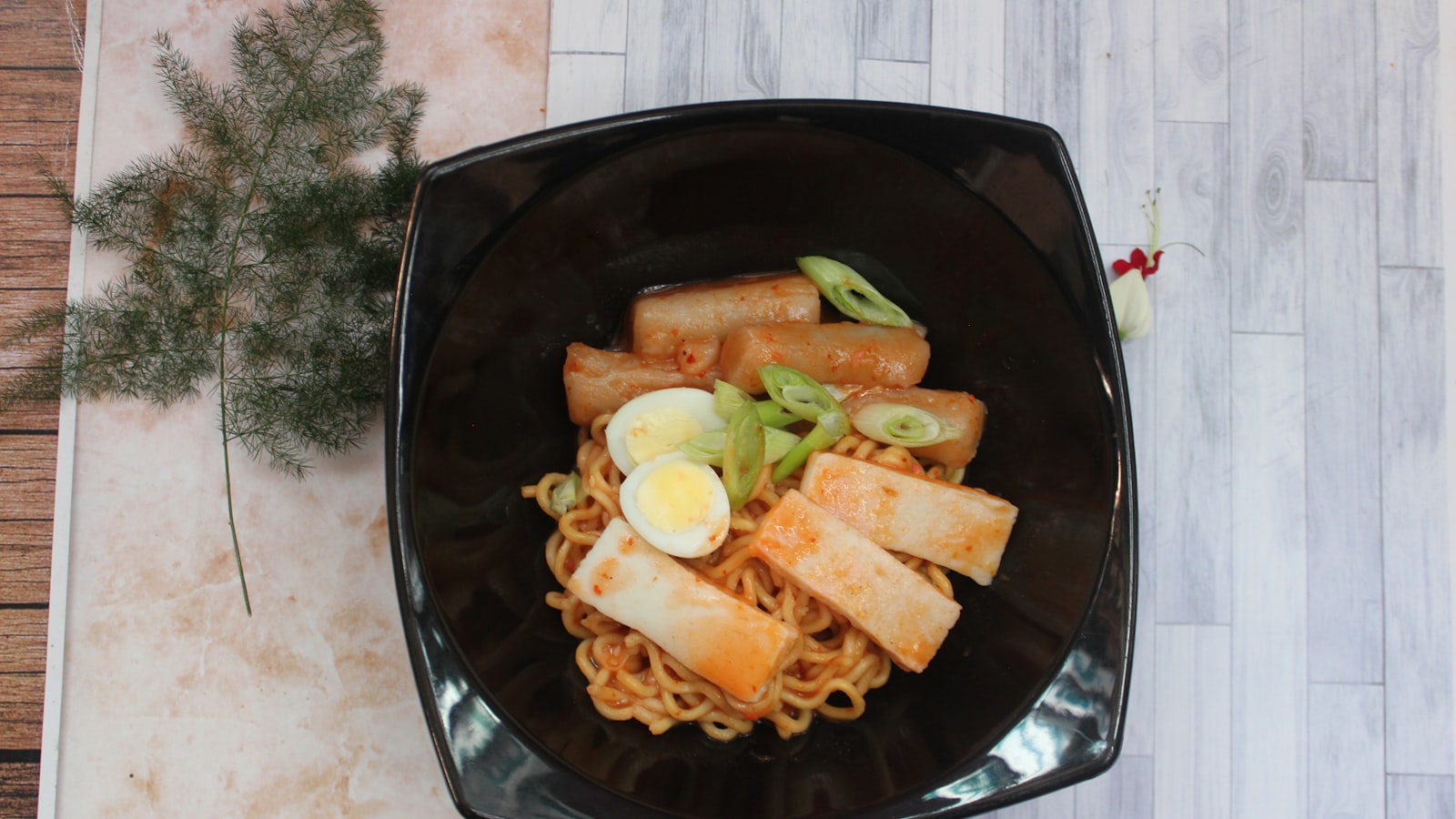
Dan Dan Noodles in Chengdu: What They Are & Where to Eat
What dan dan noodles are, why Chengdu claims them, how to order them, and where to find the best bowls — Sichuan's most famous noodle, explained for travelers.
Dan dan noodles are Chengdu’s most famous bowl — thin noodles, a fiery chili-sesame sauce, and a numbing Sichuan peppercorn kick that makes them unforgettable. Here’s what they are and where to eat them.
Dan dan noodles (担担面, dandanmian) are the Sichuan noodle that travelers hear about most, and the city of Chengdu is their spiritual home. They’re not a soup noodle — instead, a small amount of intensely flavored sauce coats each strand, built from chili oil, Sichuan peppercorn, sesame paste and minced pork. The result is a bowl that’s savory, slightly sweet, and numbing-spicy all at once, and it’s one of the best introductions to Sichuan food you’ll find.
What’s actually in the bowl
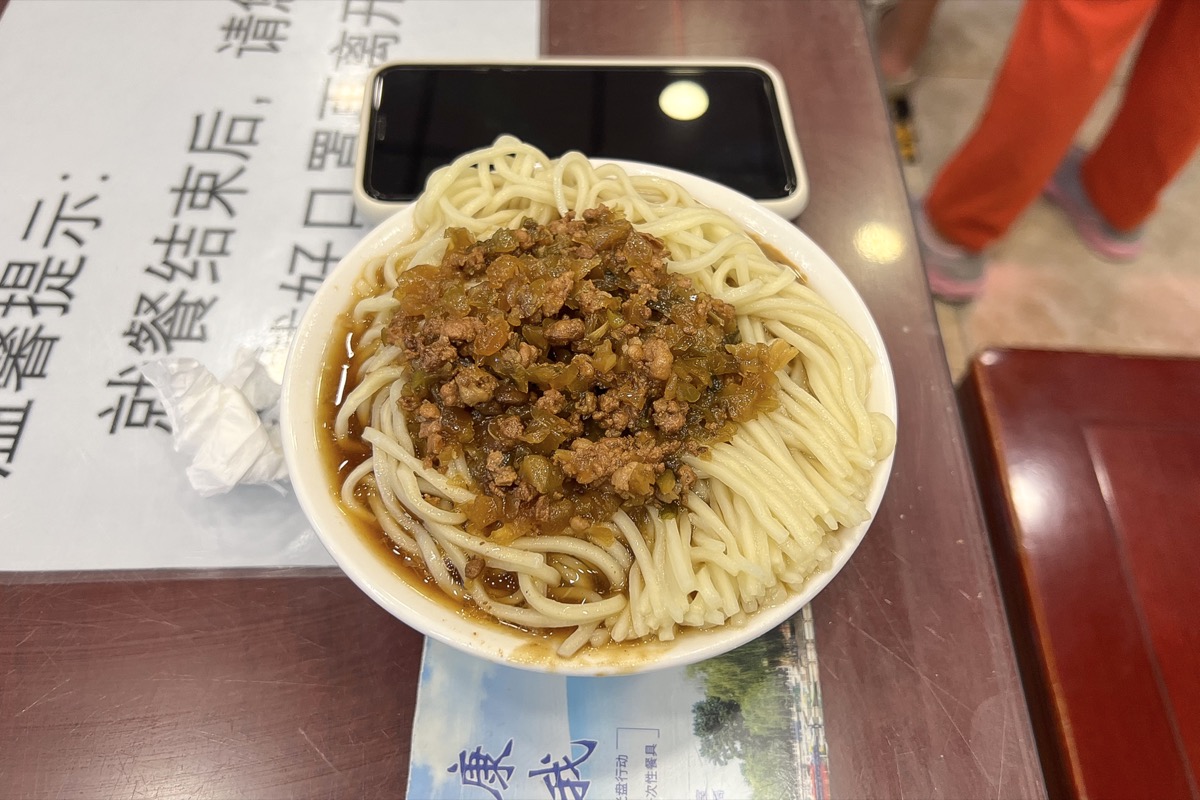
The genius of dan dan noodles is that the flavor lives in the sauce, not the broth. A proper bowl starts with a small pool of seasonings at the bottom of the bowl — chili oil, Sichuan peppercorn, sesame paste (or peanut butter in some versions), soy sauce, sugar, and often Chinese vinegar. On top go minced pork that’s been fried until crisp, preserved mustard greens (zhacai), and a scatter of scallions. The noodles themselves are thin and slightly springy. You mix everything together at the table — that’s the ritual — so every strand picks up the sauce.
The Chengdu connection
The dish dates to 19th-century Chengdu, where street vendors carried their ingredients through the lanes balanced on a shoulder pole — the ‘dan’ in the name. One basket held the noodles, the other the seasonings and a small stove. The vendor would cook a bowl on demand and hand it over hot. That street-peddler origin is why dan dan noodles are so intensely flavored: the sauce had to survive being carried, and it had to make a plain bowl of noodles worth stopping for. Today you’ll find dan dan noodles on menus across China and around the world, but the classic, unabashedly spicy version is still Chengdu’s own.
How spicy is it, really?
Honest answer: medium-high, but it’s a different kind of heat than you might expect. The chili oil brings warmth, but it’s the Sichuan peppercorn that does the memorable work — a tingling, numbing sensation (mala) that spreads across the tongue rather than a sharp burn. Most travelers find it addictive once they know what’s coming. If you’re cautious, ask for ‘weila’ (mild) or ‘bula’ (no spice) — most places will dial it back, though a truly mild dan dan noodles loses some of its character.
Where to eat dan dan noodles in Chengdu
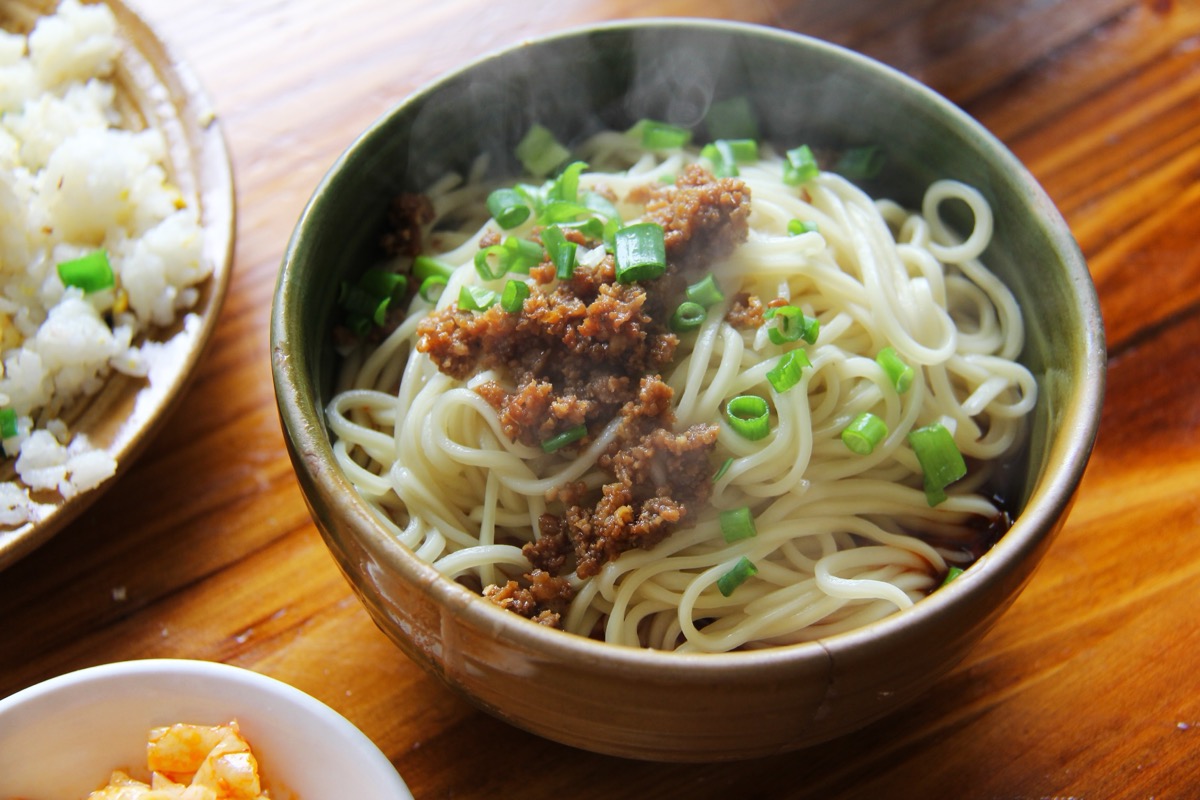
The good news for travelers: you don’t need to hunt for one famous address. Dan dan noodles are a Chengdu staple, and nearly every noodle shop in the city does a version. For a concentrated food experience, the snack streets are the easiest entry points — Jinli (锦里) and the area around Kuanzhai Alley (宽窄巷子) are tourist-friendly with picture menus and plenty of bowls. For a more local scene, head to a busy neighborhood noodle shop at lunchtime, when locals pack in. The classic rule applies: if there’s a queue of locals, the noodles are worth trying. See the Chengdu guide for the wider food map.
How to order like a local
Ordering is easy once you know the basics:
- Picture menus are standard — point at the dan dan noodles and say ‘zhe ge’ (this one).
- Mix before eating — the sauce sits at the bottom; stir it through thoroughly or the first bite will be overwhelming and the last one bland.
- Spice control: ‘weila’ (mild), ‘bula’ (not spicy), or ‘shaola’ (less spice) all work.
- Portion: ‘xiaowan’ (small) or ‘dawan’ (large); a small bowl is a snack, a large is a meal.
- Watch the pronunciation: it’s ‘dan dan’, not ‘daan daan’ — roughly ‘dahn-dahn’.
What it costs
A bowl of dan dan noodles in Chengdu is typically ¥15–30 (estimate) — among the best value meals in China. Famous tourist-area spots run toward the top of that range; a local street shop is often cheaper and just as good. Cashless payment via Alipay is standard.
A few practical notes
- Vegetarian: the classic has minced pork, but most shops can do a version without it — ask for ‘bu yao rou’ (no meat) or ‘sude’ (vegetarian). The sauce alone is delicious over noodles.
- Pair it: dan dan noodles sit naturally alongside mapo tofu and a plate of Sichuan cold dishes for a proper Chengdu meal.
- Meal timing: dan dan noodles are sold all day, but the classic street snack window is mid-morning to mid-afternoon; lunchtime is when the shops are busiest.
- Not just a bowl: the same flavor family shows up across Sichuan food — see our Sichuan food guide for the wider picture, and our noodles in China map for other regional bowls.
Dan dan noodles vs other Sichuan bowls
Dan dan noodles are part of a family of Sichuan ‘dry’ noodles — bowls where the sauce, not the broth, does the work. The closest relatives are Chongqing’s xiaomian, a smaller, more intensely fiery bowl, and the cold noodles (liangmian) of summer, served chilled with a sweet-and-sour chili dressing. Where dan dan noodles stand out is the balance: the sesame paste softens the heat into something sweet and nutty beneath the mala, which makes them the friendliest gateway into Sichuan’s noodle world. If you want to compare, our xiaomian guide covers the fierier cousin, and the noodles map shows how both fit the national picture.
A traveler’s sample order
If you’re ready to order like a local, here’s the full play. Walk into a busy shop around 11 a.m., point at the dan dan noodles on the picture menu, and say ‘dawan, weila’ (large bowl, mild) if you want to ease into the heat. When the bowl lands, mix it thoroughly — the sauce hides at the bottom, and the first bite otherwise overwhelms. Add a splash of the vinegar on the table if it’s offered; it brightens the richness. Pair it with a plate of mapo tofu and a cold drink, and you’ve had the classic Chengdu lunch. The whole thing costs less than ¥50 (estimate) and tells you more about Sichuan food than any English menu could.
Dan dan noodles beyond Chengdu
The dish has traveled. Today you’ll find dan dan noodles in noodle shops and Sichuan restaurants across China and around the world, from Shanghai to Paris to Los Angeles — often adapted to local palates with less heat or more broth. That global spread is a measure of how good the original is. But the version to seek out in Chengdu is the one closest to the street-cart original: small bowl, bold sauce, no frills. It’s the reference point that all the others are reaching for.
The honest takeaway
Dan dan noodles are one of those dishes that explain Sichuan cooking in a single bowl — bold, layered, and built on the numbing-spicy mala base the province is famous for. They’re cheap, easy to order, and available nearly everywhere in Chengdu. Find a busy shop, mix your noodles thoroughly, and let the Sichuan peppercorn do its thing. It’s the friendliest introduction to a cuisine that rewards a little bravery.
Last updated: August 2026. Prices are estimates and change — confirm before you go.
Frequently Asked Questions
What are dan dan noodles?
Dan dan noodles are a Sichuan classic: thin wheat noodles tossed in a small amount of sauce rather than a broth. The sauce layers chili oil, Sichuan peppercorn, sesame paste, minced pork and preserved mustard greens, giving a numbing-spicy, savory, slightly sweet bowl that you mix thoroughly before eating.
Why are they called 'dan dan' noodles?
The name comes from the shoulder pole (dan) that street vendors traditionally used to carry the noodles and sauce across Chengdu in the 19th century — a basket of noodles on one end and the seasonings on the other. The dish is named for how it was sold, not for an ingredient.
How spicy are dan dan noodles?
Medium-high, but the heat is more complex than just chili — Sichuan peppercorn adds the signature 'mala' numbing sensation alongside the chili oil. Restaurants usually let you adjust: say 'weila' or 'bula' for less or no spice, and most places can serve a mild version without much fuss.
Are dan dan noodles served with soup?
Classically, no — they're a dry-style noodle with the sauce coating the strands. You'll also see soupy versions in some places, but the traditional Chengdu bowl is tossed in a small pool of sauce at the bottom. Mix it thoroughly before eating so every strand picks up the flavor.
Where is the best place to eat dan dan noodles in Chengdu?
You don't need a specific restaurant — dan dan noodles are on almost every menu in Chengdu, from famous old shops to casual street counters. The snack streets like Jinli and the Kuanzhai Alley area have plenty of options, and any busy local noodle shop is a safe bet. Follow the queues and mix well.