
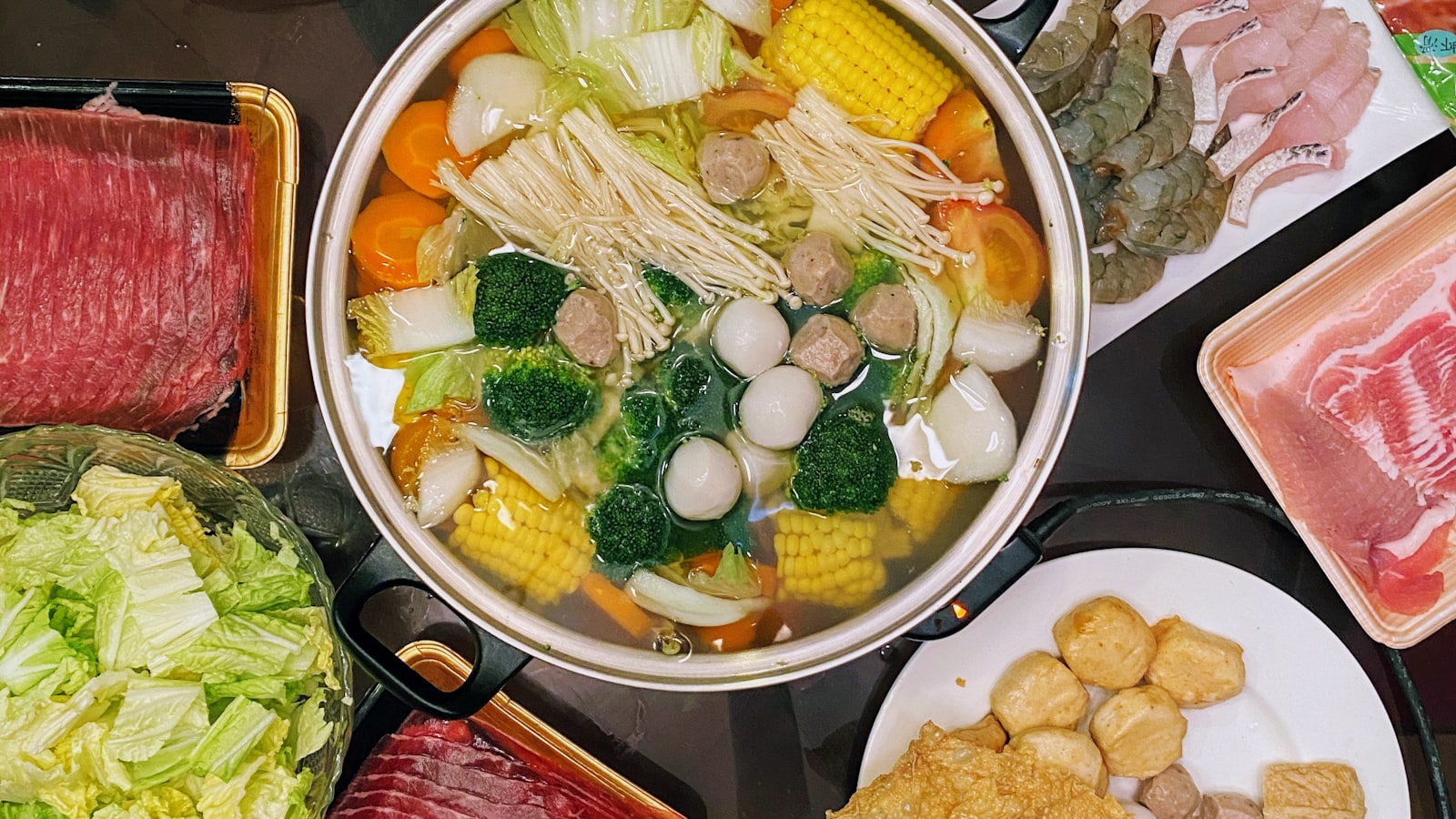
Chinese Hotpot Guide: How to Eat It Like a Local (2026)
How to eat Chinese hotpot as a tourist — picking a broth, what to order, the dipping sauce bar, and the social rules of the table.
Hotpot is China’s most social meal — a bubbling pot in the middle of the table, raw ingredients around it, and everyone cooking their own. Here’s how to eat it without a translator.
For many travelers, hotpot is the meal they remember most. It’s interactive, loud, and endlessly customizable. You control the spice, the ingredients, and the pace. This guide covers the pot, the order, the sauce, and the etiquette — so you can walk in and enjoy it from the first bite.
Where hotpot comes from
Hotpot’s spiritual home is Sichuan — Chengdu and especially Chongqing, where the red, oily, numbing-spicy broth is a point of pride. But every region has its own version: Beijing’s mutton hotpot uses a clear broth and sesame-based sauce, and Cantonese-style hotpot leans on light seafood broths. In 2026 you’ll find hotpot restaurants in every Chinese city, and the Sichuan-style is the one most visitors try first. See the Chengdu guide and Chongqing guide for where to eat it in its home territory.
The pot: choosing your broth
The single most important decision is the broth. The two options:
- Yuanyang guo (half-and-half): the safe choice — one side is a mild, savory stock (often tomato or mushroom-based), the other the spicy Sichuan broth. You get both, and non-spice-eaters can cook only in the mild side.
- Single pot: all one broth. If you’re after the full experience, a spicy red pot is authentic but intense; a clear or tomato pot is gentle.
If you’re unsure, order yuanyang. It’s the default for mixed groups and there’s zero shame in it.
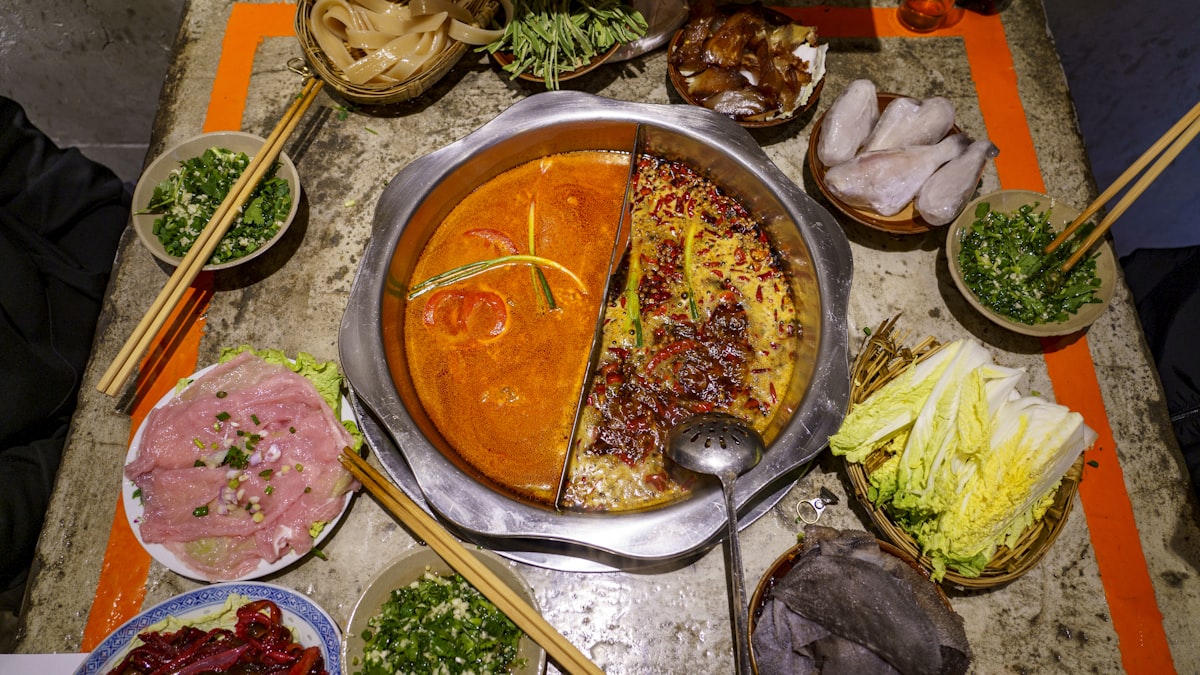
The half-and-half pot keeps a mild stock and the numbing-spicy Sichuan broth in one pot, so everyone at the table cooks at their own pace.
What to order
Hotpot is about raw ingredients you cook yourself. A good first order:
- Thin-sliced lamb or beef — the star; cooks in seconds.
- Mushrooms — enoki, oyster, or king oyster mushrooms.
- Greens — napa cabbage or water spinach.
- Tofu — soft tofu, fried tofu skin, or tofu puffs.
- Starch — sweet potato noodles, udon, or a small portion of rice.
- Balls — shrimp balls or fish balls, if you like them.
Portion sizes are small, so ordering several items for two people is normal. Many menus have pictures; pointing works fine.
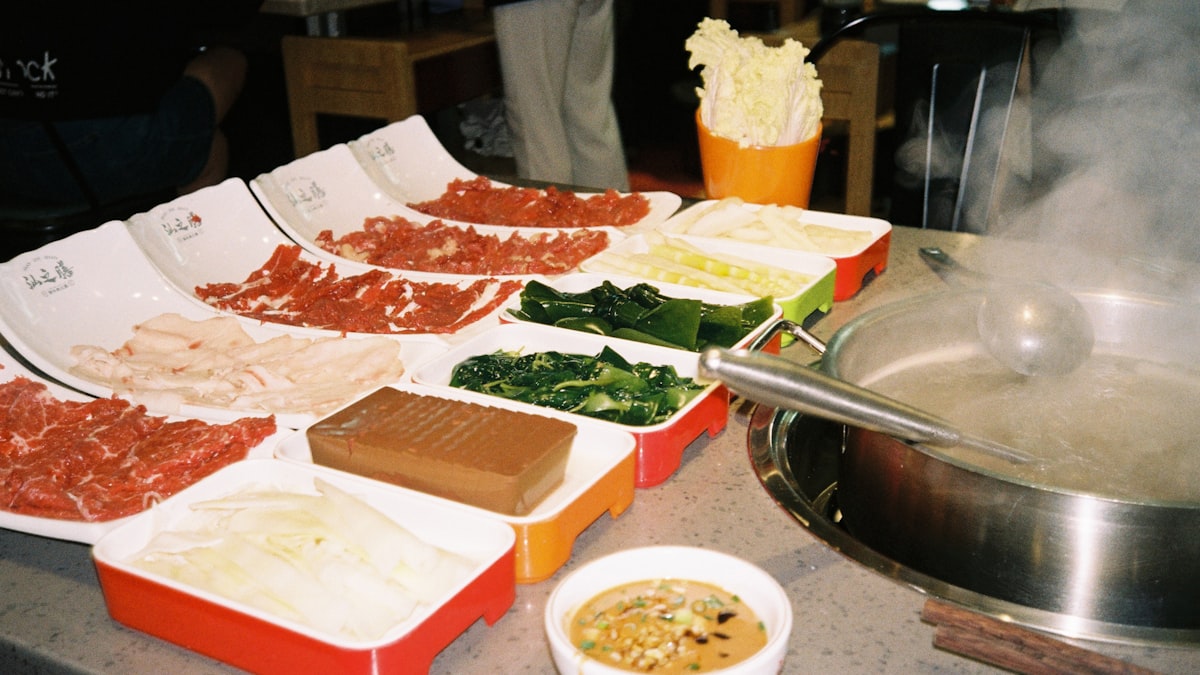
A typical hotpot order spreads raw ingredients around the pot — thin-sliced lamb and beef, mushrooms, greens, tofu and noodles.
The dipping sauce, decoded
The sauce bar is where you personalize the meal. A friendly starting formula:
- Base: sesame paste (in the north) or sesame oil (in the south).
- Add: minced garlic, chopped cilantro.
- Season: a splash of soy sauce or vinegar.
- Heat (optional): a little chili oil.
Start mild and add from there — you can always go back to the bar. In Sichuan, a popular style is a sesame-oil-and-garlic dip that cools the numbing spice.
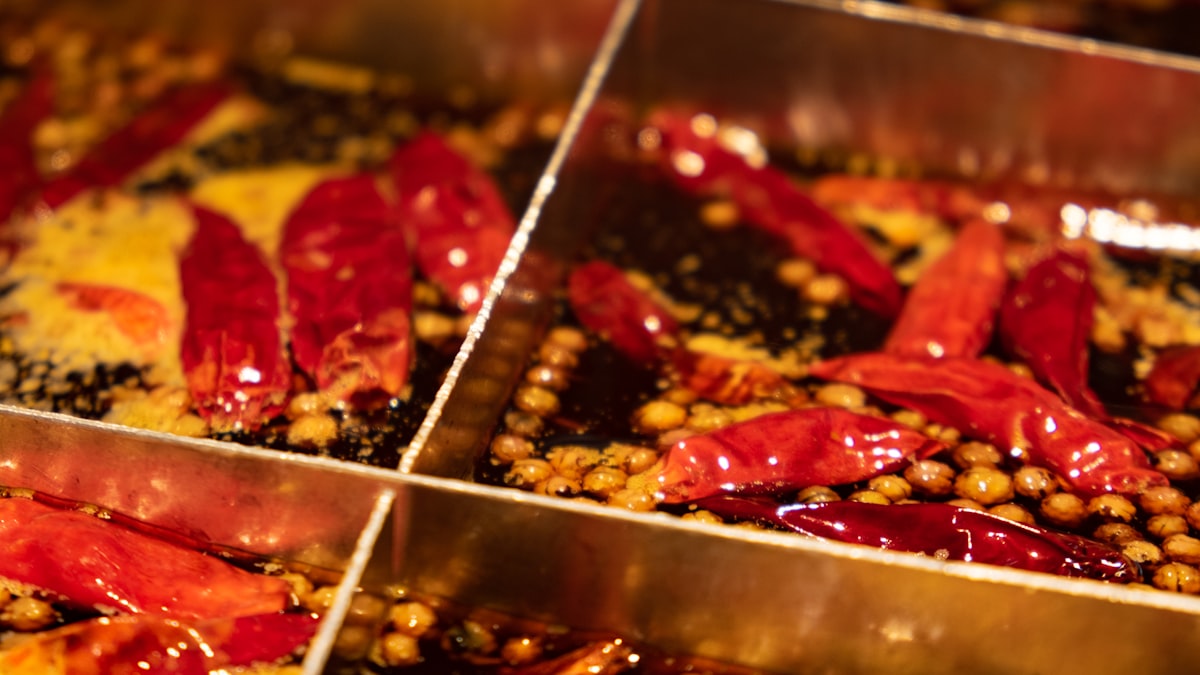
The self-serve sauce station is where you personalize the meal — sesame paste or oil, minced garlic, cilantro, and chili oil to taste.
The etiquette, briefly
- Use the serving spoon or ladle to take food from the shared pot, not your own chopsticks.
- Don’t stir or fish with your personal chopsticks — that’s what the metal tongs and slotted spoon are for.
- Cooking time matters: thin meat is seconds; vegetables a bit longer; noodles need the longest. When in doubt, follow what your companions do.
- It’s meant to be fun — messy fingers, long conversations, and refills are all part of it.
- No tipping is expected, and most places are cashless — have Alipay ready.
Vegetarian and allergy notes
Vegetarian hotpot is easy: order a clear or tomato broth, then load up on mushrooms, greens, tofu and noodles. For vegans, say ‘bu yao rou, bu yao ji dan’ (no meat, no egg) and watch for broth containing meat stock — ask for a vegetable stock. For allergies, carry a Chinese allergy card and double-check the spicy broth, which often contains peanuts in the oil.
What it costs
Hotpot is mid-priced. A per-person estimate of ¥60–150 covers a solid meal with several dishes — cheaper than a fancy restaurant, more than a noodle shop. Prices vary by city and restaurant tier. It’s one of the best value meals in China for the experience you get.
Where to start
If you’re in Chengdu or Chongqing, hotpot is the rite of passage. Elsewhere, look for a busy place with locals — high turnover means fresh ingredients. Ask for ‘yuanyang guo’, build a mild sauce, and enjoy the most social meal in China.
The social heart of the meal
Hotpot is less a dish than a way to sit together for an evening. The pot bubbles for the whole meal, so there’s no rush — you cook a few pieces, eat, talk, cook again. Conversation is the point as much as the food. That’s why hotpot restaurants are loud: laughter and chatting over a simmering pot is the whole atmosphere. Don’t be surprised if the table next to you is deep in a two-hour meal; that’s exactly the pace to match.
Hotpot vs other Chinese meals
Hotpot sits at one end of the Chinese dining spectrum. At the other are the quick solo meals — a bowl of noodles or a basket of dumplings — built for one person in twenty minutes. In between are the family-style tables of dishes to share. Hotpot is the most interactive and the most social: everyone cooks, everyone eats at their own pace, and the meal stretches as long as the conversation. It’s the meal you plan an evening around, not a quick stop.
In Chengdu vs Chongqing
The two spiritual homes disagree on details. Chengdu hotpot leans slightly milder and more fragrant, with a broader range of broths. Chongqing hotpot is the fire-breathing original — oilier, spicier, more aggressive, and often served with a whole block of solidified beef fat melting into the red broth. Both are unforgettable; the Chongqing version is the one spice lovers tell stories about. If you visit both cities, try hotpot in each — the comparison is half the fun. See the Chengdu guide and Chongqing guide.
A checklist before you go
- Yuanyang (half-half) pot for mixed spice tolerance.
- Thin-sliced meat cooks fastest — seconds, not minutes.
- Noodles last — save the starch for the end of the meal.
- The sauce bar is free rein — build it your way.
- Drink tea or beer — both cut through the richness.
- Pay by Alipay at the counter or table.
What a hotpot restaurant is like
Walk into a Sichuan hotpot place and the first thing you notice is the smell — chilies and Sichuan peppercorn, rich and smoky. The tables have a built-in burner or an induction plate, and the menu is often a long list of ingredients to tick. The pace is unhurried: you order, the pot arrives bubbling, and the meal unfolds over an hour or two. In Chengdu and Chongqing, hotpot is a social ritual that locals treat as a night out, not a quick dinner. See the Chengdu guide for recommended neighborhoods.
Common first-timer mistakes
- Ordering the pure-spicy pot first — start with yuanyang (half-half) unless you know you love heat.
- Over-ordering — hotpot ingredients are small, but a first order of four or five dishes for two people is plenty; you can always add.
- Cooking everything at once — thin meat cooks in seconds; if you dump it all in, it overcooks. Cook a few pieces at a time.
- Skipping the sauce bar — the sauce is half the experience; build one even if you’re not sure.
- Drinking nothing cold — a cold drink or tea cuts through the richness.
When to go
Hotpot is an evening meal in most of China — restaurants fill up from around 6pm. In Chengdu and Chongqing, late-night hotpot (9pm+) is a real scene for those who love it. Weekends and holidays are the busiest; book ahead at popular places. For a quieter experience, go early on a weekday evening.
Prices as of August 2026 — confirm current rates before you go.
Frequently Asked Questions
What is hotpot and why is it so popular in China?
Hotpot is a communal meal where a bubbling pot of broth sits at the center of the table and everyone cooks raw ingredients — thin-sliced meat, mushrooms, vegetables, tofu, noodles — in it themselves. It's wildly popular because it's social, customizable, and each person controls exactly what goes in their bowl.
Is hotpot too spicy for someone who doesn't eat spicy food?
Not if you order right. Ask for 'yuanyang guo' (half-and-half pot): one side a mild, savory stock, the other the numbing-spicy Sichuan broth. You cook only in the mild side and you're fine. Most hotpot restaurants offer this by default.
What should I order on my first hotpot?
A safe first order: thin-sliced lamb or beef (yangrou / niurou), enoki mushrooms, napa cabbage, tofu skin, sweet potato noodles, and maybe shrimp balls. For dipping, a sesame-paste-based sauce is the friendliest start — it cools and balances the heat.
How do I use the dipping sauce bar?
Most hotpot places have a self-serve sauce station. A classic base: sesame paste (or sesame oil in the south), garlic, chopped cilantro, a little chili oil if you like heat, and soy sauce or vinegar. Start mild and add from there.
Is there a table etiquette I should know?
Use the provided serving spoon or ladle to take food from the shared pot, not your own chopsticks. Don't dunk your chopsticks into the pot to fish — use the metal tongs or slotted spoon. It's fine to be messy; that's part of the fun.