
Dandong Guide (2026): The Border City & the Yalu River
Dandong, the border city on the Yalu River — the North Korea crossing, the Broken Bridge, the riverside, and how to plan a visit to China's frontier.
Dandong, Liaoning, China
Open an external map for this location.
OpenStreetMap Google Maps (opens externally)
Dandong is China’s border city with North Korea — standing on the Yalu River, looking across at the frontier’s other side. It’s a place of atmosphere and fascination, and a genuinely memorable stop in the northeast.
Few places in China are as fascinating as Dandong — the working border city where the Yalu River separates China from North Korea, and where you can stand on one bank and look across at the other. The river is narrow here, and the view of the North Korean town on the far bank is a constant, haunting feature of the city. For most travelers, that frontier experience is the draw — along with the bombed Broken Bridge, the riverside parks and the unique atmosphere of a city on the edge.
The frontier experience
- The Yalu River — the narrow river that separates China and North Korea; the defining feature of the city.
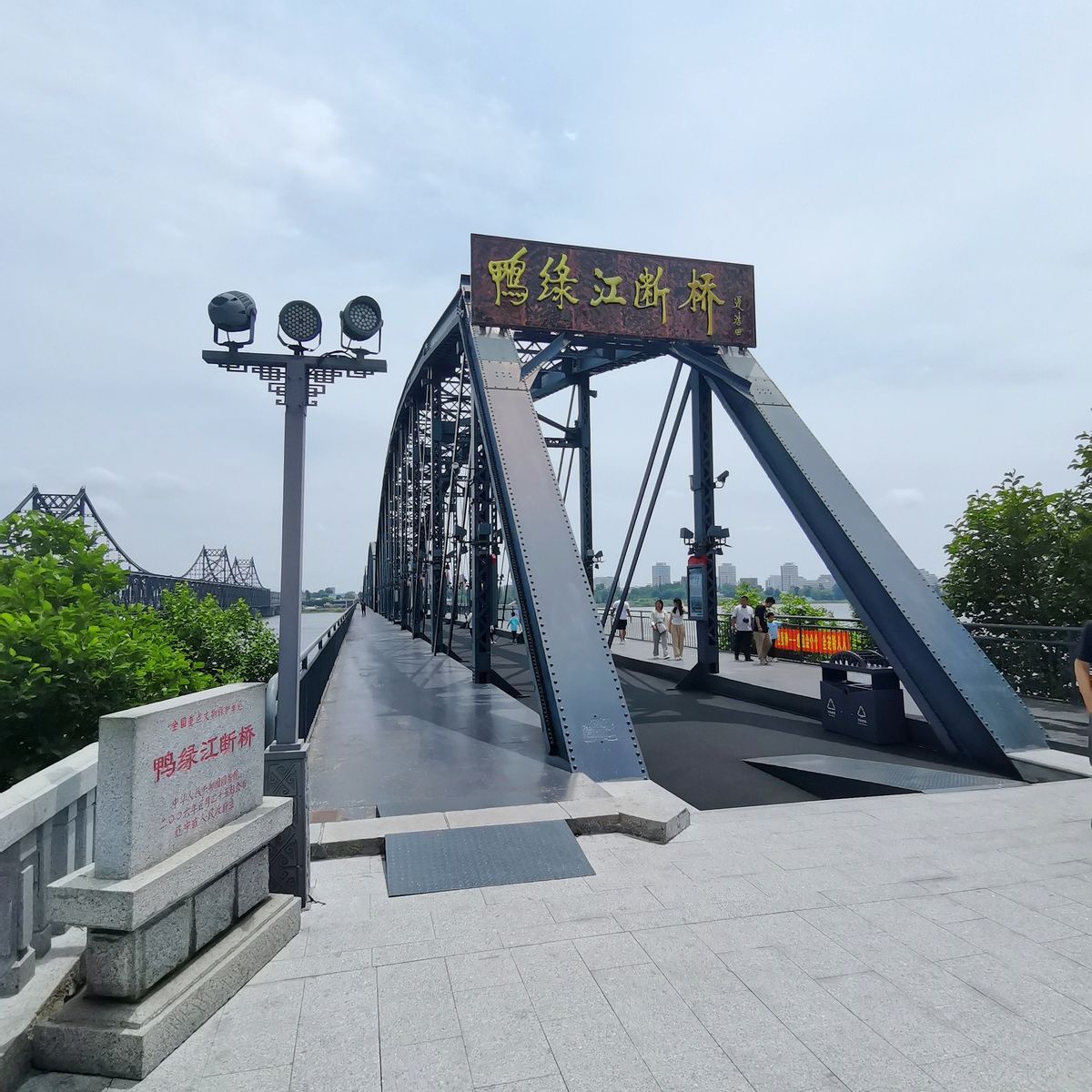
The Yalu River at Dandong, the border between China and North Korea.
- The view across — from the riverside, you look straight into North Korea: the town of Sinuiju, its buildings and its flag.
- The frontier atmosphere — a working border city, with the tension and the fascination of the edge.
The border is the reason to come — and the view across the river is unlike anything else in China.
The Broken Bridge
- The Yalu River Broken Bridge — the former road bridge, bombed in the Korean War and left as a memorial.
- Walk out on the surviving half — it ends abruptly mid-river, with the intact bridge and North Korea beyond.
- The landmark — the city’s defining monument, and the best place for the border views.
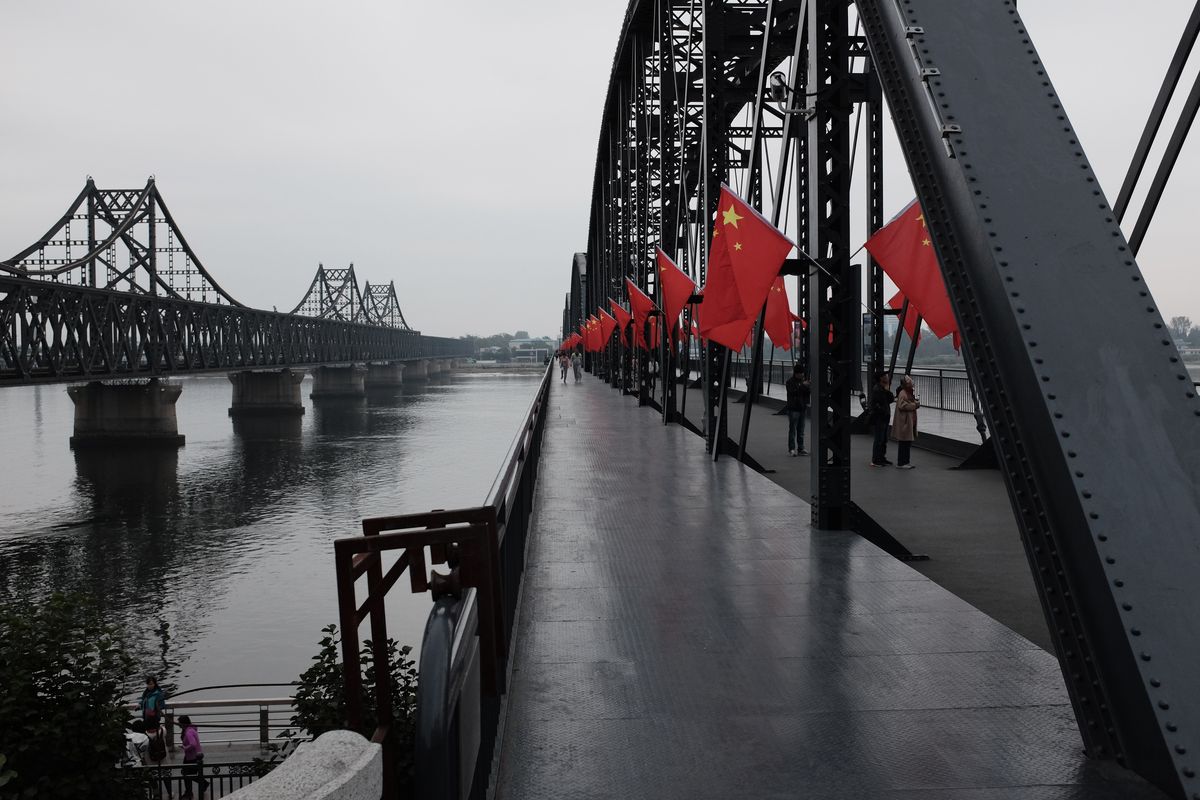
The Yalu River Broken Bridge, bombed in the Korean War and left as a memorial.
The Broken Bridge is the memory of the Korean War made physical — and a powerful place to stand.
A day in Dandong
- Morning — the Broken Bridge and the riverside; the border views and the memorial.
- Afternoon — the riverfront parks and the viewpoints along the bank.
- Evening — a riverside seafood dinner or the local night market.
This rhythm gives the frontier experience — the river, the view and the atmosphere — in a single day.
Practical notes
- Getting there — high-speed rail from Shenyang (1.5 hours), Beijing, Dalian and other cities.
- Getting around — the center and the riverside are walkable; taxis and ride-hailing for the longer hops.
- Best season — spring and autumn; the summers are mild, the winters cold and the river sometimes frozen.
- Get connected — set up Alipay and an eSIM for payment and tickets.
Combining Dandong with the northeast
Dandong works as a day trip from Shenyang or a stop on a northeast route: Shenyang (the Manchu capital), Dandong (the border) and Dalian (the coast) are a natural sequence. See our Changbaishan guide for the wider northeast, and the winter route for the cold-season trip. It’s a region of contrast — great cities, sacred mountains and now the frontier.
The history of the Yalu River border
The Yalu River has been a border of one kind or another for centuries, but Dandong’s modern story is tied to the twentieth century. The river marked the boundary between China and the Korean peninsula through the Qing dynasty and the Japanese occupation, when the railway bridge built in 1911 linked Manchuria to the Korean peninsula and made Dandong (then Antung) a frontier trading city. In the Korean War (1950–53) the bridges across the Yalu were the vital supply lines between China and the North Korean front — which is why the American bombing campaign targeted them, leaving the road bridge broken that you see today. The intact railway bridge next to it was repaired and remains in use. Since the war, the border has closed and opened in fits: crossing to Sinuiju by train or foot has been possible at various periods, but for most travelers in recent decades the experience is not crossing — it is looking. Standing on the Chinese bank, with the North Korean town close enough to see individual buildings, is a reminder that the border is not an abstraction but a physical line you can walk right up to.
Photographing the border
Getting a good view across the Yalu is easy, but getting a good photograph takes a little thought. The riverside promenade and the parks give you the classic straight-across view of Sinuiju — the low skyline, the Juche-style tower, the flag. A telephoto lens or the zoom on your phone makes a striking difference, because the far bank is close enough to read but still has detail worth pulling in. The Broken Bridge itself is the other essential shot: walk out to the end where the structure stops mid-river, and frame the surviving half against the intact bridge and the Korean shore beyond. The best light is early morning, when the river is often calm and the far bank catches the sun, or late afternoon for a warmer tone. Ask locally about the rules before flying a drone anywhere near the river — the border zone is sensitive, and the regulations around it are enforced.
A riverside walk
The most rewarding way to spend a Dandong afternoon is simply walking the riverbank. The promenade runs along the Yalu for several kilometers, past the Broken Bridge and the memorial park, through open stretches where the water and the far shore are the whole view.
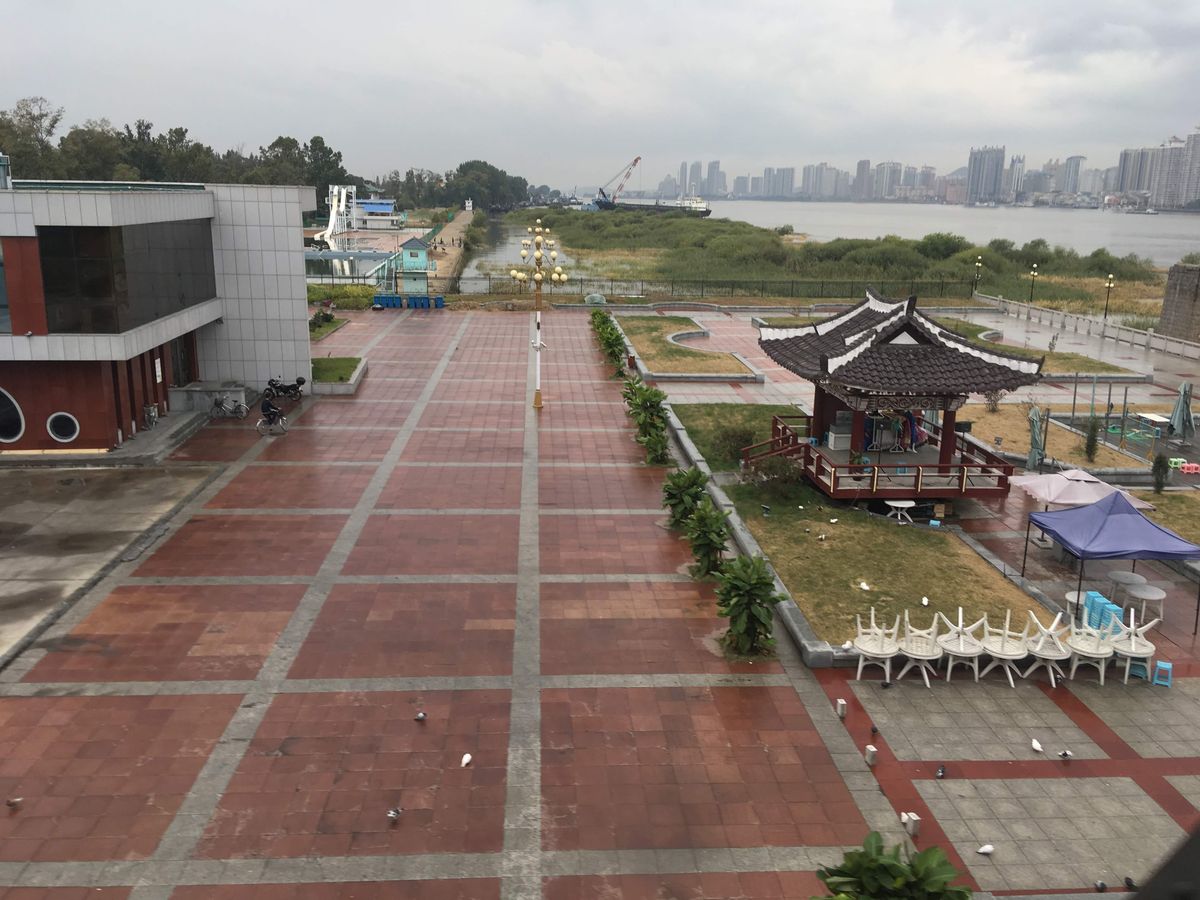
The Sinuiju riverfront on the far bank, seen from Dandong across the Yalu.
Families come down in the evening, and the atmosphere is relaxed and social — people strolling, fishing, playing cards, watching the lights come on across the river. The contrast is the point: on one bank, an ordinary Chinese evening out; on the other, the famously dark and quiet North Korean shore. It is the kind of walk that needs no sights, because the situation itself is the sight. Near the river you will also find the Dandong Museum, which covers the local history and the Korean War period, and the food streets behind the promenade where the city’s evening life happens.
Budget and practicalities
Dandong is a very affordable city. The Broken Bridge entry is around 30 RMB, the riverside parks are free, and a good seafood meal on the riverfront costs about 50–100 RMB per person — the local seafood, from the port and the river, is the food highlight. A comfortable hotel near the center runs 200–350 RMB a night. The center and the riverside are walkable; taxis and ride-hailing handle the station and the longer hops. Set up Alipay and an eSIM before you arrive so you can pay by QR code everywhere and stay connected for translation and maps. Note that the city does have a border-town character — some areas near the river are sensitive, so photograph what is visibly public and follow local instructions, and you will have no trouble.
Common mistakes to avoid
The most common mistake in Dandong is treating it as a border to cross rather than a place to experience — do not expect to visit North Korea; the draw is the view and the atmosphere, and visitors who plan around that leave satisfied. A second mistake is rushing: the riverside rewards time, and a drive-by visit at the Broken Bridge misses the evening atmosphere that is half the appeal. A third is skipping the walk along the promenade in favor of a single viewpoint; the light and the mood change along the bank, and the longer walk is the better experience. Finally, be thoughtful with photography — the border is a working frontier, and respectful, sensible photo-taking from the public riverside is fine, but flying drones or climbing restricted structures is neither appropriate nor allowed.
The bottom line
Dandong is China’s border city with North Korea — a place of atmosphere and fascination where the Yalu River separates two worlds. Walk the Broken Bridge, stand on the riverside looking across, and feel the frontier that defines the city. It’s not a big-sights destination — it’s an experience of place, and one of the most memorable stops in the northeast.
What to eat in Dandong
Dandong is a port city on the river, and seafood leads the local table. The Yalu and the nearby coast supply fresh river fish, clams, shrimp and crab, served simply steamed or grilled along the riverfront — the food highlight of a visit. The city’s Korean border history adds a distinctive twist: you will find Korean-style barbecue and cold noodles (naengmyeon) in the restaurants near the river, a legacy of the cross-border community that gives Dandong a food scene unlike most Chinese cities. For a quick meal, the streets behind the promenade hold noodle shops and snack stalls serving the same robust northeastern food as the wider region — dumplings, stews and grilled skewers. Prices are low: a seafood dinner on the riverfront typically runs 50–100 RMB per person. As everywhere, pay by Alipay and use a translation app for menus.
When to go, season by season
Dandong’s climate follows the northeast pattern of four distinct seasons. Spring (April–May) and autumn (September–October) are the sweet spots — mild days, clear light for the border views and comfortable walking along the river. Summer (June–August) is warm and humid but pleasant by the water, and the riverside evening scene is lively; it is also the peak domestic travel period. Winter (November–March) is cold, and the Yalu can freeze over — a dramatic sight, with the North Korean shore white across the ice, but the riverfront walks need serious warm clothing. The border views themselves are available year-round; only the comfort of the walk changes. A single day covers the essentials in any season, though the calm light of the shoulder months is best for photography.
Last updated: August 2026. Border access and local conditions change — confirm current details before you go.
Frequently Asked Questions
What is Dandong known for?
Dandong is China's **border city with North Korea** — the largest city directly on the frontier, standing across the Yalu River from the North Korean town of Sinuiju. Its defining experience is simply **standing on the river, looking into North Korea** — a fascination for most travelers. The Broken Bridge (bombed in the Korean War), the riverside parks and the frontier atmosphere make it a unique, memorable stop in the northeast.
Is Dandong worth visiting?
Yes — for the sheer fascination of standing on the Chinese side of the world's most mysterious border. You can look across the Yalu River into North Korea, see the Korean town on the far bank, photograph the Broken Bridge, and feel the frontier atmosphere that no other Chinese city has. It's not a big-sights city — it's an atmosphere and a place — and it's a genuinely memorable day on any northeast route.
Can you see North Korea from Dandong?
Yes — clearly. The Yalu River is narrow here, and from the riverside you look straight across into **North Korea** — the town of Sinuiju, its buildings, its riverside, and its flag. The view is a constant feature of the city: from the riverfront promenades, from the Broken Bridge, and from the viewpoints along the bank. It's a haunting, fascinating sight and the reason most people come.
What is the Broken Bridge in Dandong?
The **Yalu River Broken Bridge** is the former road bridge across the river, bombed during the Korean War (1950–53) and left in its damaged state as a memorial. You can walk out onto the surviving half, which ends abruptly in mid-river — with the intact bridge and North Korea visible beyond. It's the city's landmark, a powerful war memorial, and the best place for the border views.
How do I get to Dandong?
**High-speed rail** connects Dandong to Shenyang (about 1.5 hours), Beijing, Dalian and other cities. It works as a **day trip from Shenyang** or as a stop on a northeast route — Shenyang, Dandong and Dalian are a natural sequence. The border parks and the riverside are close to the station and the center, easy to cover on foot or by a short taxi ride.
How much time do I need in Dandong?
**One day** is the right amount — the riverside and the Broken Bridge in the morning, the border viewpoints and the riverfront parks in the afternoon, and a riverside meal or a night market in the evening. It's a compact, atmospheric city; a full day gives you the frontier experience without rushing. It works well as a day trip from Shenyang or as a short stop.
Is there anything else to do in Dandong?
Beyond the border, Dandong offers: the **riverfront promenade** and the parks along the Yalu, the **local seafood** (it's a port city, with a good riverside food scene), the **Antung railway station** history, and easy access to the scenic **Great Wall eastern end** region nearby. But the border is the draw — the river, the view across, and the frontier atmosphere are what make Dandong worth the stop.