
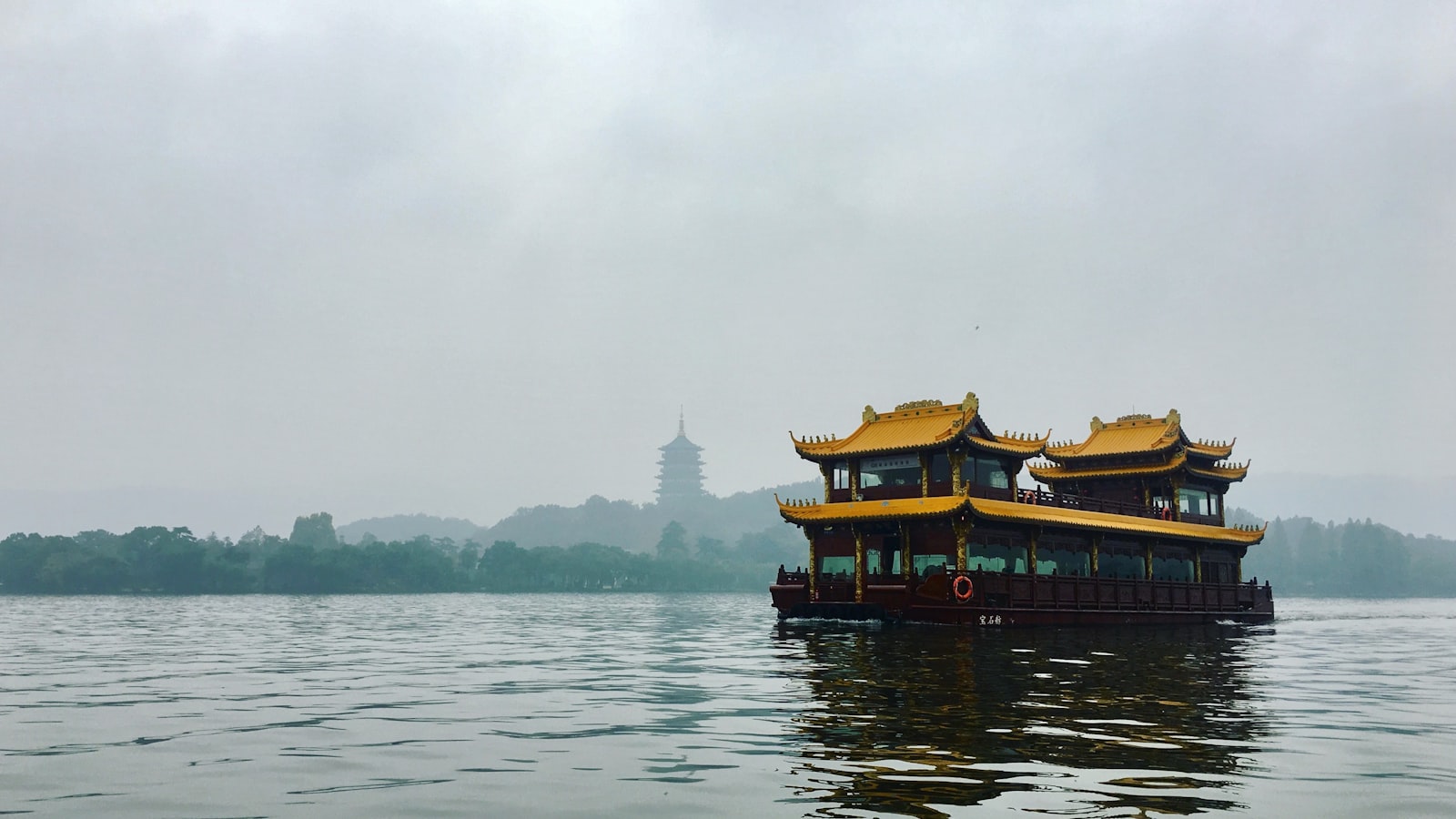
Zhejiang Travel Guide (2026)
Plan Zhejiang: Hangzhou's West Lake, temples and tea hills, plus water towns and the best seasons, transport and itineraries.
OpenStreetMap Google Maps (opens externally)
Zhejiang is the province of West Lake — a landscape of willow-lined waterways, tea-covered hills, and canal towns that has inspired Chinese poets for a thousand years.
The province’s calling card is Hangzhou, whose West Lake is arguably China’s most famous piece of scenery — a UNESCO-listed cultural landscape of causeways, islands, and pavilions that set the standard for Chinese garden and landscape design. Around it stretches a province of surprising variety: the Qiantang River’s famous tidal bore, Longjing tea hills, ancient canal water towns, and a long coastline. For most travelers the plan is simple: Hangzhou, its lake, and the nearby towns. This hub guide covers exactly that.
Overview
Zhejiang province lies on China’s east coast, directly south of Shanghai and Jiangsu, curving around the southern shore of Hangzhou Bay. Its landscape shifts from the flat, watery plain around Hangzhou to the mountains and coastline of the south. Historically it was a centre of silk, tea, and scholarship — Hangzhou served as the capital of the Southern Song dynasty, and Marco Polo described it as the finest city in the world. Today it is one of China’s wealthiest provinces, and its capital, Hangzhou, is both a major tech hub (home to Alibaba) and a preserve of classical Chinese aesthetics. That duality is part of the appeal: you can sip tea in a Song-dynasty landscape in the morning and ride the metro past glass skyscrapers in the afternoon.
Best time to visit
- March to May is the classic window: blossom around West Lake, the first Longjing tea harvest, and mild weather.
- September to November is equally good — comfortable, with clear autumn light.
- Summer (June to August) is hot, humid, and rainy, though the lake offers breeze and the evenings are pleasant.
- Winter (December to February) is cold and frequently misty — atmospheric for photography, but chilly for long walks.
Getting there and getting around
By air: Hangzhou Xiaoshan International Airport (HGH) is a major hub with many domestic and international connections, and most visitors find it simpler to fly into Shanghai and ride the short high-speed link instead.
By high-speed rail: Hangzhou is roughly 45 minutes to an hour from Shanghai by high-speed rail, and connects onward to Nanjing, Suzhou, and the rest of the national network. It is one of the easiest add-on destinations in China, and the frequent trains mean you can even visit West Lake as a long day trip from Shanghai.
Within Zhejiang: Hangzhou’s metro covers the city and West Lake approaches. Day trips to the water towns (Wuzhen, Xitang) run by bus or private car; high-speed rail reaches Shaoxing, Ningbo, and other cities along the coast. Buses to Longjing village and the tea hills leave from the city centre. If you are coming from Shanghai, note that Hangzhou has two main rail gateways — Hangzhou East and Hangzhou West — so check which station your ticket uses and plan the metro connection from there.
Main destinations
- Hangzhou — the capital and the reason most travelers come: West Lake with its causeways and islands, the Lingyin Temple complex in the hills, the Longjing tea fields, and the Grand Canal quarter. Two to three days is the sweet spot.
Suggested itinerary
- Day 1 — Hangzhou: walk or cycle the north shore of West Lake — Broken Bridge, Bai Causeway, Solitary Hill — then boat out to the islands; finish with dinner by the lake.
- Day 2 — Hangzhou: morning at Lingyin Temple and the surrounding hills; afternoon in the Longjing tea village for a tasting and a walk through the terraces.
- Day 3 — water town day trip: take a bus or tour to Wuzhen or Xitang; stay overnight if you can, when the day-trippers have left the canal lanes quiet.
- Day 4 — optional: the Qiantang River tidal bore (seasonal), Shaoxing’s canals and yellow wine, or onward by train to Shanghai, Suzhou, or Nanjing.
Practical tips
- Go around the lake on foot or by bike. West Lake is free and best at a slow pace; rent a shared bike and loop the north and east shores to dodge the crowds.
- Time the tea hills. Longjing village is lovely year-round but liveliest around the spring harvest; tastings are common and reasonable.
- Book the water town overnight. Wuzhen’s official hotels are the only way to sleep inside the canal district — book well ahead if that’s your plan.
- Check the tide schedule. The Qiantang tidal bore is spectacular but happens at specific times and is best viewed from designated spots; don’t improvise riverbank viewing.
- Connectivity first. Set up a VPN or eSIM and Alipay before you arrive so booking apps, bikes, and payments work from the start.
Food & drink
Zhejiang (Zhe) cuisine is delicate and fresh — light seasoning, river fish, bamboo shoots and the province’s famous vinegar. In Hangzhou, the classics are Dongpo pork (slow-braised, melting and sweet), West Lake fish in a sweet-sour vinegar sauce, and beggar’s chicken wrapped and baked in clay; Longjing shrimp, stir-fried with the local tea leaves, is the most elegant of the lot. Breakfast skews toward savory: fried dough sticks, soy milk and xiaolongbao soup dumplings. To the east, Shaoxing contributes yellow rice wine, drunk warm and used in cooking; Ningbo is seafood country. The tea hills of Longjing make their own claim — the spring harvest is celebrated with tastings and, increasingly, tea-picking experiences aimed at visitors.
Beyond Hangzhou
Hangzhou is the anchor, but the province is easy to explore along its rail and water networks. The canal towns of Wuzhen and Xitang, within an hour or two of the city, are the classic side trips — stone bridges, boat lanes and lantern-lit evenings, best after the day-trippers leave. Shaoxing, about 20 minutes by high-speed rail, is the hometown of Lu Xun and a gentler canal city, known for yellow wine and calligraphy heritage. Ningbo, on the coast, combines an old port quarter with one of China’s oldest private libraries, the Tianyi Pavilion. For a slower spiritual stop, the Buddhist island of Putuoshan lies offshore, a short ferry from the mainland and a major pilgrimage site. Each is a plausible day trip or overnight from Hangzhou.
Tea, silk & the Grand Canal
Zhejiang’s landscape is inseparable from two industries that made it rich. Longjing (Dragon Well) tea is China’s most famous green tea, grown on the terraces just west of West Lake; the village of the same name is the place to taste it in season and watch leaves being pan-fired by hand. Silk was historically the region’s other staple — Hangzhou’s silk museum traces the trade that put the city on the map, and the province still produces much of China’s silk. Both stories connect through the Grand Canal, whose southern end lies at Hangzhou; a walk along its wharf quarter, or a short boat ride, is a reminder of how this now-gentle lake town was once a commercial empire’s engine room.
Hangzhou’s lakeside teahouses serve Longjing by the pot with snacks, and the spring harvest is the one time the tea truly lives up to its reputation. Putuoshan deserves an overnight rather than a rushed day trip — the temple rituals begin early and the ferry schedule rewards patience. In season, the Qiantang River’s tidal bore near Hangzhou draws crowds; time it with the official schedule and a designated viewing point.
Last updated: August 2026. Train times, water-town admission and tide viewing schedules change — confirm before you go.
Frequently Asked Questions
How many days do I need in Hangzhou?
Two to three days covers West Lake, the temples, and a day trip or two. Add a day for a water town like Wuzhen or Xitang, or for the tea hills of Longjing. Many travelers do Hangzhou as an easy add-on to Shanghai.
When is the best time to visit Hangzhou?
Spring (March to May) is the classic season — blossom, fresh tea, and mild weather. Autumn (September to November) is equally lovely. Summer is hot and humid, and winter is cold and often misty, though a foggy West Lake has its own classic atmosphere.
How do I get from Shanghai to Hangzhou?
High-speed rail takes roughly 45 minutes to an hour, with trains running frequently through the day. It's one of the easiest day-trip or side-trip connections in China, and both cities have metros to get you to the station.
What should I do at West Lake?
Walk or cycle the lakeside paths, take a boat across to the islands, watch the sunset from the Broken Bridge area, and catch the evening fountain show. The lake is free to wander — the charm is in the scenery, not one single attraction.
Is a water town worth the trip?
If you've never seen a Chinese canal town, yes — Wuzhen and Xitang offer canals, stone bridges, and traditional houses within an hour or so of Hangzhou. They can get busy, so staying overnight after the day-trippers leave is the classic trick.