
Hohhot Travel Guide (2026): Temples, Grassland & Mongol
Hohhot, the capital of Inner Mongolia — the Dazhao Temple, the Five Pagoda Temple, the Zhaojun Tomb and day trips to the steppe, plus the best season to go.
OpenStreetMap Google Maps (opens externally)
Hohhot is the gateway to the Mongolian steppe — a working Tibetan-Buddhist temple city where yurts, horse riding and salted milk tea are a couple of hours away. It’s China’s capital of Mongol culture, and it feels like nowhere else.
Most travelers treat Inner Mongolia as a stop on the way to somewhere else, but Hohhot — the autonomous region’s capital, whose Mongolian name means “Blue City” — deserves its own couple of days. Within the city are a string of genuinely distinctive sights: a major working lamasery, a curious diamond-throne pagoda with an astronomical chart, and the ancient tomb of one of China’s most famous peace brides. And on the edge of the city begins the landscape people cross China to see: rolling grassland where you can ride horses at sunset and sleep in a yurt under a sky full of stars. Here’s how to plan it.
The essentials
- Days needed: 2 days for the city; 3 if you add a grassland overnight.
- Getting there: high-speed rail from Beijing in about 2–2.5 hours, from Datong in about 2 hours; flights from across China to Hohhot Baita Airport.
- Best season: June–September, when the steppe is green and the Naadam festival (mid-July) is on.
- Base for: the Inner Mongolia grassland and desert route.
Why Hohhot matters
Hohhot is the heart of Inner Mongolia, the vast autonomous region that stretches across China’s north in an arc of steppe, desert and grassland. The city itself was founded in the late 16th century by Altan Khan, a Mongol ruler who allied with the Ming dynasty, and it grew around the lamaseries he built — which is why the city’s oldest monuments are Tibetan-Buddhist temples rather than the pagodas and pavilions you find further south.
That Mongol heritage is what makes Hohhot feel different from any other Chinese capital. The language, the food, the festivals and the landscape all point north to the steppe rather than south to the Chinese heartland. For a visitor, the practical takeaway is simple: the city’s sights tell the story of Mongol culture and its meeting with Chinese history, and a short drive out of town puts you in the grassland itself.
The Dazhao Temple & the old quarter
The anchor of any Hohhot visit is Dazhao Temple (大召寺), the largest and most important lamasery in the city. Founded in the late 16th century — about the same time the city was established — it’s a working Tibetan-Buddhist (Gelug) temple, with monks in residence and a lively circuit of worship around its halls. The main hall houses a huge silver Buddha statue, which gives the temple its full name, the “Temple of the Great Recumbent Buddha.”
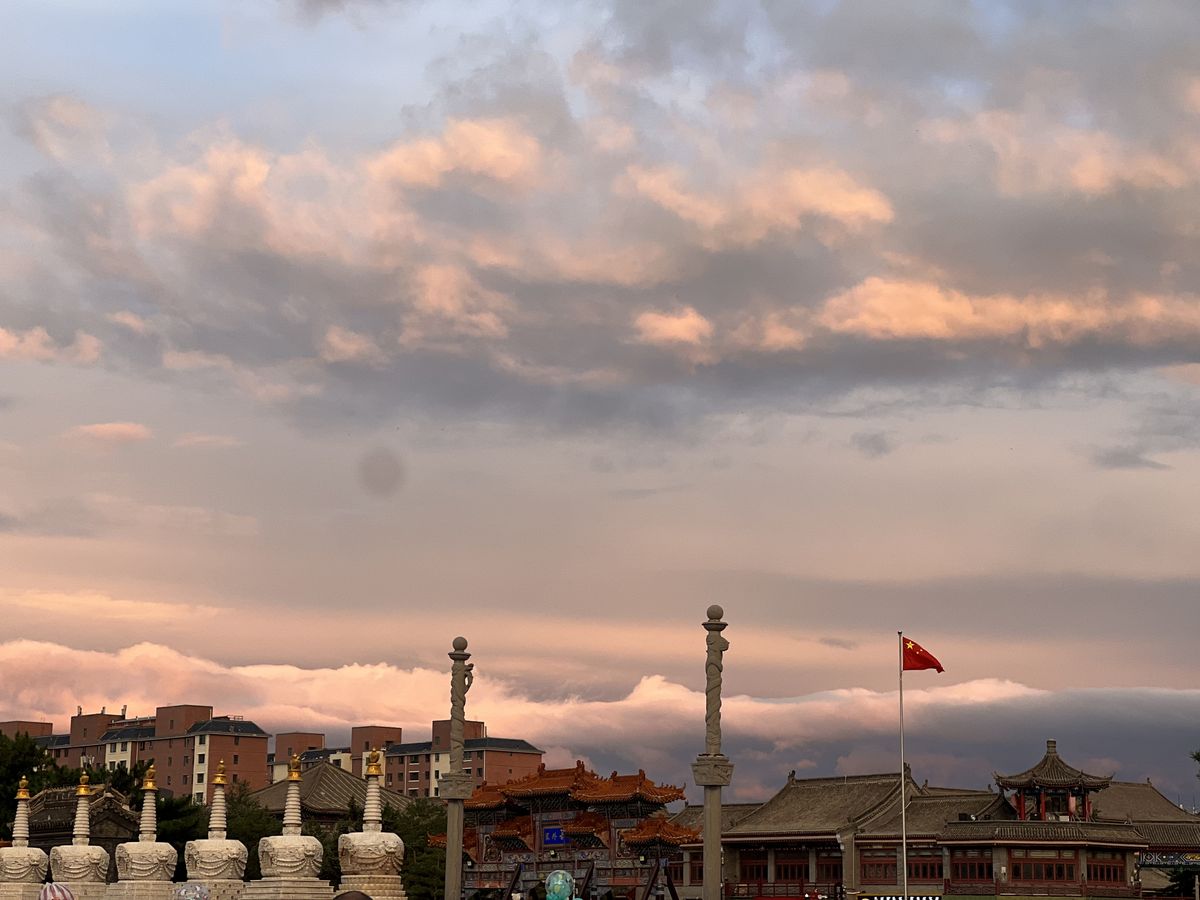
Dazhao Temple is a working Tibetan-Buddhist lamasery in the heart of Hohhot’s old quarter.
Allow an hour or two, and leave time to wander the streets around it. The old quarter here is the most atmospheric part of the city — tea houses, souvenir stalls selling Mongolian knives and throat-singing recordings, and the Sai Shang Old Street running off the temple square. It’s compact and walkable, and it’s where the city’s Mongol character is most visible. Admission to the temple is roughly ¥35 (prices change).
The Five Pagoda Temple & the museums
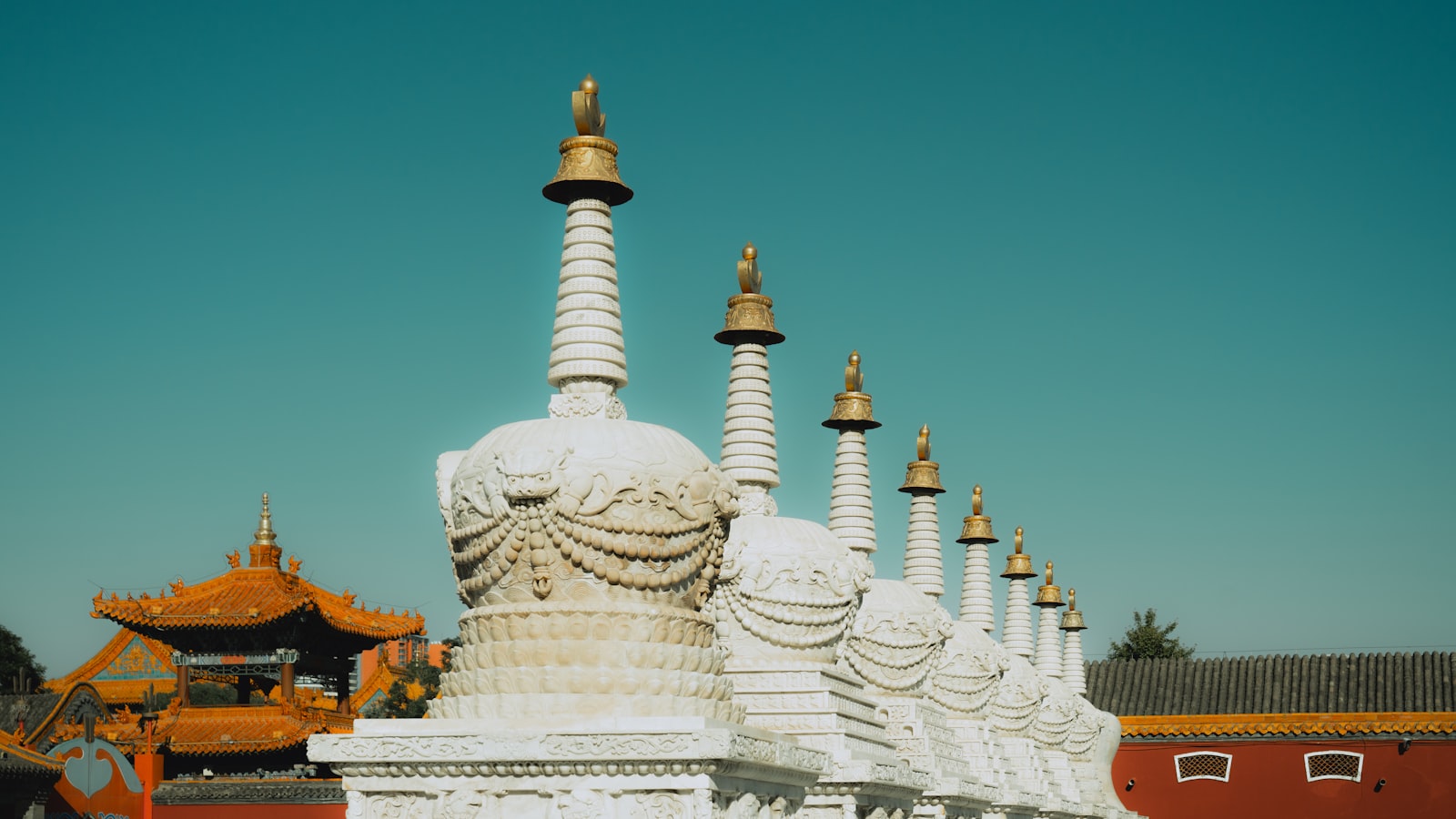
A short ride away is one of the most curious buildings in China. The Five Pagoda Temple (五塔寺), formally the Diamond Throne Pagoda of Ciyin Temple, is a Qing-dynasty brick stupa built in the 1720s: a square pedestal carrying five small towers, its entire surface densely carved with Buddhas, Sanskrit script and decorative reliefs. On the rear wall is an engraved astronomical chart — a star map carved in stone, a rarity in China — which is the pagoda’s claim to fame. It’s a small, quiet site, worth about 45 minutes.
For a deeper dive into the region, the Inner Mongolia Museum (内蒙古博物院) is excellent and free (reservation required): dinosaur fossils — Inner Mongolia is one of the world’s great fossil regions — Mongol history from Genghis Khan onward, and the culture of the grassland peoples. Also worth a look is the Xilituzhao Palace, a grand lamasery complex that was once a residence for living Buddhas. Budget a couple of hours for the museum if you like dinosaurs or history.
The Zhaojun Tomb
About 9km south of the center stands the Zhaojun Tomb (昭君博物院), known as the “Green Tomb.” It’s the reputed burial mound of Wang Zhaojun, the Han-dynasty court lady who, in 33 BC, was married to the Xiongnu ruler Huhanye to seal a peace treaty — one of the most famous stories of diplomacy-by-marriage in Chinese history, and a symbol of Han and Mongol harmony that both sides still celebrate.
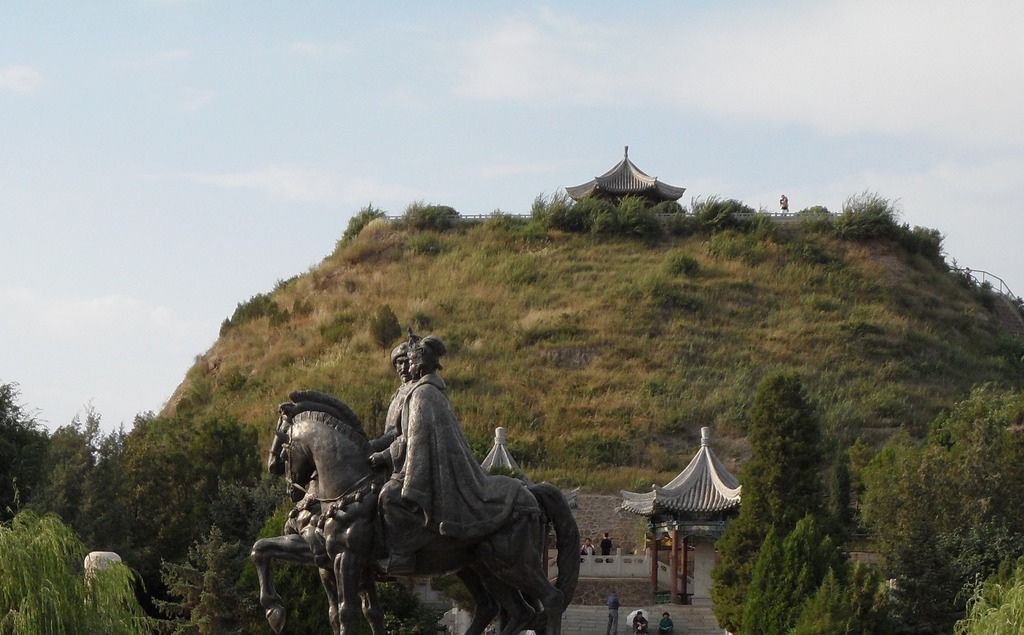
A statue at the Wang Zhaojun Tomb — a memorial to the Han dynasty peace bride, just south of Hohhot.
The site is a large landscaped park built around a big grass-covered tumulus, with museum halls telling Wang Zhaojun’s story and its legacy. It’s a pleasant half-day outing, easily combined with a grassland trip if you’re heading north anyway. Admission is around ¥50–60 (prices change). Note that some of the presentation is museum-crafted rather than archaeological — the mound’s association with Zhaojun is traditional, not proven — but the site is genuinely moving for the story it tells.
The grassland day trip
The reason most people come to Hohhot is just beyond the city: the grassland. The classic choice is Xilamuren (希拉穆仁), about 2 hours north, a broad steppe dotted with yurt camps, horses and the occasional white stupa. A standard day trip runs roughly like this: drive out in the morning, take a horse ride across the steppe (gentle and guided for beginners), a late-afternoon walk to a viewpoint, and — if you stay overnight — a bonfire, a tasting of Mongolian food, and a night sky that is among the best in China.
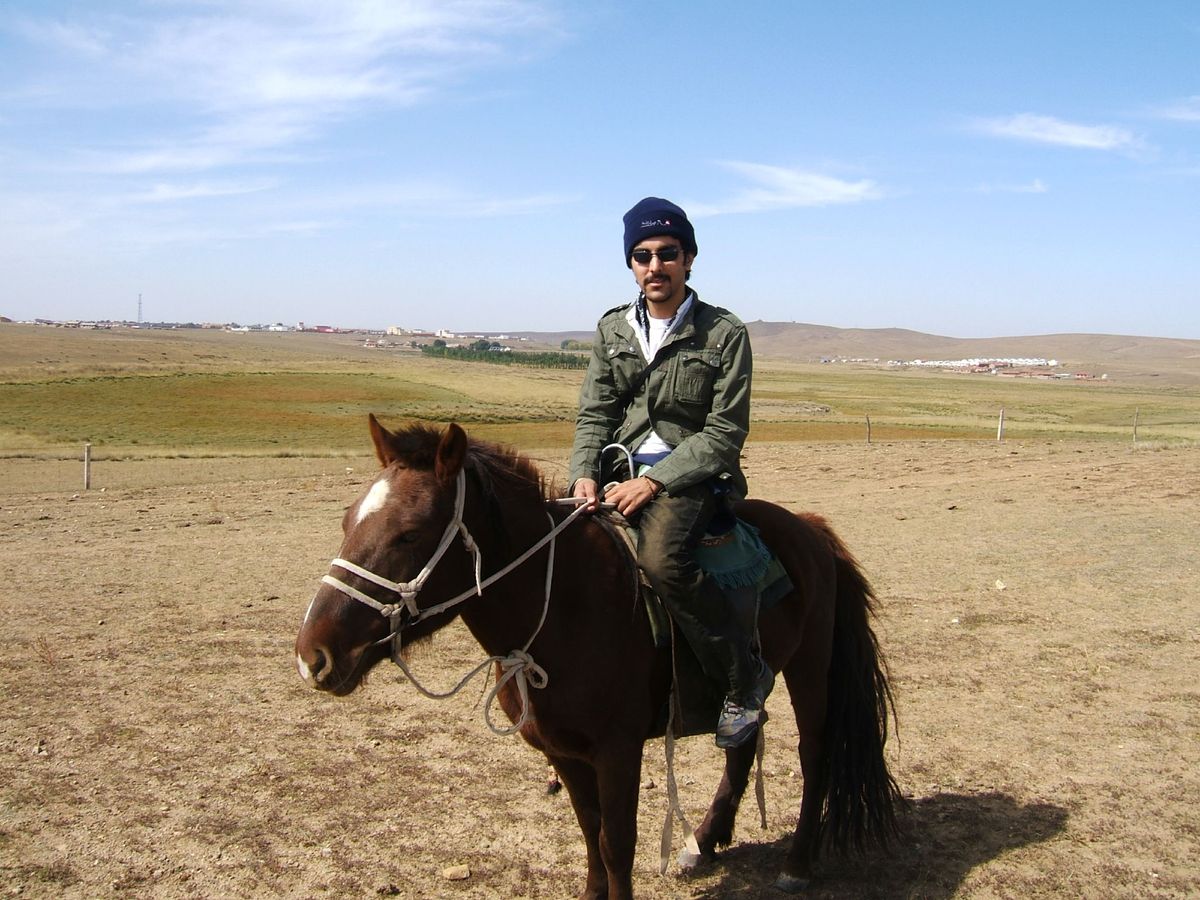
Horse riding on the Xilamuren grassland — the classic Inner Mongolia experience, about two hours from Hohhot.
- Xilamuren — the closest good grassland (~90km, about 2 hours); the practical pick for a one-night visit.
- Gegentala — further north (~150km) and larger, with a big festival ground; quieter feel, longer drive.
- Huitengxile — an alpine flower meadow with wind turbines to the east (~130km), lovely in July.
Organized day trips and overnight packages from Hohhot handle transport, meals and the yurt — the easiest way to do it, since public buses to the grassland are limited. Book ahead in July and August, when the camps fill.
The Naadam festival
If your dates allow, plan around Naadam, the great Mongol festival of the “three manly sports” — horse racing, wrestling and archery. It falls in mid-July across Inner Mongolia, and Hohhot and the nearby grasslands mark it with performances, opening ceremonies in colorful deel robes, and a festive, celebratory atmosphere. It’s the single best time to experience Mongol culture as a living tradition. Hotels and camps book out, so reserve well ahead.
What to eat: Mongolian food
Hohhot’s food is a dramatic change of pace from the rice-and-stir-fry China of the east. The table is built on lamb and dairy:
- Milk tea (nai cha) — the signature drink: salty, buttery tea, often with dried cheese, fried rice and milk skins stirred in. An acquired taste, and worth acquiring.
- Hand-grabbed lamb — big chunks of lamb boiled simply, eaten with your hands and a knife; the purest expression of the region’s food.
- Roasted whole lamb — the celebratory dish, roasted over fire and carved at the table; order it with a group.
- Mongolian yogurt, cheese and milk skins — sold everywhere, and excellent.
- Lamb hotpot and barbecue — the other pillars, especially in the cooler months.
Hohhot also has a large Hui Muslim community, so the halal food — hand-pulled noodles in lamb broth, lamb skewers, flatbreads — is superb and affordable. See our Muslim travelers guide for the wider context. A meal is usually 30–60 RMB per person, more for the roasted-lamb banquet.
When to go, season by season
Hohhot has big seasonal swings, and the season decides the trip.
- June–September: the green season — the steppe is at its best, and July brings Naadam. This is the recommended window; August is the peak.
- May and October: transitional — the grassland is brown but quiet, and the city sights work fine year-round.
- November–March: genuinely cold, often below freezing, with snow. The city’s temples and museums are fine, and you’ll have them nearly to yourself, but the grassland experience is limited. The desert further south (Xiangshawan) is a winter alternative.
Note that the grassland is cold at night even in summer — pack a warm layer no matter when you go.
Where to stay and eat
Stay near the old quarter and Dazhao to be within walking distance of the best streets and food, or near Hohhot East station if you’re arriving and leaving by high-speed rail. Budget hotels from about ¥150–250 a night, mid-range ¥250–450, with international chains for the predictable option.
For food, the streets around Dazhao and the Sai Shang Old Street are the place to graze: milk tea houses, lamb shops and halal noodle stalls side by side. For a proper Mongolian dinner, ask your hotel for a well-regarded lamb restaurant and go with a group so you can order the roasted lamb.
A realistic budget
Hohhot is inexpensive by Chinese standards. Rough guidance per person (prices change, treat as planning estimates):
- Hotels: ¥150–250 budget, ¥250–450 mid-range.
- City sights: Dazhao about ¥35; Five Pagoda Temple about ¥25; Inner Mongolia Museum free (reservation); Xilituzhao a small fee; Zhaojun Tomb about ¥50–60.
- Grassland trip: an organized one-day tour roughly ¥300–500 including transport and lunch; an overnight yurt package more, with the yurt stay the main cost.
- Food: milk tea and street snacks ¥15–30; a lamb meal ¥30–60; roasted whole lamb, shared, ¥150–250 per person.
- Transport: buses and taxis cheap; a ride across town ¥10–25; the airport by taxi ¥40–60.
Carry a little cash as backup; Alipay works almost everywhere.
Getting there & around
- Flights: Hohhot Baita International Airport (HET), with flights from Beijing, Shanghai, Guangzhou and across the region.
- High-speed rail: the main station is Hohhot East. From Beijing about 2–2.5 hours, from Datong about 2 hours (a handy pairing). Book with your passport through Trip.com or 12306.
- Around town: taxis and ride-hailing (Didi) are cheap and easy; the old quarter is walkable. The grassland needs an organized tour, a private driver or a chartered car.
Practical tips
- Book the grassland camp and Naadam-period hotels well ahead — July and August sell out.
- Pack for big temperature swings — warm days, cold steppe nights, and wind. A warm layer, sunscreen and a scarf for the dust are essential.
- Download maps ahead — mobile coverage is thin out on the steppe.
- Set up Alipay and an eSIM before you arrive for payment, ride-hailing and maps.
- Reserve the Inner Mongolia Museum online and bring your passport.
Combining Hohhot with the region
Hohhot is the natural hub for an Inner Mongolia trip. The classic loop pairs the city with a grassland night (Xilamuren) and the desert at Xiangshawan further south — see our Inner Mongolia route for a 6-day version. Because the high-speed rail is fast, Hohhot also works as a 2-day side trip from Beijing or as an add-on to a Shanxi trip via Datong — the two cities are about two hours apart and make a natural pairing of ancient China and the steppe. It’s a different China, and it’s only a short train ride from the familiar one.
Last updated: August 2026. Admission prices, rail schedules and grassland availability change — confirm before you go.
Frequently Asked Questions
Is Hohhot worth visiting?
Yes — Hohhot is the easiest gateway to Inner Mongolia and the best base for a grassland trip. The city itself holds genuinely distinct sights: the working Tibetan-Buddhist Dazhao Temple, the curious Five Pagoda Temple with its star chart, and the Zhaojun Tomb, a monument to a Han dynasty peace story. And within an hour or two of the city you can be riding horses across the steppe and sleeping in a yurt. No other Chinese capital feels so different.
How many days do I need in Hohhot?
Two days covers the city's sights comfortably: a day for Dazhao and the old quarter plus the Five Pagoda Temple and the museum, and a day for the Zhaojun Tomb. Add a third for the classic grassland overnight at Xilamuren — a horse ride, a yurt stay and a bonfire — and you've seen the Inner Mongolia that people come for. Hohhot also works as a 2-day side trip from Beijing by high-speed rail.
What is the Dazhao Temple?
Dazhao is the largest and most important Tibetan-Buddhist lamasery in Hohhot, founded in the late 16th century when the city was established. It's a working temple with resident monks, and its main hall holds a huge silver Buddha statue that gives the temple its alternative name. The surrounding old streets, with their tea houses and souvenirs, are the most atmospheric part of the city to wander.
Can I visit the grassland from Hohhot?
Yes — this is the whole point of a Hohhot visit. Xilamuren is the closest good grassland, about 2 hours north, with yurt camps, horse riding, a sunset and a bonfire. Gegentala is further and larger, and Huitengxile is an alpine flower meadow to the east. Organized day tours and overnight packages from Hohhot handle everything, which makes the grassland easy even for first-timers. June to September is the green season.
What food should I try in Hohhot?
Inner Mongolian food is a shift to lamb and dairy. Try roasted whole lamb (a celebratory dish, best shared), hand-grabbed lamb, and milk tea — the salty, buttery Mongolian nai cha that comes with dried cheese and fried rice. Also look for Mongolian yogurt, cheese and milk skins, lamb hotpot, and the local style of barbecue. The city also has a large Hui Muslim community, so the halal food is excellent too.
What is the Naadam festival?
Naadam is the great Mongolian festival of the 'three manly sports' — horse racing, wrestling and archery — held across Inner Mongolia in mid-July. Hohhot and the grasslands around it celebrate with performances, and it's the liveliest time to experience Mongol culture. Book accommodation well ahead if your trip lands in July.