
How to Buy Real Silk in China: A Complete Guide
How to buy real silk in China — where to shop in Hangzhou and Suzhou, how to tell real silk from fake, silk grades and momme weights, and what things cost.
Buying silk in China is one of the great souvenir experiences — but only if you buy the real thing. This guide shows you where the good silk is, how to test it, and what to pay.
Silk has been woven in China for more than 5,000 years, and the country still produces most of the world’s supply. For travelers, that means the chance to buy genuine, high-quality silk at source prices — scarves, robes, bedding, ties and embroidered panels that make far better keepsakes than a fridge magnet. The catch is that tourist markets are full of “silk” that is actually polyester, priced as if it were the real thing. Learn a few basics and you can shop with confidence.
Why buy silk in China
China is where silk began. Legend credits Empress Leizu, wife of the Yellow Emperor, with discovering that a silkworm’s cocoon could be unwound into thread, around 2700 BC. The Silk Road carried the fabric westward and made Chinese silk famous on every continent. Today the country produces the vast majority of the world’s raw silk, and the craft is still centered on the same regions that built its reputation.
Buying silk at the source has two advantages. First, price — you skip the export markup, so a scarf that would cost a fortune in a Western shop is affordable here. Second, quality — the best workshops are open to visitors, and you can see the actual process from cocoon to finished fabric. There is also the simple pleasure of owning something made where it was invented.
The silk capitals: Hangzhou and Suzhou
Two cities dominate Chinese silk: Hangzhou and Suzhou, both in the Yangtze Delta where the mulberry trees and the craftsmanship have been paired for centuries.
- Hangzhou — home of the China National Silk Museum, the country’s most comprehensive silk collection, with working looms and a shop selling museum-quality pieces. The nearby streets and the city’s main shopping areas are full of silk-brand stores. Hangzhou’s West Lake setting makes it an easy day-trip base too — see our Hangzhou guide.
- Suzhou — historically the emperor’s silk supplier, famous for Song brocade and embroidered panels. The silk museum district and the fabric shops around the old city are excellent for both finished goods and fabric by the meter. Suzhou is a short high-speed train hop from Shanghai — our Suzhou guide covers the practicalities.
Both cities also run small factory tours and workshops where you can watch silk being reeled from cocoons and woven — a genuinely fascinating half-day, and the best education you’ll get before spending money.
Colourful silk fabric by the meter is the classic purchase — the shop will often cut and finish a scarf while you wait.
The main types of silk
Not all silk is the same, and the label matters.
- Mulberry silk (桑蚕丝) — the gold standard. Silkworms fed only on mulberry leaves produce the finest, longest, whitest fibres. Almost all high-quality Chinese silk — and everything at the big brand shops — is mulberry silk.
- Tussah or wild silk (柞蚕丝) — made from wild silkworms. Coarser, slightly tan in natural color, and cheaper. It has its own rustic charm but is not the fine, smooth silk most buyers want.
- Silk-blend fabrics — a mix of silk and cotton or synthetic fibre. Lower cost, less lustre; fine for casual wear but not a real silk souvenir.
For a genuine purchase, the label to look for is 100% mulberry silk. The Chinese characters 桑蚕丝 mean mulberry-silkworm silk, and reputable shops print them on the label.
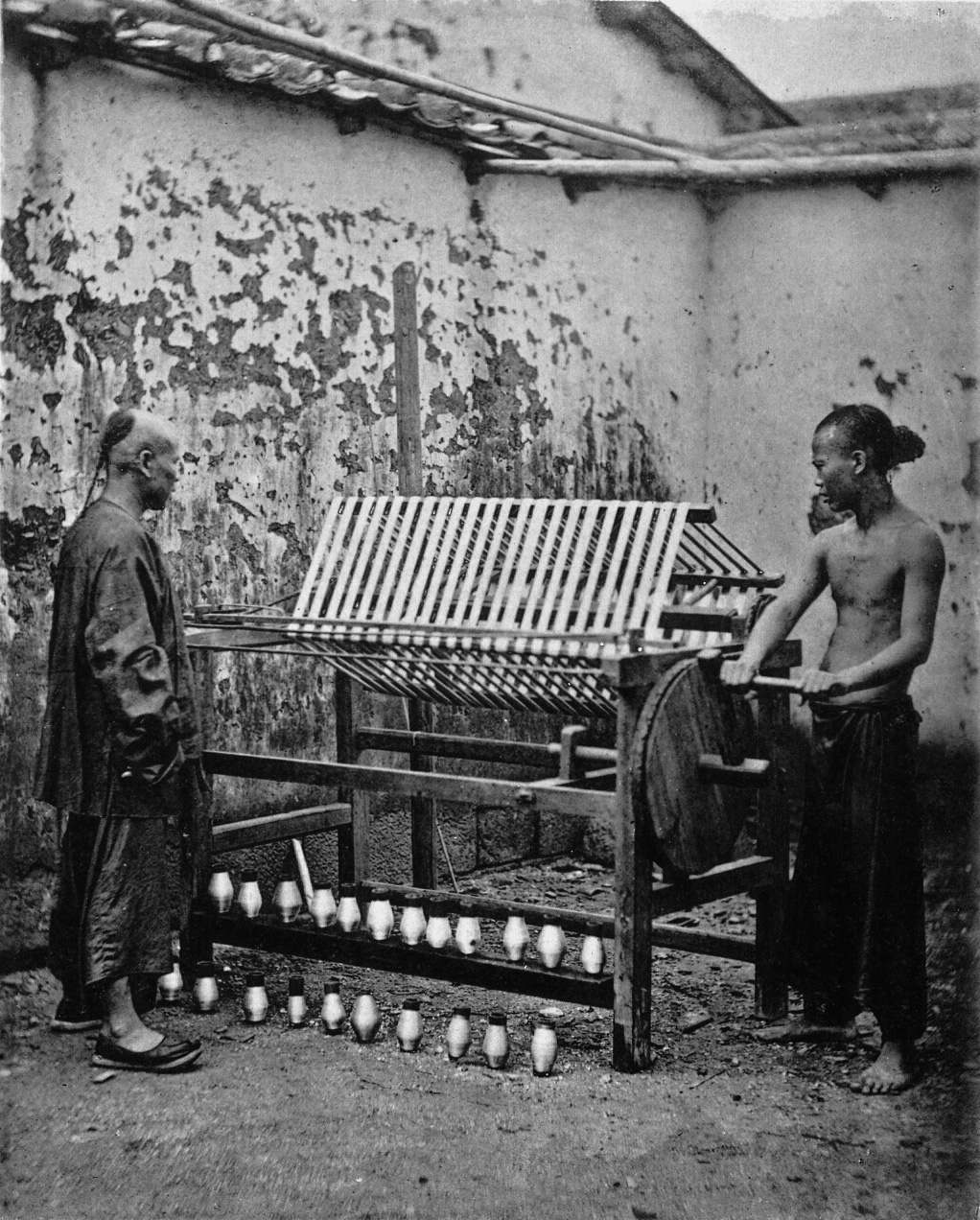
Silk starts as a silkworm cocoon, unwound in one continuous thread — the process you can watch at Hangzhou’s and Suzhou’s silk museums.
How to tell real silk from fake
The tourist-market “silk” problem is real: polyester printed with a sheen and sold at silk prices. You can test any piece in under a minute.
- The burn test (most reliable). Pull a loose thread from a seam — don’t cut the fabric itself. Light it and smell. Real silk smells like burnt hair, burns slowly, goes out when you remove the flame, and leaves a soft grey ash that crumbles between your fingers. Synthetic fabric melts, smells like burning plastic, and forms a hard, dark bead.
- The label. Look for “100% mulberry silk” and the characters 桑蚕丝. If the label says “rayon”, “viscose” or “polyester”, walk away.
- The feel. Real silk is smooth and cool to the touch, with a slightly uneven, natural texture. Polyester feels slippery, warm and uniform.
- The sound. Rub a folded piece together. Real silk makes a soft, dry rustle; synthetic makes a squeaky, slippery sound.
- The colour. Genuine silk absorbs dye richly and has a deep, subtle lustre; printed polyester looks shiny and flat.
Be extra careful with “antique” embroidered pieces and stall-front bargains — these are the most common fakes.
Grades and momme weights
Beyond “real or fake”, quality varies. Two terms are worth knowing.
- Grade — Chinese silk is graded from 3A up to 6A, with 6A the top grade: longest fibres, fewest imperfections, finest weave. Premium brands advertise their 6A mulberry silk. You can’t easily verify a grade yourself, but the big, established shops grade honestly and it shows in the price.
- Momme weight (mm) — how dense the weave is. A light scarf is about 8–12 mm, a good everyday scarf 14–16 mm, and bedding 19–22 mm or more. Higher momme = heavier, stronger, more durable silk. For a scarf, 12–16 mm feels great; for something you’ll wear a lot, go heavier.
What to buy and what it costs
Prices are rough guides — they change and vary by shop — but they give you a fair mental range.
- Silk scarves — the classic souvenir. A simple 12–16 mm scarf runs roughly ¥50–200 at a reputable shop (estimate). Embroidered or branded pieces cost more.
- Silk robes and pyjamas — ¥300–800 for a good set (estimate).
- Silk ties — ¥100–300 (estimate).
- Embroidered panels and wall art — ¥200 and up, depending on size and stitching density; hand-embroidered pieces can run into the thousands.
- Silk duvet covers and bedding — ¥500–2,000+ for quality 19 mm and above (estimate). This is where the biggest price differences with the West appear.
- Fabric by the meter — ¥100–300 per meter for fine mulberry silk (estimate); the shop can often make a scarf to order.
If a price seems absurdly low — a “silk” scarf for ¥20 — treat it as synthetic and test before buying.
Where to shop
- Silk museums (Hangzhou, Suzhou) — trustworthy, informative, and a fair starting price.
- Brand-name silk shops in the main shopping streets of Hangzhou and Suzhou — reliable quality, helpful staff, and they issue receipts for the tax refund.
- Department stores — a safe middle ground; look for the silk floor.
- Markets and fabric districts — the most fun and the most negotiable, but test everything and bring a sense of adventure. Prices here are made for bargaining — our bargaining guide covers the technique.
- The Silk Road cities — if your route goes through Xinjiang or the historic Silk Road, you’ll find silk at bazaars too, though the specialist range is in the east. See our Silk Road itinerary for the route.
Payment and the tax refund
Most silk shops — even small ones — take Alipay or WeChat Pay by QR code; cash works as backup. Set up Alipay before your trip and payment is painless.
If you spend a meaningful amount, ask for a tax-refund invoice (离境退税). At the airport, claim the refund with your passport, the invoice and the goods; many participating shops now give an instant refund on the spot. Full details, allowances and limits are in our customs and duty-free guide.
Care and packing
Silk is delicate but travels beautifully.
- Pack it rolled, not folded — rolled silk arrives with fewer creases. Place scarves between items of clothing.
- On arrival, most fine silk is dry-clean only; hand-washing in cold water with a gentle detergent works for scarves in a pinch.
- Store silk away from direct sunlight and keep it dry — it’s a natural fibre and needs air.
- Don’t pack silk in a vacuum bag for long — the compression can crush the fibres.
Silk is lightweight, so it’s also a smart packing strategy for a shopping-heavy trip.
The bottom line
Buy silk in Hangzhou or Suzhou, look for 100% mulberry silk, run the burn test on anything from a market stall, and keep your receipts for the tax refund. A real silk scarf bought at source is a beautiful, practical and genuinely local souvenir — and once you’ve seen a cocoon unwound into a single thread, you’ll understand why the craft survived five thousand years. If you’re visiting during a shopping festival, our Double 11 shopping guide shows how online silk deals compare.
Last updated: August 2026. Silk prices, grades and tax-refund rules change — confirm current details before you go.
Frequently Asked Questions
Is silk cheaper to buy in China?
Yes, generally — China produces most of the world's silk, so prices at source are lower than abroad for equivalent quality. A basic silk scarf that costs ¥50–200 (estimate) might retail for three or four times that in a Western boutique. The caveat: quality varies wildly in tourist markets, so the saving only counts if you buy real silk. Shopping in the established silk districts of Hangzhou and Suzhou, or in state-run and reputable shops, gets you the genuine article at source prices.
How do I tell real silk from fake?
The most reliable test is the burn test: pull a thread from the seam, light it, and smell. Real silk burns with a smell like burnt hair, stops burning when the flame is removed, and leaves a soft grey ash that crumbles. Synthetic 'silk' melts, smells like plastic, and forms a hard bead. Also check the label for '100% mulberry silk' (桑蚕丝), feel the fabric — real silk is smooth, cool and slightly uneven — and rub two pieces together; real silk makes a soft rustling sound, not a slippery squeak.
What is momme weight and why does it matter?
Momme (mm) is the weight of silk fabric — how many pounds a piece 45 inches wide and 100 yards long weighs. Higher momme means denser, heavier, more durable silk. A light scarf might be 8–12 mm, a mid-weight scarf 14–16 mm, and quality bedding or a kimono-weight fabric 19–22 mm or higher. For scarves, 12–16 mm is a good balance; for a duvet cover you want at least 19 mm. Higher momme costs more but wears better.
Where is the best place to buy silk in China?
Hangzhou and Suzhou are the traditional silk capitals. In Hangzhou, the China National Silk Museum and the shops around it are a trustworthy starting point; in Suzhou, the silk museum district and the city's long-established fabric shops are excellent. Both cities also have dedicated silk-brand stores in their main shopping streets. Avoid buying 'silk' from random souvenir stalls unless you can test it — and always ask for a receipt if you plan to claim the departure tax refund.
Can I bring silk home and claim a tax refund?
Yes. Silk is a lightweight, easy souvenir and most travelers simply pack it. Keep the store receipt: if the shop participates in the departure tax-refund scheme (离境退税), ask for a tax-refund invoice, then claim at the airport's tax-refund counter with your passport, invoice and goods. Many stores now issue instant refunds on the spot. The duty-free personal allowance and tax-refund rules are covered in our [customs guide](https://chinotrips.com/how-to/customs-duty-free/).