
Street & Market Photography in China: A Practical Guide (2026)
Photographing China's streets and markets — the best cities for street photography, how to photograph people with respect, night markets, and the practical tips.
China’s streets and markets are a photographer’s dream — neon night markets, ancient lanes, teeming food stalls and the daily life of a billion people. Here’s how to photograph them well, and with respect.
For all China’s grand landscapes, some of the most rewarding photography is in its streets and markets — the night markets glowing with food-stall lights, the old lanes of the ancient towns, the daily commerce that has happened the same way for centuries. This is where travel photography becomes street photography: fast, candid and full of life. This guide covers where to go, what to shoot, and how to do it with respect.
The best places
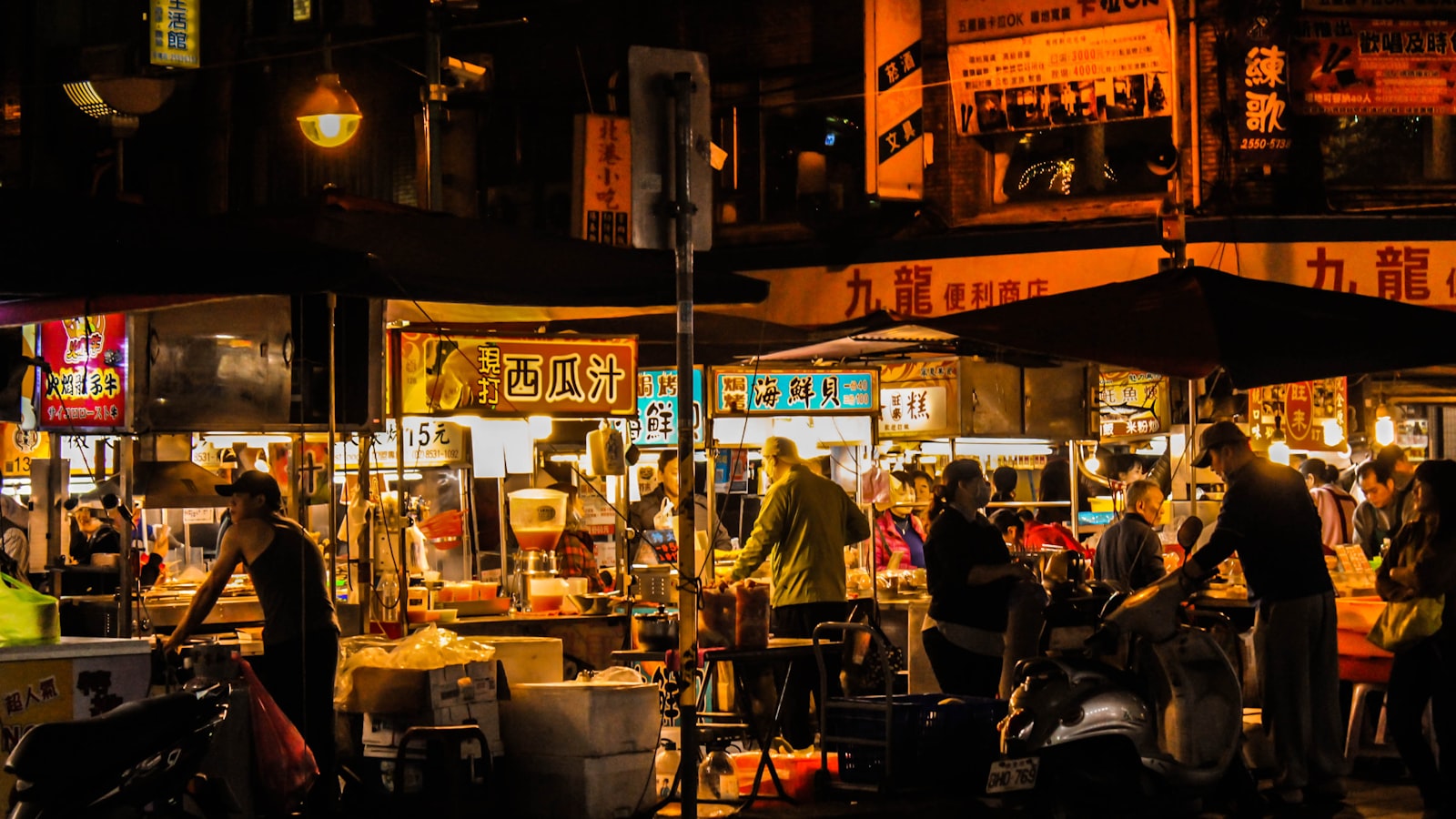
- Night markets — the food stalls, the steam, the neon; the most photogenic scene in every Chinese city. See our night market guide.
- Old lanes and hutongs — Beijing’s hutongs, Shanghai’s lanes; everyday life and architecture.
- Xi’an’s Muslim Quarter — vibrant market streets and food culture around the ancient city.
- Ancient towns — Dali, Lijiang, Pingyao; traditional streets, craft shops and daily life.
- Minority villages — the southwest’s villages with distinct dress and customs; photograph with extra respect.
Each is a different flavor of Chinese street life, and each rewards an unhurried afternoon.
Photographing people, with respect
The heart of street photography in China is the people — and the etiquette is simple:
- Smile first — a friendly approach opens almost every door; most people are happy to be photographed.
- Ask for close-ups — a portrait of a person warrants a question or a gesture; most say yes.
- Respect the vulnerable — be gentle photographing older people, children, and people in difficult situations.
- Minority regions — Tibet, Xinjiang and the southwest deserve extra care; ask, and respect refusal.
- Religious sites — follow the rules; no flash, and no photography where it’s prohibited.
A little courtesy turns a camera from an intrusion into an invitation — and the best street photographs come from that warmth, from the connection the photographer makes before the shutter. It’s the difference between taking a picture and being welcomed into one.
The timing
- Late afternoon into evening — golden light, then the market lights; the sweet spot.
- Night markets after sunset — when the stalls glow and the steam rises.
- Morning markets — the fresh-produce markets are liveliest early, with the best light.
- Midday — harsh; use it for shaded lanes, architecture and interiors.
Street photography in China is at its best at the edges of the day — when the markets are waking or glowing.
The gear and technique
- Compact and fast — a phone, a compact, or a mirrorless with a small prime; unobtrusive is the principle.
- A fast prime (35 mm or 50 mm f/1.8) — handles the low-light market scenes beautifully.
- Shoot the details — steam, hands at work, the produce, the signage; the close-ups tell the story.
- Wide for context — a stall and its setting beats a single close-up for storytelling.
- Low light — trust the market’s own lighting; a soft fill is better than a flat flash.
The best street images come from observation and respect, not expensive gear — a phone with good low-light mode does most of this work.
The scenes, by city
- Beijing’s hutongs — old lanes, doorways, chess players, everyday life; the street photographer’s classic. See our Beijing guide.
- Xi’an’s Muslim Quarter — the market streets, the food stalls, the crowd energy; vibrant at any hour.
- Shanghai’s lanes — the old lane houses with washing on lines, the everyday domestic life of the city.
- Dali and Lijiang — the ancient towns’ lanes, crafts and street life; photogenic and relaxed. See our Lijiang guide.
- The night markets everywhere — the food-stall scenes that define Chinese evening photography.
Each city has its street character, and the character is what photographs well.
Common mistakes to avoid
- Photographing from a distance — street photography is about being in the scene; get closer, and the images improve immediately.
- Forgetting the light — the golden hour and the market lights are the whole game; the midday flat light kills the atmosphere.
- Using flash in tight spaces — it flattens the scene and startles people; trust the available light and raise the ISO.
- Skipping the details — hands, food, signage, textures; the close-ups often beat the wide scenes.
- Rushing — the best street frames come from spending time in one place and watching the moments unfold.
What a street-photography day costs
Street photography is the cheapest photography in China — almost everything is free. Walking the markets and lanes costs nothing; market food is ¥10–40 a stall, which doubles as dinner and a subject; transport between the old towns and night markets is the modest cost; and museum or temple entry where relevant is ¥20–80. The gear is a one-time thing — a phone or a compact you already own. A day of China’s best street photography can cost less than a single ticket at the big sights.
The rhythm of a good street-photography day
The photographers who get the best market shots work the day in a rhythm: morning at the produce markets (fresh, lively, best light, the farmers’ morning commerce); afternoon in the old lanes and temples (the shaded architecture and the slow everyday life); late afternoon into evening at the food markets (the steam, the neon, the crowds at their best). The night market is the crescendo — and it’s also dinner. Two or three such days across different cities give a rich, varied portfolio of Chinese street life.
Photography and the food
Chinese street food is one of the world’s great photographic subjects, and the markets are built for it. The techniques that work: shoot the steam (the rising vapor from the grills and woks is the signature image); get close (a macro or close focus makes the texture sing); shoot the maker (the hands working the wok, the face of the vendor — with a smile and permission); and shoot the color (the red chilis, the green vegetables, the golden skewers). The night markets especially are a visual feast — and eating your subject is the perfect reward.
Practical notes
- Set up payment and connectivity — Alipay and an eSIM make the markets easy to enjoy and photograph.
- Blend in — casual clothes and a small camera read as a traveler, not a spectacle.
- Back up daily — a card of market shots is worth protecting; back up at the end of each day.
- Be patient — the best frames come from spending time in one place, not rushing between stalls.
The bottom line
China’s streets and markets are among the world’s most rewarding street-photography subjects — the neon night markets, the ancient lanes, the daily life of the world’s most populous country. Photograph them by going at the golden hours, shooting the details and the light, and above all by doing it with respect — smile, ask, and the warmth of the scene comes through in every frame — the photos will be the ones you treasure most from the trip.
Last updated: August 2026. Market hours and access change — confirm current details before you go.
Frequently Asked Questions
Is it okay to photograph people on the street in China?
Generally yes, with awareness. **Chinese street scenes are vibrant and people are used to tourists photographing them** — a smile and a gesture usually gets a friendly nod. **Ask before photographing close-up portraits**, especially of older people or children. In **minority regions** (Tibet, Xinjiang, the southwest) be extra respectful, and at religious sites follow the local rules. A little courtesy goes a long way.
Where are the best places for street photography in China?
The standouts: **night markets** (vibrant, colorful, great food shots), the **old lanes and hutongs** of Beijing and Shanghai, **Xi'an's Muslim Quarter**, the **ancient towns** of Dali, Lijiang and Pingyao, and the **minority villages** of the southwest. Each is full of life, color and character — the raw material of great street photography. See our [night market guide](https://chinotrips.com/culture/night-market-guide/) for the food-market scene.
What's the best time for street photography in China?
**Late afternoon into evening** is the sweet spot — golden light on the streets, then the neon and market lights after dark. **Night markets** are best after sunset, when the food stalls light up. **Morning markets** are lively early with the freshest produce and the best light. The midday sun is harsh; use it for shaded lanes and architecture instead of people shots.
What gear is best for street photography in China?
**Compact and fast** is the principle: a good phone, a compact camera, or a mirrorless with a small prime lens. The goal is to be unobtrusive and quick — big DSLRs draw attention and slow you down. A **fast prime** (35 mm or 50 mm f/1.8) handles the low-light market scenes beautifully. A phone with good low-light mode is genuinely enough for most street work.
How do I photograph night markets well?
**Shoot the food close-up** — the steam, the color and the texture are the appeal; a macro or close focus makes the stalls sing. **Include the context** — a wide shot of the stall and its sign tells the story. **Watch the light** — the market's own lighting is the best source; avoid a strong flash that flattens it. **Be quick and respectful** — photograph the scene, not into people's faces.
Any etiquette rules for photography in China?
The basics: **ask before close-up portraits**, **don't photograph people in ways that embarrass them**, be **extra respectful in minority and religious settings**, and **don't use flash in temples and museums**. Most people are happy to be photographed if you smile first — and a photo of them at work or market is usually welcome. When in doubt, ask; a simple gesture resolves most situations.