
Macau Travel Guide (2026): Ruins, Casinos & Portuguese Flair
Macau — the former Portuguese colony: the Ruins of St. Paul's, the old town, the Cotai casinos, and how it fits with a Hong Kong trip.
Macau, China
Open an external map for this location.
OpenStreetMap Google Maps (opens externally)
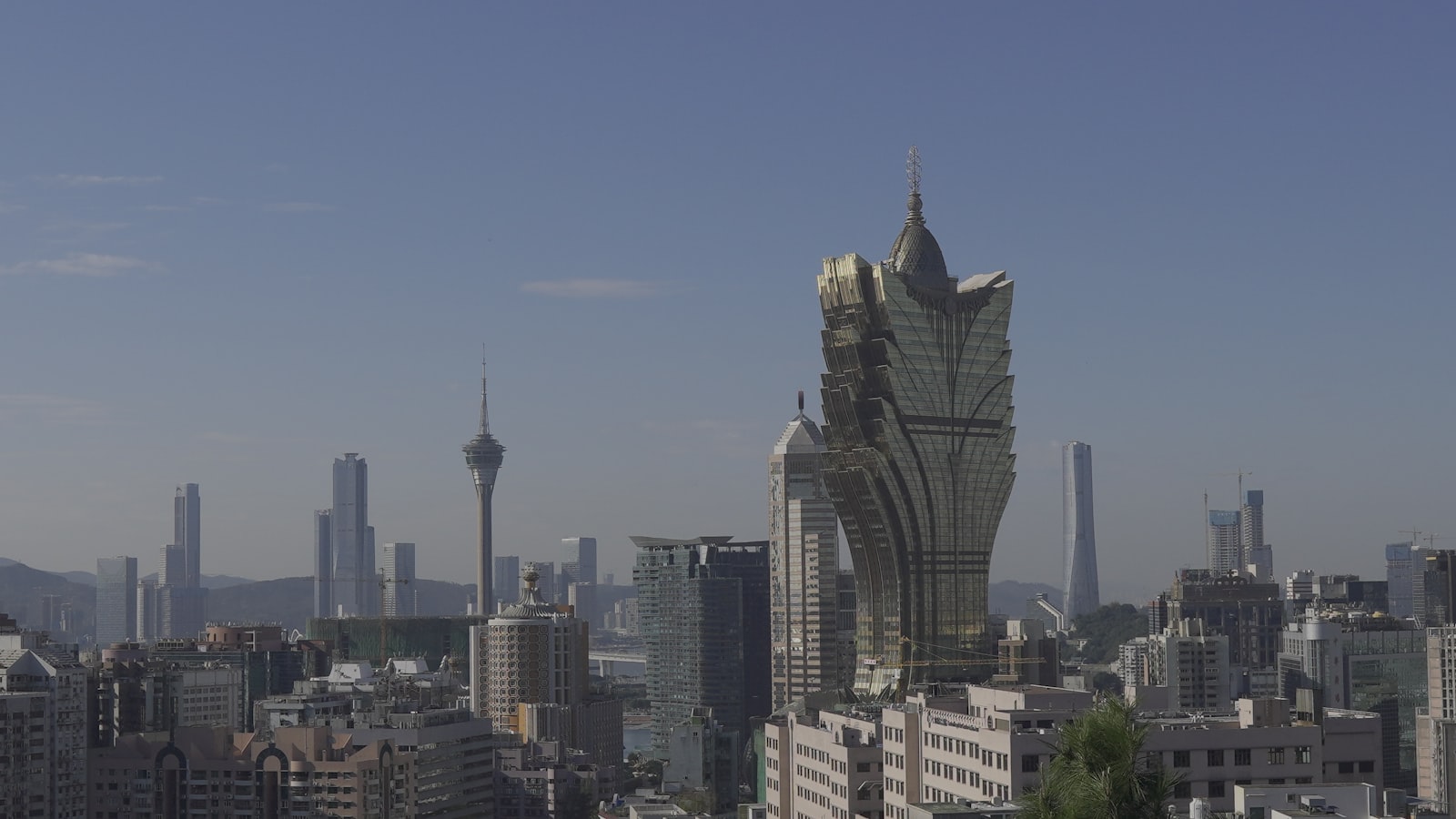
Macau is the former Portuguese colony where Europe meets China on a small island — pastel churches and old squares on one side, the world’s biggest casino strip on the other. Here’s how to visit it in 2026.
Overview
Macau spent over 400 years as a Portuguese colony and returned to China in 1999 with its character intact. The result is a compact, one-of-a-kind city: a UNESCO-listed historic center of Portuguese churches, pastel squares and cobbled lanes; a Chinese temple culture beneath it; and a dazzling modern casino district in Cotai. It’s a short hop from Hong Kong, and it feels like visiting a small European town and Las Vegas in the same day.
How many days
1–2 days. A day covers the historic center, the food and a look at the casino strip; an overnight lets you see the old town at night and the casinos lit up. Most visitors come from Hong Kong as a day trip, but staying a night reveals the other side of Macau.
Suggested itinerary
A 1-day plan:
- Morning: the Ruins of St. Paul’s, Senado Square and the pastel old town.
- Afternoon: the A-Ma Temple and the Portuguese-era lanes; a Portuguese egg tart stop.
- Evening: the Cotai Strip casinos, then back to Hong Kong (or stay over).
Overnight version: add a Macanese dinner (the unique blend of Portuguese and Chinese), and see the old town lit up after the day-trippers leave.
Best time to visit
- Autumn (October–December) and spring (March–May): the best windows — mild and dry.
- Summer (June–August): hot, humid and typhoon-prone.
- Winter (December–February): mild and pleasant, occasionally cool.
- The old town is comfortable year-round; summer heat is the main consideration.
Top sights
- The Ruins of St. Paul’s — the iconic church facade and the stone steps below.
- Senado Square and the old town — the pastel Portuguese-era center, a UNESCO site.
- The A-Ma Temple — the oldest temple in Macau, which gave the city its name.
- The Cotai Strip — the enormous casino resorts, surreal and spectacular at night.
- The food — Portuguese egg tarts, Macanese dishes, and the city’s unique cuisine.
Getting there & around
- From Hong Kong: the bridge bus (45–60 min) or ferry (about 1 hour) — frequent and easy.
- From mainland China: direct from Zhuhai across the border, or via the bridge.
- Within Macau: walking for the old town; taxis and buses for Cotai; free shuttle buses connect the casinos.
- The Cotai free shuttles — the casinos run them, a handy way to get around.
Food & Macanese cuisine
- Portuguese egg tarts — the famous pastry, best warm from a bakery.
- Macanese dishes — the unique blend of Portuguese and Chinese: African chicken, minchi, and the local curries.
- Seafood and dim sum — the Chinese side of the table.
- Where: the old town’s lanes and the casino restaurants.
Practical tips
- Check the Macau visa rule for your passport — it’s separate from mainland China’s.
- Set up Alipay — widely accepted in Macau.
- Dress for the casinos — the big resorts have a smart-casual dress code.
- The old town at night is as lovely as the day — stay over if you can.
Where to go next
Macau pairs with Hong Kong on the Pearl River delta — see our Hong Kong entry guide — and with the mainland cities of Guangzhou and Zhuhai nearby. It’s the natural add-on to a southern China trip. See our Guangzhou guide for the mainland side.
The Portuguese legacy, in depth
Macau’s 442 years as a Portuguese colony left a legacy that’s visible everywhere: the pastel churches and squares, the Portuguese place names, the Macanese cuisine (a genuine fusion of Portuguese and Chinese), and even the language — Portuguese remains an official language alongside Chinese. The UNESCO-listed historic center preserves the most intact slice of that heritage: Senado Square, the Ruins of St. Paul’s, the old city walls. It’s a piece of Europe in Asia, and it’s unique in the world.
The casinos, honestly
The Cotai Strip is a world of its own — enormous casino resorts built on reclaimed land, a surreal amalgam of Venice, Paris and Las Vegas rendered in marble and neon. Whether you gamble or not, the scale is worth seeing once, and the resorts have shopping, shows and free shuttles. A few honest notes: you must be 21+ to enter, there’s a smart-casual dress code, and the gambling itself is a serious business — for most visitors, the spectacle is enough.
Food & Macanese cuisine
Macau’s food is the best argument for staying longer. The famous Portuguese egg tart (pastel de nata) is the entry point — warm, flaky, addictive. Beyond it, Macanese cuisine is a genuine fusion: African chicken (a Portuguese-African dish), minchi (minced pork with potatoes), and the local curries. The old town’s lanes, the temple-side eateries, and the casino restaurants cover the full range. It’s one of the great food cities of the region.
Practical notes
- The visa rule is separate — check whether your passport needs a Macau visa (many don’t for short stays).
- From Hong Kong: the bridge bus or ferry, about an hour.
- The free casino shuttles — a handy way to get around Cotai.
- Stay overnight if you can — the old town at night is a different, lovelier Macau.
- Set up Alipay — widely accepted.
A budget for Macau
Macau is pricier than the mainland — closer to Hong Kong’s level. Rough daily figures for planning (per person, MOP, and prices change): accommodation mid-range ¥400–800 (casino hotels are the affordable option), food Portuguese egg tarts ¥10–20, a Macanese dinner ¥100–200, transport the ferry or bridge from Hong Kong is the main cost, within Macau walking and the free casino shuttles are cheap. Budget for a bit more than mainland China, but the old town is free to wander.
The day-trip logistics
If you’re coming from Hong Kong, the day trip is straightforward. The ferry from Hong Kong’s piers takes about an hour and runs frequently. The bridge bus (Hong Kong–Zhuhai–Macau) is faster (45–60 min) but involves more connections. Plan your return — the last ferry back matters if you’re not staying over. The border is real — Macau is separate from mainland China, so have the right documents. It’s an easy trip, but it’s a crossing, not a commute.
Making the most of one day
A single day in Macau is enough for the essentials if you’re organized: morning in the old town (St. Paul’s, Senado Square, the A-Ma Temple), lunch at a Macanese restaurant, afternoon at the casino strip or the museums, evening back at the old town as it lights up. The old town is compact; the casinos are a short ride away. If you want to see both Macaus — the European one and the casino one — one day covers it, though an overnight is more relaxed.
Last updated: August 2026. Prices, hours and entry rules change — confirm before you go.
A day trip from Hong Kong
The ferry from Hong Kong to Macau takes about an hour and runs frequently, making it a popular day trip. You pass through immigration at the port, so carry your passport and check entry rules for your nationality. Give yourself a full day — the historic center, casinos and Portuguese food are a lot to cover, and the last ferry back leaves in the evening.
Frequently Asked Questions
Why visit Macau?
Macau is the former Portuguese colony that returned to China in 1999 — a small city where European architecture, pastel facades and Portuguese egg tarts sit alongside Chinese temples and the world's biggest casino strip. It's a completely different world from the mainland, and an easy day trip from Hong Kong across the Pearl River delta.
Do I need a separate visa for Macau?
Macau has its own entry rules, separate from mainland China. Many nationalities enter Macau visa-free for short stays (typically 30 days, passport-dependent). If you're coming from Hong Kong or mainland China, check whether your passport needs a Macau visa separately — the two are not the same. Confirm with the Macau Immigration Department for your passport.
How do I get from Hong Kong to Macau?
The quickest way is the Hong Kong–Zhuhai–Macau Bridge bus (about 45–60 minutes), or the ferry from Hong Kong's piers (about an hour). Ferries are frequent. It's an easy day trip, though many visitors stay a night to see Macau at its liveliest.
What should I not miss in Macau?
The Ruins of St. Paul's (the iconic church facade), Senado Square and the pastel old town, the A-Ma Temple, and the Portuguese egg tarts. The Cotai Strip casinos are the modern draw — a surreal, enormous resort district. The old town and the casinos are so different they feel like two cities.
Is Macau just casinos?
No — the casinos dominate the modern image, but Macau's historic center is a UNESCO World Heritage Site of Portuguese-era streets, churches and squares. Food is the other great draw: Portuguese and Macanese cuisine, from egg tarts to African chicken. The casinos are one part of a much richer place.