
Pingyao Travel Guide (2026): The Walled City, Temples & How to Plan
Pingyao, China's best-preserved walled city — a complete guide: the Ming/Qing lanes, the banking history of Rishengchang, Shuanglin Temple's painted sculptures, plus costs, seasons and day plans.
OpenStreetMap Google Maps (opens externally)
Pingyao is the China of merchants and city walls — a perfectly preserved Ming/Qing town you can walk through, with the country’s banking history written into its lanes. Here’s the complete guide: what makes it special, how to plan, and how to see it in 2026.
Pingyao is the closest thing China has to a time machine. Where most cities demolished their ancient cores, Pingyao kept everything — the full circuit of Ming walls, the grid of lanes, the merchant houses and the banks that made it one of the richest cities in 19th-century China. It was listed as a UNESCO World Heritage Site in 1997 precisely because it is the best-preserved walled city in the country. This guide covers the history, the highlights and the practical plan.
The old city, laid out
Understanding the layout makes the wandering more rewarding. The walled city is a chessboard of lanes inside a roughly square circuit of walls, and the key is knowing how it’s organized:
- The main streets — the north-south Nan Dajie (South Street) is the commercial heart, the Ming/Qing showcase with shops, banks and restaurants. The east-west streets cross it to the city gates.
- The wall — the full circuit is about 6km, with gates on each side and watchtowers at the corners. The best walk is the southeast stretch, where the roofs of the old city spread below in an unbroken sea of grey tile.
- The yamen district — the county office and the administrative quarter, quieter than the main street and home to the lesser lanes.
- The lesser lanes — away from the main street, the small alleys hold the lived-in Pingyao: laundry lines, courtyard gates, old men at chess. This is where the “not restored, just preserved” character shows.
The old city is compact — everything is walkable within about 20 minutes across. The car ban inside the walls keeps it pedestrian-friendly, with electric sightseeing carts for the less mobile.
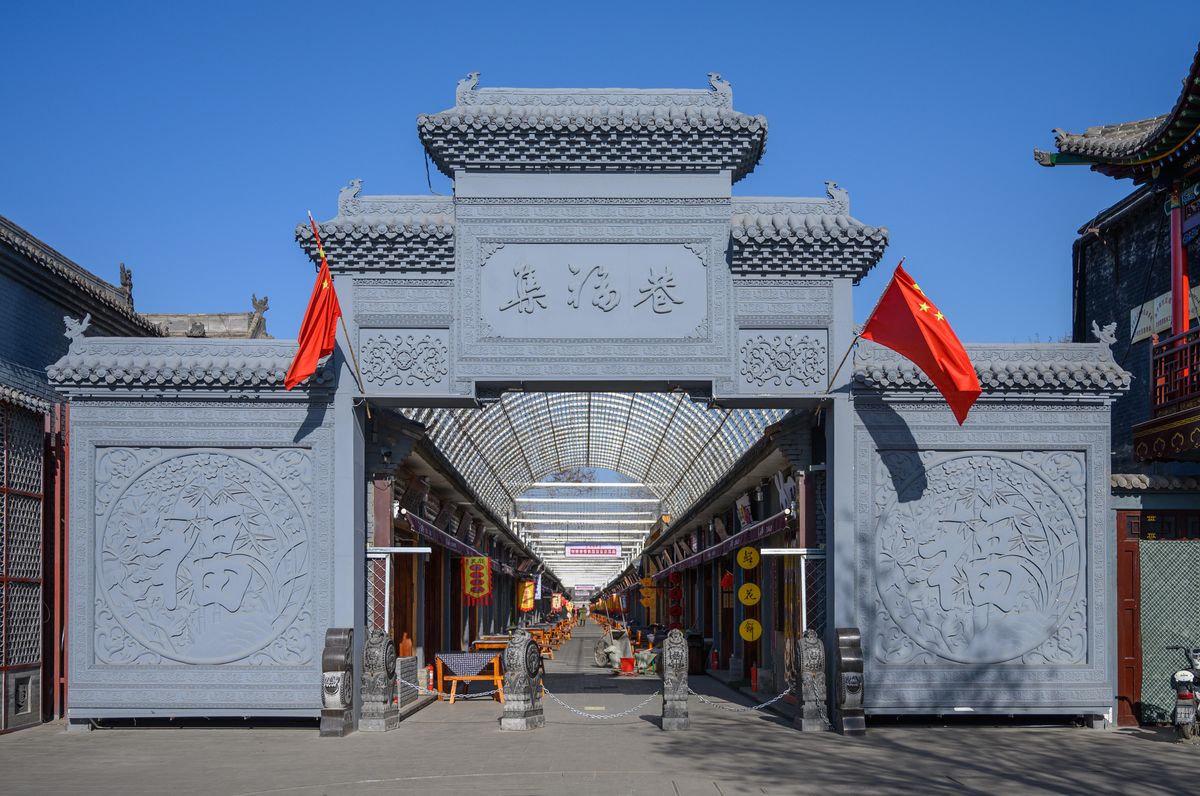
Pingyao’s main street is a living showcase of Ming/Qing shopfronts — walk it in the evening, once the day-trippers have gone.
Why Pingyao matters: the history
Pingyao’s importance goes beyond its pretty walls. In the 19th century, this small Shanxi town became the birthplace of Chinese banking. The Rishengchang (日升昌), founded in 1823, was the country’s first ‘piao hao’ (exchange house or draft bank) — a system that let merchants deposit money in one city and withdraw it in another, using paper drafts instead of carrying silver across the dangerous countryside.
- The banking revolution — Rishengchang’s draft system spread across China, and at its peak the Shanxi banks controlled the bulk of the country’s financial traffic.
- The merchant houses — the wealth built grand courtyards, warehouses and the watchful walls you see today.
- The legacy — the old city’s banks, guild halls and the underground treasury are the physical record of this financial empire.
Walking Pingyao with this history in mind transforms the visit: the austere walls were built for protection of a merchant city, the banks on the main street were the Wall Street of their era, and the underground vault at Xietongqing is where the silver actually lay.
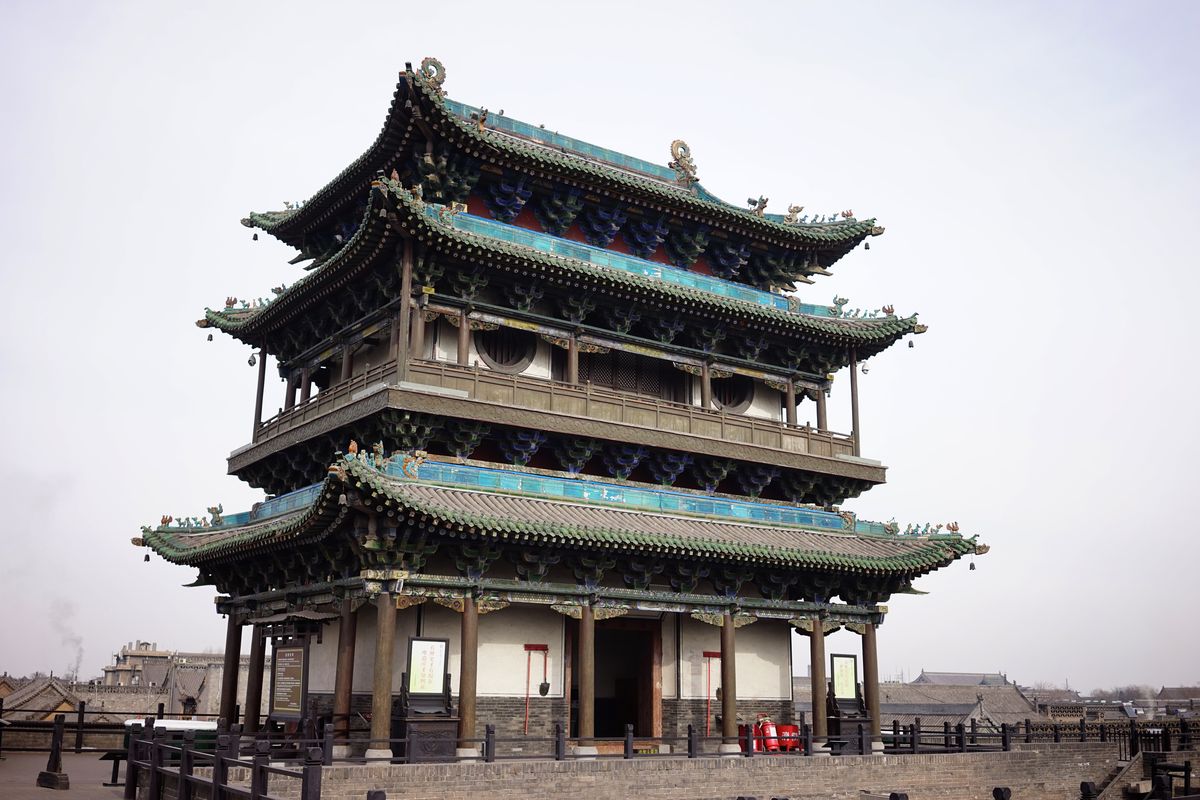
The full circuit of Pingyao’s Ming wall runs about 6km — the southeast stretch gives the classic view over the sea of tile roofs.
The banking story, in depth
The Rishengchang is the reason Pingyao is more than a pretty town — it’s the Wall Street of 19th-century China. Founded in 1823, it pioneered the draft system: a merchant deposited silver in Pingyao, took a paper draft, and withdrew the equivalent in a branch city hundreds of miles away. This removed the danger and cost of transporting silver across robber-plagued countryside, and the model spread rapidly.
- The scale — at its peak, the Shanxi banks (headquartered in Pingyao, Qi County and Taigu) held the deposits of much of the empire’s trade.
- Rishengchang today — the former head office is a museum of the trade: the counting rooms, the managers’ apartments, the safe rooms and the reconstructed account books.
- Xietongqing’s vault — a few doors away, the underground treasury lets you descend into the actual silver vault beneath the street — the closest you’ll get to where imperial-era money lived.
- The guild halls and shops — the main street’s merchant houses and guildhalls are the surrounding fabric of this financial world.
Visiting the banks with this context turns a quick museum stop into the heart of the Pingyao story — and explains why the town built its walls, watchtowers and courtyard mansions as they did.
The essentials at a glance
- Days needed: 1–2 days; stay inside the walls.
- Getting there: high-speed rail from Taiyuan in about 40 minutes, about 4 hours from Beijing.
- Entry: walking the old city is free; the ¥125 pass covers 22 sights and is valid 3 days.
- Best season: May–October; book ahead for the summer and October holidays.
- Best reason to stay: the lanes after the day-trippers leave — and the courtyard guesthouses.
What to do in the old city
- The city wall — walk it (best at sunset) for the roofs-and-courtyards view. The full circuit is about 6km; a section takes under an hour, and the southeast stretch has the best views over the tile roofs.
- Rishengchang — the first Chinese bank, now a museum. The old counting rooms, the managers’ desks and the safe rooms tell the story of merchant-era finance in a compact, evocative walk.
- The county office (yamen) — daily re-enactments of court hearings; the administrative heart of the old city.
- Xietongqing — the underground treasury vault, where the silver was actually stored. A dim, atmospheric descent beneath the streets.
- The night light show at Yingxun Gate, and the lanes after dark — the old city glows in the evening, quieter and more atmospheric than by day.
Photographing Pingyao
Pingyao is one of the most photogenic cities in China, and a few choices capture it well:
- The wall at sunset — the golden light on the grey ramparts and the sea of rooftops below is the signature shot. The southeast stretch is the classic viewpoint.
- The lanes at night — after the day-trippers leave, the lit lanes and the glowing shopfronts make the atmospheric evening shots; the lantern-lit courtyards of the guesthouses are a bonus if you’re staying inside.
- The rooftops from the wall — the unbroken expanse of grey tile roofs and courtyard gardens, best in the morning or late-afternoon light.
- The details — the carved lintels, the shop signs, the door knockers and the courtyard gates; the old city is rich in close-up subjects.
- Shuanglin’s sculptures — the painted clay figures are the artistic highlight; go early for the soft light through the halls. No flash — the halls are dark and the sculptures are fragile.
A wide lens for the streets, a telephoto for the rooftops from the wall, and a phone for the lanes at night covers the range. See our photography guide for technique.
Add a day for the temples
- Shuanglin Temple — 2,000+ painted Yuan/Ming clay sculptures, a UNESCO highlight. ¥35, about 6km out (bus 108 or a short taxi). The finest collection of painted sculptures in China — go in the morning for the light.
- Zhenguo Temple — a Five Dynasties hall, the oldest wooden building in the region. ¥25, a short drive out. Smaller and quieter than Shuanglin, but architecturally significant.
The two temples together make a strong second day, and they’re the difference between seeing Pingyao and understanding why it’s a UNESCO site.
A slower pace: the old city after dark
The single most-recommended piece of advice for Pingyao is to stay inside the walls overnight. By day the old city is a busy heritage attraction; after the tour groups leave in the late afternoon, it becomes something else — the lanes quiet, the shop lights glow, and the courtyard guesthouses open their doors. The evening rhythm is worth planning around:
- The night light show at Yingxun Gate (the south gate) — a projection show on the wall, a free evening highlight.
- The lit lanes — the main street and the lesser alleys take on a different character after dark, quieter and more atmospheric.
- The courtyard evenings — staying in a converted merchant house means ending the day in a lantern-lit courtyard, a world away from the daytime bustle.
- The early morning — the other quiet window, when the old city wakes slowly and the streets are nearly empty.
If you only take one piece of advice from this guide, make it this: book a night inside the walls. It’s the difference between a busy day trip and the Pingyao that people remember.
A one-day plan in the old city
- Morning: walk the city wall — the full circuit is about 6km but a section in an hour covers the best views; the southeast stretch has the classic roofs-and-courtyards scene.
- Late morning: Rishengchang (the first Chinese bank) and Xietongqing (the underground treasury) — together they tell Pingyao’s banking story in a compact walk.
- Lunch: try Pingyao beef and mianpi at a lane-side restaurant; the southern main street is the tourist pick, the side lanes quieter and cheaper.
- Afternoon: the county office (yamen) for the court-hearing re-enactments, then a relaxed wander through the lesser lanes away from the main street — this is where the lived-in character shows.
- Evening: the night light show at Yingxun Gate, then a slow dinner and a walk through the lit lanes after the day-trippers have gone.
A two-day plan: adding the temples and the countryside
- Day 1: the old city — the wall, the banks, the yamen and the lanes, as above. Stay the night inside the walls.
- Day 2 (morning): Shuanglin Temple for the painted sculptures — the highlight of the second day.
- Day 2 (afternoon): Zhenguo Temple for the ancient wooden hall, or a slower return to the old city’s lesser lanes and shops.
Two days is the comfortable amount; a single packed day works from Taiyuan but misses the quieter Pingyao.
When to visit
- May–October is the classic window — mild, with the autumn lanterns and markets around September–October.
- Summer and the early-October holiday are busy; book the pass and accommodation ahead.
- Winter is quiet and cold, but the old city under a light snow is genuinely magical and prices drop sharply.
- Avoid Mondays if you want the You Jian Pingyao show, which is closed that day.
Where to stay and eat
- Stay inside the walls: the southern main street is central; the yamen street is quieter and cheaper. Traditional courtyard guesthouses are the experience — most are converted merchant houses with a small court and a kang-style bed. A 300-year-old courtyard guesthouse is the difference between a day trip and a memory.
- Eat: Pingyao beef, the local vinegar (the town is famous for it), mianpi (cold noodles) and the traditional breakfast soups. Try the vinegar-drenched snacks on the main street; the town’s pickled and smoked products make easy gifts.
Practical tips
- Cars are banned inside the walls — park outside and walk or take the electric sightseeing cart.
- Wear flat shoes — the old city is cobbled, and the wall walk is long.
- Book the You Jian Pingyao show ahead if you want it (¥238, not Mondays).
- The pass is worth it — at ¥125 for 22 sights across three days, it pays for itself after the wall and two museums.
- Carry cash as backup — a few older stalls prefer it, though Alipay works almost everywhere.
- Payment and data: set up Alipay and an eSIM before you arrive.
Where this fits
Pingyao is the southern anchor of the Black Myth Shanxi route and pairs with Datong and Taiyuan on the Shanxi ancient-architecture trail — see our Datong guide. It also works as a memorable stop on a Beijing-to-Xi’an journey through central China.
Prices and times as of August 2026 — confirm current tickets and opening hours before you go.
Frequently Asked Questions
Why is Pingyao worth visiting?
Pingyao is the best-preserved walled ancient city in China — a UNESCO World Heritage Site of Ming/Qing streets, watchtowers and merchant houses that feels lived-in, not restored. It's also the birthplace of Chinese banking, with the country's first 'piao hao' (exchange house) still standing. Where most Chinese cities have torn down their old cores, Pingyao kept the entire walled city — walls, streets, banks and all — which is why it's the definitive place to step into imperial China.
How many days do I need in Pingyao?
One full day covers the wall, the main sights and a night in the old city; two days lets you add Shuanglin Temple and the Zhenguo Temple. Stay inside the walls — the lanes are magical after the day-trippers leave, and the courtyard guesthouses are part of the experience. A one-day visit works from Taiyuan, but the overnight is what most visitors remember.
Is the old city free to enter?
Yes — walking the old city is free. The ¥125 pass covers the city wall and 22 individual sights (county office, Rishengchang bank, the underground treasury and more) and is valid for 3 days. Book it on arrival; seniors and children get discounts. Shuanglin Temple (¥35) and Zhenguo Temple (¥25) are separate, outside the walls.
What is Shuanglin Temple?
A UNESCO-listed temple about 6km from the old city, famous for more than 2,000 painted clay sculptures from the Yuan and Ming dynasties — the finest such collection in China. Admission ¥35 (separate from the old-city pass). Go in the morning; the halls are unlit and the light is best early. It's the single best art experience of a Pingyao visit.
How do I get to Pingyao?
High-speed rail from Taiyuan takes about 40 minutes to Pingyao Ancient City station (6–10km out; bus or taxi into town). From Beijing it's about 4 hours by high-speed rail. The older Pingyao station is a 10-minute walk from the walls. Book rail with your passport — see our [train guide](https://chinotrips.com/how-to/train-tickets/).
What should I eat in Pingyao?
The local specialties: Pingyao beef (a cured, pressed beef unique to the town), the famous Shanxi vinegar (Pingyao is part of the vinegar heartland), mianpi (cold wheat noodles with chili oil), knife-cut noodles, and the traditional breakfast soups. The streets are food-rich; try the vinegar-drenched snacks and the pickled products, which make easy gifts.
How much does a Pingyao visit cost?
Rough guidance (per person, CNY, prices change): the ¥125 old-city pass; Shuanglin ¥35; Zhenguo ¥25; a courtyard guesthouse inside the walls ¥150–500 a night; meals ¥40–80; HSR from Taiyuan ¥40–60. A comfortable overnight visit typically runs ¥400–800 per person including accommodation, entry and food — modest for one of China's great heritage cities.
When is the best time to visit Pingyao?
May–October is the classic window — mild weather, with the autumn lanterns and markets around September–October. Summer and the early-October holiday are busy; book the pass and accommodation ahead. Winter is quiet and cold, but the old city under a light snow is genuinely magical and prices drop sharply. Avoid Mondays if you want the You Jian Pingyao show, which is closed that day.