
Mount Tai Guide (2026): Climbing China's Most Sacred Peak
Mount Tai near Tai'an, Shandong — the most revered of China's Five Sacred Peaks, the 7,000-step sunrise climb, imperial temples, and how to plan the ascent.
Mount Tai, Tai'an, Shandong, China
Open an external map for this location.
OpenStreetMap Google Maps (opens externally)
Mount Tai is the most sacred mountain in China — the peak where emperors came to pray to heaven for over two thousand years, and the country’s most classic climb. The goal for most visitors is simple: make the 7,000-step ascent in time to watch the sun rise over the plain of Shandong.
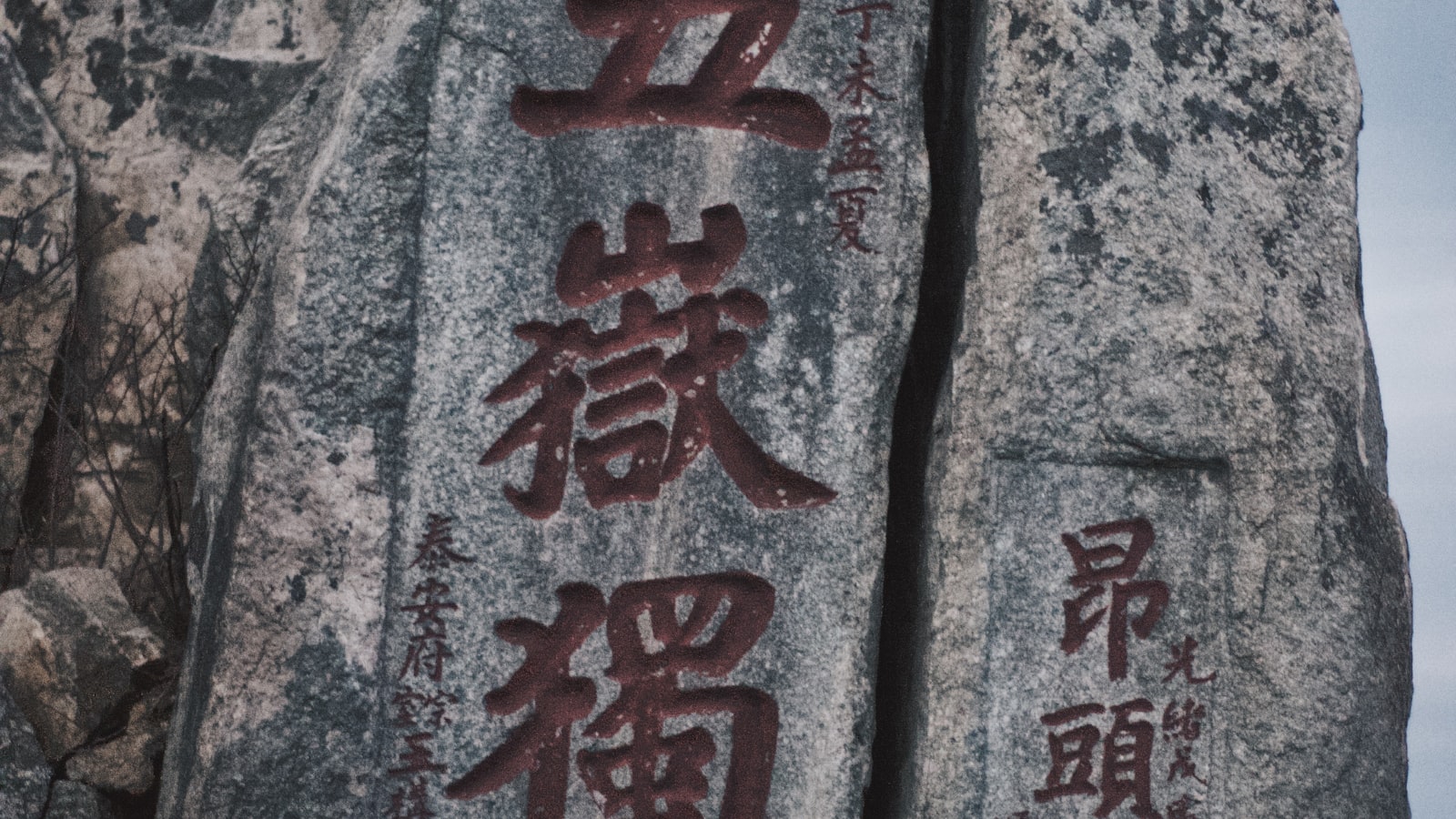
For Chinese culture, Mount Tai is not just a mountain. It is the greatest of the Five Sacred Peaks, the eastern peak that symbolized sunrise, renewal and the mandate of heaven. The first emperor of China climbed it; dozens of later emperors followed, performing solemn sacrifices at the summit. The slopes are a living record of that imperial pilgrimage — temples, stone inscriptions, and the great ceremonial archways that mark the way up. Add the famous dawn, and you have one of the most meaningful experiences available in China: a strenuous, beautiful, deeply cultural climb that millions of Chinese travelers make every year.
The three routes up
Mount Tai offers three main ways up, and most visitors choose between the classic full climb and a shortcut combination.
- The Red Gate route — the classic full climb. It starts at the Red Gate (Hongmen) at the foot of the mountain and ascends roughly 7,000 stone steps to the South Heaven Gate near the summit. Expect 4–6 hours of steady climbing with frequent rest stops, snack stalls and water vendors along the way. This is the route to take if you want to earn the sunrise.
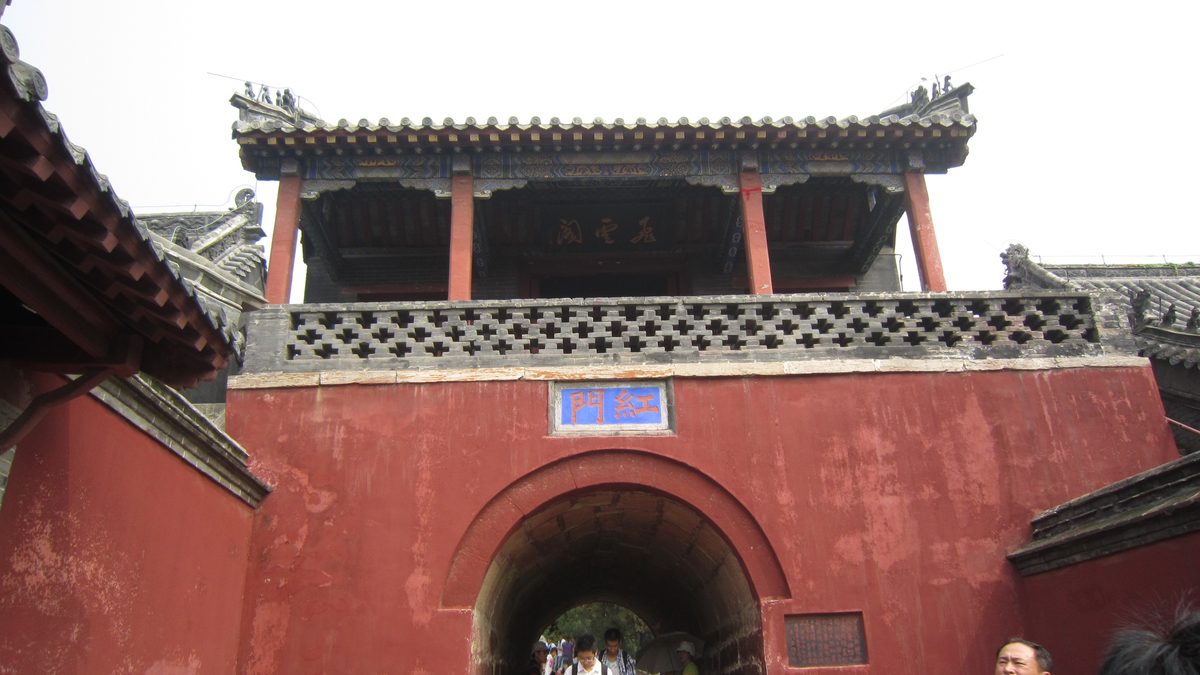
The Red Gate at the foot of Mount Tai — the starting point of the classic 7,000-step climb.
-
The Sky Ladder — the steep upper section of the Red Gate route, a near-vertical flight of hundreds of steps up to the South Heaven Gate. It is the hardest part of the climb, and also the most thrilling. If the full ascent feels too much, you can climb the lower sections and take the cable car up for this last stretch.
-
The West route — a less visited road-and-path route up the western face, gentler in gradient but longer and less scenic. It’s used mainly by hikers who want a quieter alternative or a loop descent.
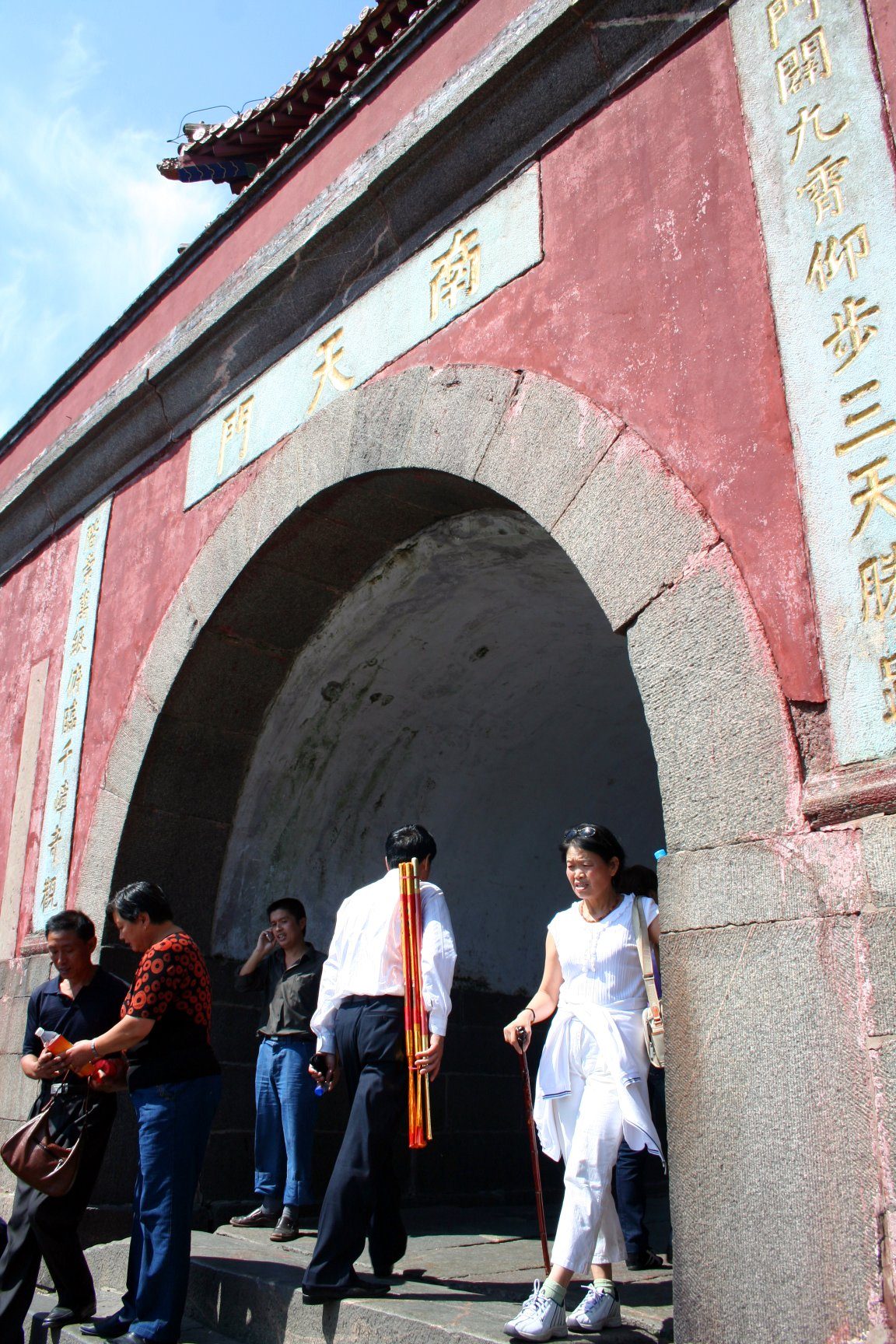
The South Heaven Gate crowns the top of the Sky Ladder, the steep final staircase to the summit.
The summit and the sunrise
The summit plateau of Mount Tai is its own little world — a cluster of temples, plaques and viewing terraces at around 1,545 meters (5,070 feet) above sea level. The focus of most visits is the Jade Emperor Peak, the highest point, where the temple of the supreme Daoist deity stands. On a clear dawn, the viewing terraces fill with visitors waiting for the horizon to catch fire. The sunrise is the moment the whole climb has been building toward: the sun lifting over the sea of cloud that often blankets the Shandong plain below.
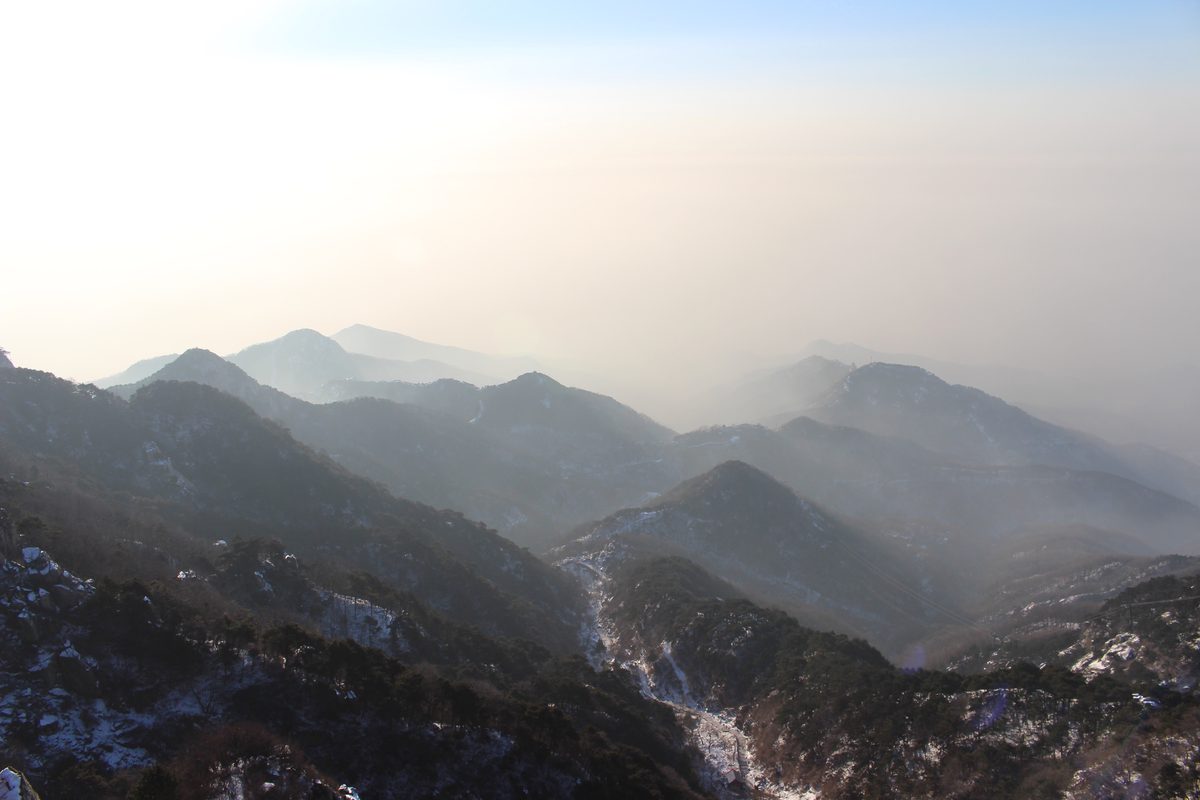
The famous Mount Tai sunrise, viewed from the summit above a sea of cloud.
If the weather is bad, the sunrise will be a wash — which is why many visitors build flexibility into their plan. Checking the forecast the night before is essential, and because the weather is genuinely changeable, a single morning is a gamble. The summit has a number of guesthouses and a hotel, so the standard plan is to climb in the afternoon, sleep at the top, and wake early for the dawn. If you are not staying overnight, the shuttle bus plus cable car can get you up in time for first light without the full hike.
The imperial heritage
Beyond the climb, Mount Tai is a museum of imperial history. The path up is lined with stone inscriptions left by emperors, generals and scholars over more than two thousand years — the oldest dating from the Qin dynasty, when the first emperor made his sacrificial climb. The Dai Temple at the foot of the mountain in Tai’an city is a vast imperial complex in its own right, with ancient cypresses and halls that rival the temple complexes of Beijing; it is well worth a visit before or after the ascent. Near the summit, the Bixia Temple honors the goddess who watches over the mountain, and the South Heaven Gate itself, a gate-tower perched at the top of the Sky Ladder, is one of the iconic images of Chinese travel.
Getting there
Mount Tai sits directly beside Tai’an, a mid-sized city in central Shandong, and the mountain is a short ride from the town. The high-speed rail puts it within easy reach of the whole region: Jinan is about 20–30 minutes away, Qufu about 40 minutes, Qingdao about 1.5–2 hours, and Beijing about 2 hours. From Tai’an’s high-speed rail station, taxis and ride-hailing reach the Red Gate trailhead in about 30 minutes. Most visitors pass through Tai’an as part of a Shandong loop — see our Shandong guide for the routing, and the Jinan guide and Qufu guide for the two cities it most naturally pairs with.
Practical notes
- Gear — wear proper shoes: the stone steps are relentless and worn smooth in places. Carry water (refillable at stalls), a snack, and warm layers for the summit, which is noticeably colder than the base, especially before dawn.
- Timing — the crowds are heaviest on weekends and Chinese holidays, when the trail can be a slow-moving river of climbers. A weekday in spring or autumn is the sweet spot.
- The cable car — a cable car runs from the midpoint of the mountain to near the summit, saving the upper half of the climb; lines can be long at sunrise time.
- Food and rest — there are regular rest stops with snacks, noodles and water along the entire route, so you don’t need to carry much.
- Get connected — set up Alipay and an eSIM before you arrive so you can buy tickets by QR code and check the sunrise forecast at the summit.
A realistic budget
A Mount Tai trip is modestly priced. The entrance ticket is around 115–120 RMB in high season (estimates, prices change), the shuttle bus about 35 RMB one way, and the cable car about 100 RMB one way. A bed in a simple summit guesthouse runs 150–400 RMB a night, and a decent hotel in Tai’an city 200–500 RMB. Food on the mountain is a bit inflated but still cheap — a bowl of noodles 20–40 RMB. For a one-person budget, expect roughly 500–900 RMB including tickets, transport and a night’s stay, not counting travel to Tai’an. Confirm current prices on the official ticketing platform when you book.
When to go
The classic windows are spring (April–June) and autumn (September–November), when the weather is clear and the temperature on the summit is survivable. Summer is hot and humid at the base and the trail is crowded; winter is cold (the summit can drop well below freezing, and snow can close parts of the trail), though the clear winter air sometimes produces the most dramatic sunrises. The golden rule is to check the weather before committing to the overnight climb — a clear forecast makes the whole experience, and a bad one is the difference between a spectacular dawn and a long cold slog in fog.
Combining Mount Tai with the region
Mount Tai is the centerpiece of a classic Shandong route, and it pairs naturally with the two places every Shandong itinerary touches. Qufu, the home of Confucius, is about 40 minutes away by high-speed rail — the perfect cultural complement to the mountain, and the town where China’s greatest philosopher was born (see the Qufu guide). Jinan, the City of Springs, is only 20–30 minutes in the other direction, and its Baotu Spring and Daming Lake are a relaxed bookend to the climb (see the Jinan guide). A common week strings them together — Jinan, then Tai’an for the sunrise, then Qufu, then east to the coast at Qingdao. For the full routing, start with our Shandong guide.
The bottom line
Mount Tai is the most sacred mountain in China and its most classic climb — seven thousand steps of temples, inscriptions and imperial history rising to a summit sunrise that has been celebrated for two thousand years. Come prepared to climb, check the weather, and give yourself the overnight that the experience deserves. It is demanding, and it is unforgettable.
Last updated: August 2026. Opening hours, cable-car schedules and ticket prices change — confirm current details before you go.
Frequently Asked Questions
Is climbing Mount Tai hard?
Yes, it's a real climb. The classic route from the Red Gate at the foot to the South Heaven Gate near the summit is about 7,000 stone steps and roughly 4–6 hours of steady ascent depending on your pace. There are plenty of rest stops, snacks and water along the way, and a cable car from the midpoint to near the summit for those who prefer to skip the upper stairs.
How long does it take to climb Mount Tai?
The full climb from the Red Gate at the foot to the summit takes most hikers 4–6 hours, plus a descent of 3–4 hours or a quick cable-car ride down. A popular plan is to climb in the afternoon or evening, sleep at a summit hotel or guesthouse, and wake before dawn for the sunrise. If you want the sunrise without the full hike, take the shuttle bus to the midpoint and then the cable car.
Can I see the sunrise without climbing the whole way?
Yes. Take the shuttle bus from the town to the midpoint of the mountain (about 30 minutes), then the cable car to near the summit (about 10–15 minutes), and walk the last short stretch to the viewing points. This is the most popular way to see the sunrise for travelers short on time, and it lets you catch the dawn without the full 7,000 steps.
How do I get from Tai'an to Mount Tai?
Mount Tai stands right next to Tai'an, and the trailheads are a short ride from the city. From Tai'an's high-speed rail station, taxis and ride-hailing reach the Red Gate trailhead or the bus station at the foot of the mountain in 20–40 minutes. Many visitors combine Mount Tai with Qufu and Jinan on a single Shandong route — see our [Shandong guide](https://chinotrips.com/shandong/) for the full picture.
How much does it cost to climb Mount Tai?
A Mount Tai entrance ticket is roughly 115–120 RMB in high season and about 100 RMB in low season (estimates, prices change). The shuttle bus from town to the midpoint is around 35 RMB one way, and the cable car around 100 RMB one way. A simple bed in a summit guesthouse typically costs 150–400 RMB a night. It's a modestly priced outing by Chinese standards.
Is Mount Tai worth visiting?
For most travelers, yes. Mount Tai is the most venerated mountain in China — for over 2,000 years emperors climbed it to perform sacrifices to heaven, and its slopes are lined with temples, stone inscriptions and ceremonial arches that no other mountain can match. The sunrise is genuinely spectacular, and the combination of cultural depth and a classic physical climb is unique in China.
More in Shandong
Shandong Travel Guide (2026) — Shandong travel guide