
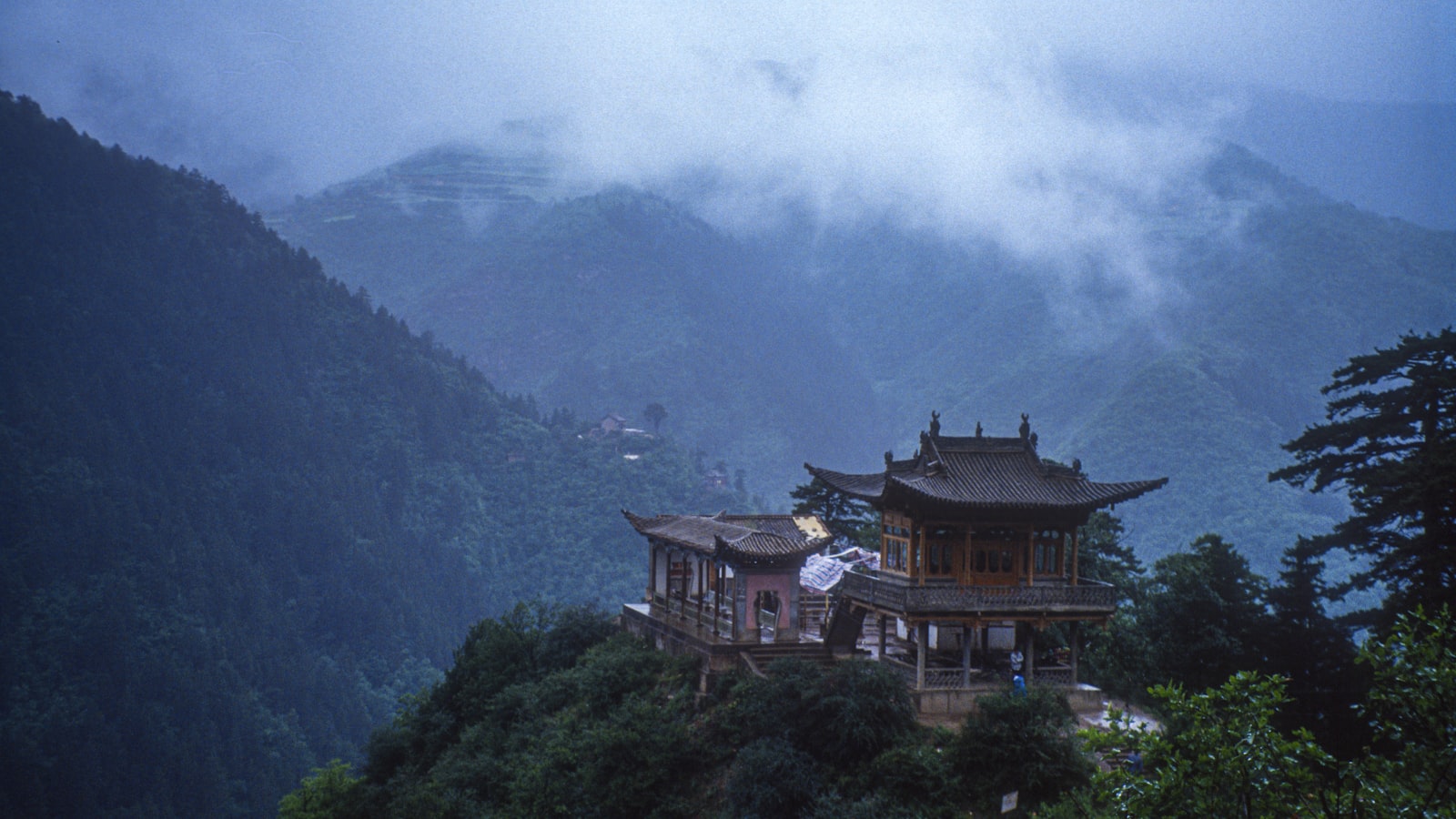
Wudang Mountains Guide (2026): Daoist Temples & Tai Chi
The Wudang Mountains in Hubei — the legendary birthplace of tai chi, the Daoist temple complex of the Golden Summit, a UNESCO site, and how to plan a visit.
Wudang Mountains, Hubei, China
Open an external map for this location.
OpenStreetMap Google Maps (opens externally)
The Wudang Mountains are the great Daoist mountain of China — a UNESCO-listed range of mist-wrapped peaks, cliffside temples and palaces where the practice of tai chi and the internal martial arts is said to have been born. The crown is the Golden Summit, a 500-year-old metal temple on the highest peak.
Where Mount Tai was the mountain of emperors, Wudang is the mountain of Daoists. For over a thousand years this range in the north of Hubei province was the center of the Daoist world — a place of hermits, alchemists, martial artists and, from the Ming dynasty onward, imperial construction on a spectacular scale. The temples and palaces that survive form one of the most complete Daoist complexes in China, and the mountain’s reputation as the birthplace of tai chi draws martial-arts pilgrims from around the world. It is quieter and more atmospheric than the headline sights of eastern China, and all the more memorable for it.
The Golden Summit
The essential Wudang experience is the ascent to the Golden Summit (Jinding), the temple complex on the 1,612-meter peak of Tianzhu, the highest of the range. The summit’s centerpiece is the Hall of the Supreme Ultimate, a Ming-dynasty pavilion built almost entirely of copper and gold. For more than 500 years it has stood exposed on the peak, its metal roof and gilded interior resisting the mountain weather that destroys lesser buildings. On a clear day the view from the summit is one of the great panoramas of central China — a sea of forested peaks rolling away in every direction, with the temple at their center.
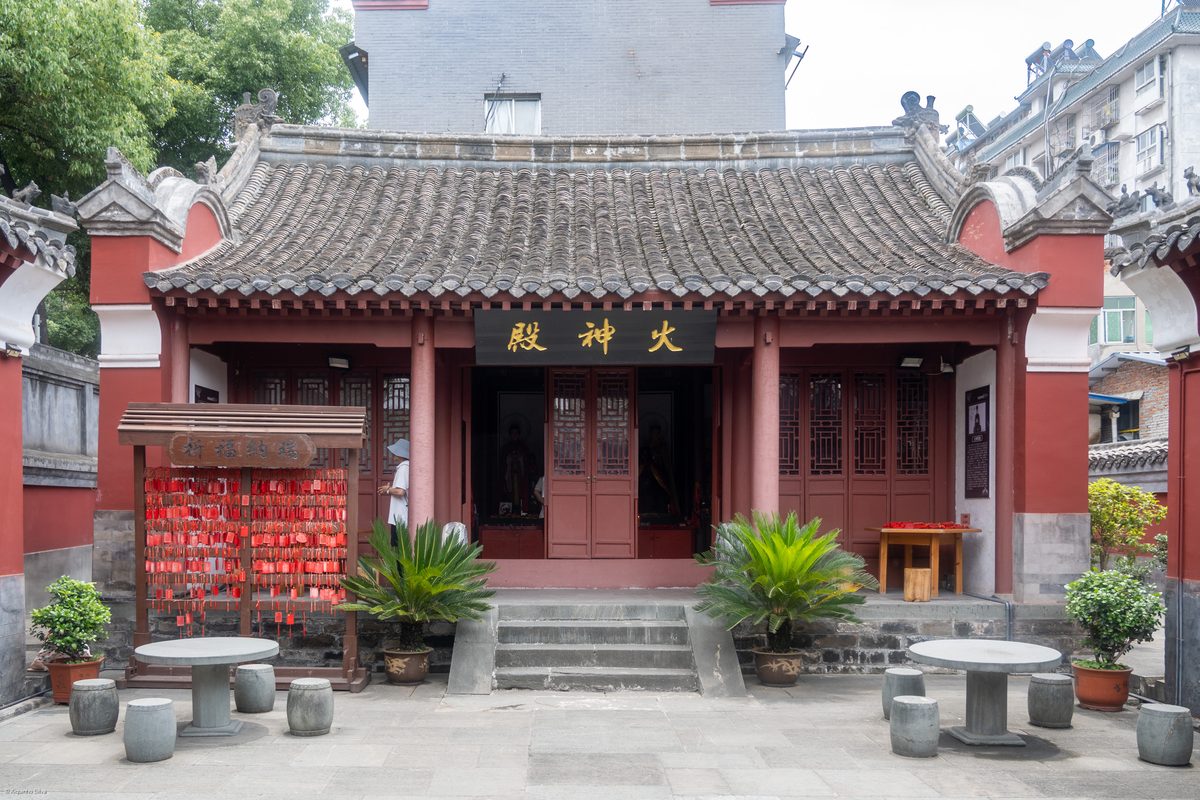
The summit of the Wudang Mountains, crowned by the Golden Summit temple complex.
Getting up is straightforward: a shuttle bus runs from the base area to the midpoint, and a cable car covers most of the remaining climb to a station just below the summit. From the cable-car station the Golden Summit is a steep but short walk up the stone stairs. On misty days the summit can be entirely socked in, so check the conditions before paying for the cable car — the classic Wudang view needs clear weather.
The great temples
Below the summit, the slopes of Wudang are threaded with temples and palaces that reward a second day. The most important are reached along the route down or by short drives between the base areas:
- Purple Cloud Temple (Zixiao Gong) — the largest and best-preserved of Wudang’s ancient complexes, a Ming masterpiece of halls and courtyards set against the forested slope. It is the traditional center of the mountain’s Daoist practice and the most atmospheric place on Wudang to see monks at work.
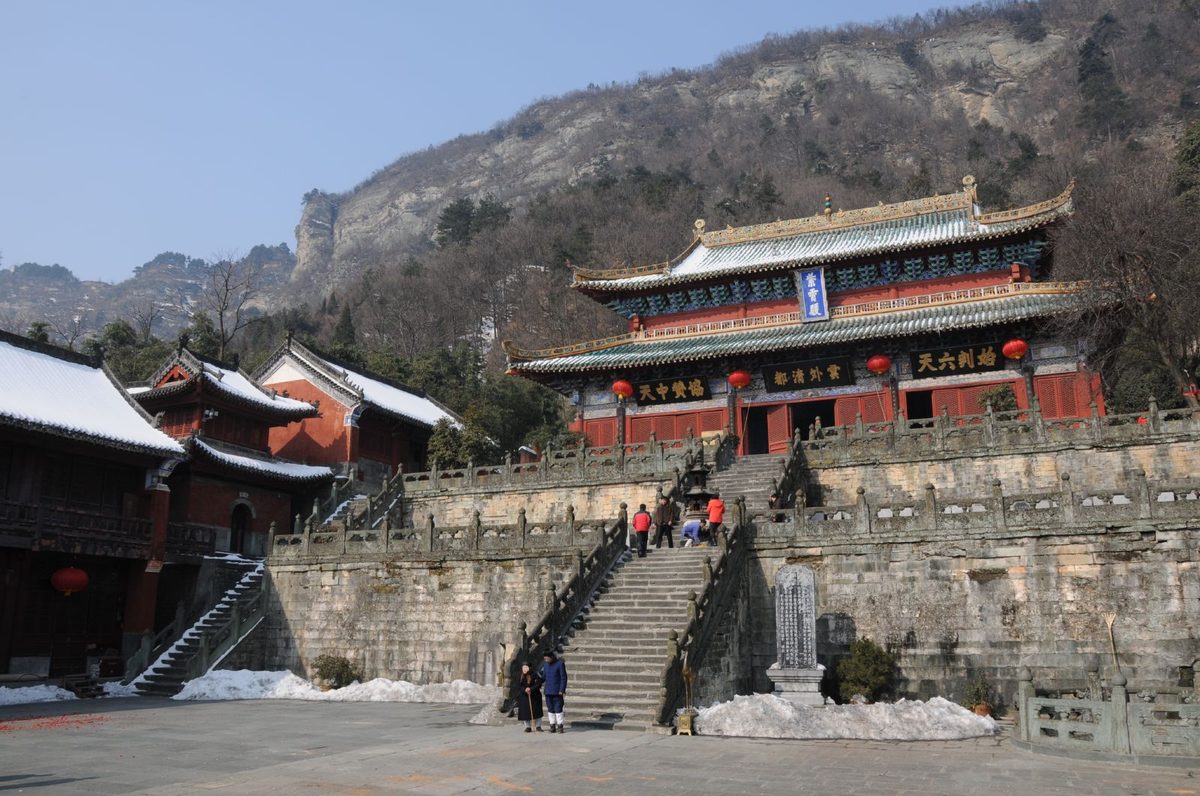
The Purple Cloud Temple, the largest and most atmospheric of Wudang’s Ming-dynasty complexes.
- South Cliff (Nanyan) — a dramatic cluster of shrines and pavilions built onto the edge of a sheer cliff, including the Dragon Head Stone, a narrow stone ledge extending over the void that was once used for ritual offerings. The cliffside setting is the most theatrical sight on the mountain.
- Reclining Dragon Bridge and the Taihe Palace — historic structures that mark the imperial pilgrimage route, with stone bridges and ancient trees.
- The Eight Immortals Temple and smaller shrines — scattered across the range, each with its own Daoist story.
The temples of Wudang are set deep among the forested slopes of the range.
A short history of the sacred mountain
Wudang’s story goes back more than a thousand years, but the period that shaped the mountain you see today was the Ming dynasty (1368–1644). The founding Ming emperor and his son the Yongle Emperor both revered the Daoist faith, and Yongle — who had claimed the throne with the support of a Daoist monk — launched one of the largest building programs in Chinese history here. Between 1412 and 1424, imperial craftsmen built a vast complex of palaces, temples and fortifications across the range, designed around the Daoist cosmology that the emperor himself embodied. The result was a sacred landscape: a chain of ritual buildings climbing from the base toward the Golden Summit, laid out according to the geometry of Daoist belief. Much of what you see today dates from that single, extraordinary construction campaign, which is why the architecture has a rare coherence — an entire holy mountain built to one imperial design. Later dynasties added to it, but the Ming vision remains the core, and it is this unique combination of religion, empire and architecture that earned Wudang its UNESCO listing in 1994.
What to eat in Wudangshan
The town of Wudangshan, at the foot of the mountain, is a pleasant place to base yourself, and its food is the robust cuisine of northern Hubei. Look for the region’s hot dry noodles (a Hubei breakfast staple), soup dumplings, and slow-braised pork dishes, along with mountain specialties like stir-fried bamboo shoots and wild mountain greens that reflect the local terroir. Many restaurants near the temples cater to pilgrims with simple, hearty vegetarian dishes — a nod to the Daoist tradition of the mountain, where many practitioners eat plant-based food. Meals are inexpensive (about 30–60 RMB per person), and the temple-area stalls are handy for a snack between sites. If you are staying on the mountain to catch the early-morning practice, pack a little food of your own or rely on the small guesthouse kitchens.
Tai chi at the source
No visit to Wudang is complete without understanding its martial heritage. Wudang is traditionally credited as the birthplace of tai chi (taiji) and the internal martial arts — the soft, circular styles that developed, according to legend, when the Daoist sage Zhang Sanfeng watched a crane and a snake fight and realized that yielding could overcome force. Whether the legend is literal history or not, the mountain remains a living center of practice: dawn on the terraces and temple forecourts often finds practitioners moving through the slow, deliberate forms. For visitors, this means two things. First, the atmosphere is genuinely spiritual — more so than any other famous mountain in China. Second, with a little planning you can join in: many schools in the town and on the mountain welcome beginners for a class or a short retreat. Even an hour of instruction on a misty Wudang morning is an experience no other destination can offer.
Getting there and practical notes
- Getting there — high-speed rail from Wuhan reaches Wudangshan West station in about 2 hours; from the station, shuttles and taxis run to the mountain entrance (about 30–40 minutes). Wudang sits roughly halfway between Wuhan and Xi’an on the rail network, so it fits naturally into a longer route.
- Getting around — the mountain has shuttle buses connecting the base, the temples and the cable-car station. Book tickets with Alipay and an eSIM before you arrive.
- Gear — comfortable shoes are essential; the temple sites involve stairs and uneven stone. Bring layers for the summit, which is noticeably cooler than the base.
- Best season — autumn (October–November) and spring (April–May) are the clear windows, with mild weather and the best chance of clear summit views; summer is hot and wet, winter cold.
A realistic budget
A Wudang visit is moderately priced. The mountain entrance ticket is roughly 130–140 RMB, the shuttle bus around 100 RMB, and the cable car around 80–100 RMB one way (estimates, prices change — confirm current rates). A comfortable hotel in the town of Wudangshan runs 200–500 RMB a night, with basic guesthouses cheaper. Food is inexpensive — a meal 40–80 RMB per person. For a two-day, one-person budget including tickets, transport on the mountain and accommodation, expect roughly 800–1,200 RMB, not counting travel to Wudang. Book the entrance ticket and shuttle ahead during holidays, when the mountain can be very busy.
Combining Wudang with the region
Wudang sits in the north of Hubei, well positioned for a central-China route. Many travelers link it with Wuhan, the provincial capital and a major rail hub, and with Zhangjiajie further south, whose sandstone pillars are a very different kind of natural spectacle (see the Zhangjiajie guide). For mountain-lovers, the other great sacred peak of China — Huangshan in Anhui, with its granite peaks and famous sunrises — makes a natural comparison or a second leg (see the Huangshan guide). If you are traveling on the high-speed network, booking your train tickets between these cities ahead of time makes the routing smooth.
The bottom line
The Wudang Mountains are China’s great Daoist mountain — a UNESCO-listed range of cliffside temples, ancient palaces and misty peaks crowned by the Golden Summit, and the legendary birthplace of tai chi. Come for the Ming architecture, stay for the dawn practice and the quiet, spiritual atmosphere that no other mountain in China quite matches.
Last updated: August 2026. Opening hours, shuttle and cable-car schedules and ticket prices change — confirm current details before you go.
Frequently Asked Questions
What are the Wudang Mountains known for?
The Wudang Mountains are the most important Daoist mountain range in China — for centuries a center of Daoist practice, pilgrimage and martial arts. They are traditionally considered the birthplace of tai chi, and their slopes hold a remarkable complex of temples, palaces and cliffside shrines, crowned by the Golden Summit temple at 1,612 meters. The whole complex is a UNESCO World Heritage site.
How do I get to the Wudang Mountains?
The gateway town is Wudangshan (Shiyan city), and the high-speed rail line from Wuhan reaches **Wudangshan West station** in about 2 hours. From the station, shuttle buses and taxis run to the mountain entrance about 30–40 minutes away. You can also fly into Wuhan or Xiangyang and continue by rail. It's an easy addition to a central-China route that often includes Wuhan and Zhangjiajie.
Can I see tai chi at Wudang?
Yes — Wudang is the traditional home of tai chi and the internal martial arts, and the mountain is full of practitioners. On the mountain and in the town of Wudangshan you'll find schools and public practice areas where people train early in the morning, and many visitors join short beginner classes. With planning you can book a session with a local school or an instructor at one of the temples.
How long should I spend at Wudang?
Two days is the standard visit: a full day to take the shuttle and cable car up to the Golden Summit and walk down through the main temples, and a second day for the lower temples, the town, or a tai chi class. A single rushed day can see the summit but misses the quieter temple sites and the dawn practice that makes Wudang special.
Is Wudang hard to visit?
The summit is high (1,612 meters) and involves a climb, but it is manageable: a shuttle bus runs from the base to near the midpoint, and a cable car carries you most of the way to the top. From the upper cable-car station the Golden Summit is a short steep walk. Between the main temple sites the paths involve stairs and uneven stone, so comfortable shoes and reasonable fitness are needed.
What is the Golden Summit?
The Golden Summit (Jinding) is the crowning temple of Wudang, perched at 1,612 meters on the highest peak. Its main hall is a copper-and-gold pavilion built in the Ming dynasty, a masterpiece of metal architecture that has stood on the peak for over 500 years. On a clear day the views over the sea of surrounding peaks are the best on the mountain.