

Chaozhou Guide (2026): Ancient Streets, Teahouses & the Food Capital
Chaozhou, the ancient city in Guangdong — the old town, the famous teahouses, the craft traditions and one of China's greatest food scenes.
Chaozhou, Guangdong, China
Open an external map for this location.
OpenStreetMap Google Maps (opens externally)
Chaozhou is one of China’s great food cities and the heart of a rich regional culture — a remarkably preserved old town, the famous gongfu teahouses and a cuisine celebrated across the country. It’s a compact, atmospheric gem near the bigger cities.
Chaozhou is the kind of place that rewards the traveler who goes a little off the main route. The old city is authentic and lived-in — Ming and Qing streets, temples, and teahouses where the slow ritual of gongfu tea still plays out. The food is legendary, one of China’s great regional kitchens. And the culture — the opera, the crafts, the tea — is distinct and deep. It’s a city of atmosphere and flavor, and a wonderful stop in southern China.
The old town
- The ancient streets — Ming and Qing lanes and courtyard houses, still lived-in and working.
- The Guangji Bridge — the famous ancient bridge across the Han River, with its distinctive ‘floating’ middle section.
- The Kaiyuan Temple — the large, ancient Buddhist temple in the heart of the old town.
The old town is authentic — a working ancient city, not a reconstruction.
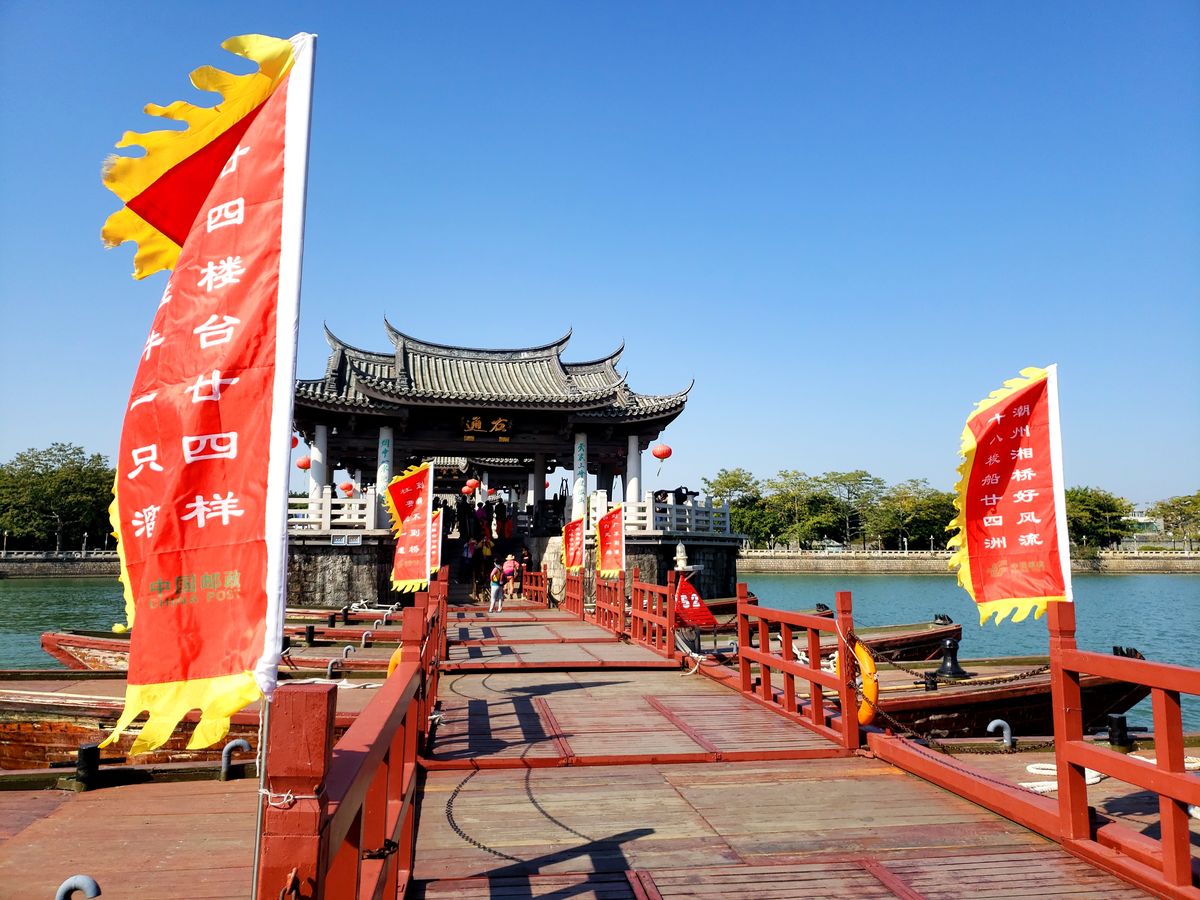
The Guangji Bridge, with its boat-joined “floating” middle section, is the old town’s famous landmark.
The gongfu tea culture
- The ritual — the slow, elaborate brewing of oolong tea in small pots and tiny cups.
- The teahouses — the old town’s teahouses are the place to experience it; the afternoon unfolds slowly.
- The culture — gongfu tea is Chaozhou’s signature tradition, and the teahouses are a highlight.
The teahouse is the heart of Chaozhou’s social life — and one of the most authentic experiences in southern China.
The food
- Chaozhou cuisine — one of China’s great regional kitchens, famous for its seafood, soups and refinement.
- The specialties — beef balls and hotpot, the famous goose, the fresh seafood, the local snacks.
- The streets — the old town’s food stalls and shops, where the local scene lives.
‘The most refined cuisine in China’ — and eating it at the source is a highlight of any visit.
Practical notes
- Getting there — high-speed rail from Guangzhou, Xiamen, Shenzhen and Shantou.
- Getting around — the old town is compact and walkable; taxis for the rest.
- Best season — spring and autumn; the food is good year-round.
- Get connected — set up Alipay and an eSIM for payment and booking.
- Combining — pairs with Shantou (30 minutes away) and a Guangzhou–Xiamen southern route. See our Guangdong guide for the region.
A walk through the old town
The old town of Chaozhou is compact enough to explore on foot, and the best way to see it is simply to wander. Start at the Guangji Bridge on the Han River, one of China’s most famous ancient bridges — its central section is made of joined boats that open to let shipping pass, which is why it is called the “floating bridge.” Cross the river or walk along the bank, then enter the old town through the ancient gate towers. The streets here are lined with Ming and Qing courtyard houses, many still lived in, their tiled roofs and carved facades giving the quarter a lived-in, authentic character. The Kaiyuan Temple, in the heart of the old town, is a large and ancient Buddhist temple with a calm, tree-shaded courtyard and a working monastic atmosphere — worth half an hour even if you have seen many Chinese temples. From there the lanes branch into shops and workshops: the old pharmacy, the ceramic studios, the embroiderers, and the small food stalls that fill the streets from late morning. The whole quarter rewards an unhurried afternoon, and the absence of big tourist crowds is part of the charm.
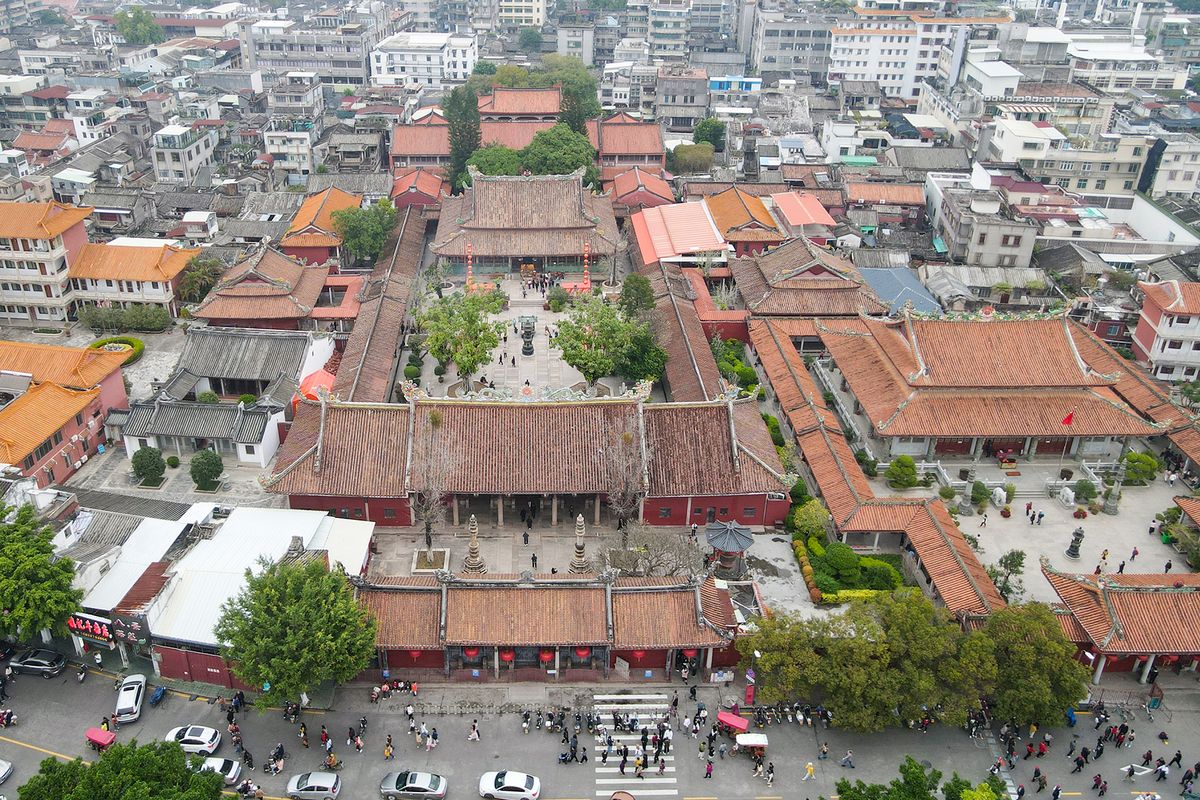
The Kaiyuan Temple, a large and ancient Buddhist temple, sits at the center of the old town.
Chaozhou cuisine in depth
Chaozhou food is often described as the most refined cuisine in China, and eating it at the source is the highlight of any visit. The principles are freshness and restraint — seafood, poultry and vegetables prepared so that the natural flavor leads, rather than masked by heavy sauces. The signature dishes to look for: beef balls (hand-pounded, springy and served in a clear soup), beef hotpot where thin slices are cooked at the table in a bubbling broth, the famous braised goose in a soy and spice marinade, and the delicate seafood dishes — fish, prawns and shellfish simply steamed or poached. The local snacks are equally distinctive: the old town’s stalls sell oyster omelets, rice noodle rolls, and the sweet and savory pastries that Chaozhou is known for across the Chinese diaspora. Pair the food with a pot of gongfu tea, which locals drink with and after meals to cut the richness. Eat often and follow the crowds — a morning snack, a full hotpot lunch, a teahouse break, and a street-food evening is the classic Chaozhou day.
The craft and culture traditions
Chaozhou culture spread around the world with the Chinese diaspora, and the home city still keeps its traditions alive. Chaozhou embroidery — fine, colorful silk work — is still practiced in the old town’s workshops, where you can watch the embroiderers at work and buy pieces directly. The city has also long been a center of ceramics, with a pottery tradition that reaches back centuries and kilns that still produce the distinctive local wares. Chaozhou opera, with its elaborate costumes and high-pitched singing, is performed in the old town and at the cultural venues, and is one of the great regional opera traditions of southern China. Even if you cannot sit through a full performance, the costumes and music are worth a glimpse. The deeper point is that Chaozhou is not a staged heritage display but a working culture — the crafts are practiced, the opera is performed, and the tea ritual is part of daily life, which is what makes the city feel so real.
Budget and practicalities
Chaozhou is a very affordable city. The old town is free to wander, the Guangji Bridge crossing costs a modest amount, and the Kaiyuan Temple entry is nominal. The food is the main expense and it is inexpensive: a bowl of beef balls or a noodle dish is 10–20 RMB, a full hotpot meal with several dishes 60–100 RMB for two, and a teahouse session 30–60 RMB per person. A comfortable hotel near the old town runs 200–350 RMB a night. The town is compact and walkable, with taxis and ride-hailing for the station and the longer hops. Set up Alipay and an eSIM before you arrive so you can pay by QR code at the small stalls and teahouses and stay connected for translation. English is limited outside the big hotels, so a translation app makes ordering the food far easier.
Common mistakes to avoid
The most common mistake in Chaozhou is treating it as a brief stop when the food and the town deserve a full day or two — a rushed half-day barely scratches either. A second is eating only at the obvious restaurants; the small stalls and the old-town lanes hold the best and cheapest food, and the crowds at the popular spots are a reliable signal. A third is skipping the teahouse because it seems slow; the gongfu tea ritual is one of the most authentic experiences in southern China, and sitting through it properly is the point. Finally, do not miss the Guangji Bridge at evening, when it is lit — and check whether the floating section is open, as it closes periodically for boats and maintenance. Plan for at least a full day, eat often, and let the city’s unhurried rhythm set your pace.
The bottom line
Chaozhou is one of China’s great food cities and the heart of a rich regional culture — an authentic old town, the gongfu teahouses and a legendary cuisine. Spend a day or two walking the ancient streets, sitting in the teahouses and eating your way through the specialties, and you’ll understand why Chaozhou is one of the most rewarding stops in southern China.
When to go, season by season
Chaozhou’s climate is the mild, humid pattern of coastal Guangdong, which means the food is good year-round and the seasons mostly affect comfort. Spring (March–May) is pleasant with warm days and occasional rain; the old town is at its freshest. Autumn (October–December) is the best all-round window — dry, warm and clear, ideal for walking the ancient streets and the teahouse afternoons. Summer (June–September) is hot and humid, with heavy rain possible; the midday heat makes the teahouse ritual a genuinely sensible break rather than a tourist indulgence. Winter (December–February) is mild and comfortable by northern standards, occasionally chilly at night, and the quietest time for crowds. Whenever you go, plan the food around the day rather than the season — the beef balls, the goose and the seafood are constants.
Pairing Chaozhou with Shantou
Chaozhou and Shantou are two halves of the same cultural region — the “Chaoshan” area — connected by about 30 minutes of high-speed rail. Shantou is the bigger, busier city, famous for its waterfront and its own branch of the same cuisine, while Chaozhou holds the preserved old town and the deep history. A practical pairing is to base yourself in one and day-trip the other: spend a full day in Chaozhou’s old town, teahouses and food streets, then take the short rail hop to Shantou for its harbor and a different set of the same signature dishes. The two together give a fuller picture of Chaoshan culture — the food, the crafts and the architecture that spread with the Chinese diaspora. If you are moving between Guangzhou and Xiamen, Chaozhou fits naturally as a one- or two-night stop on the route.
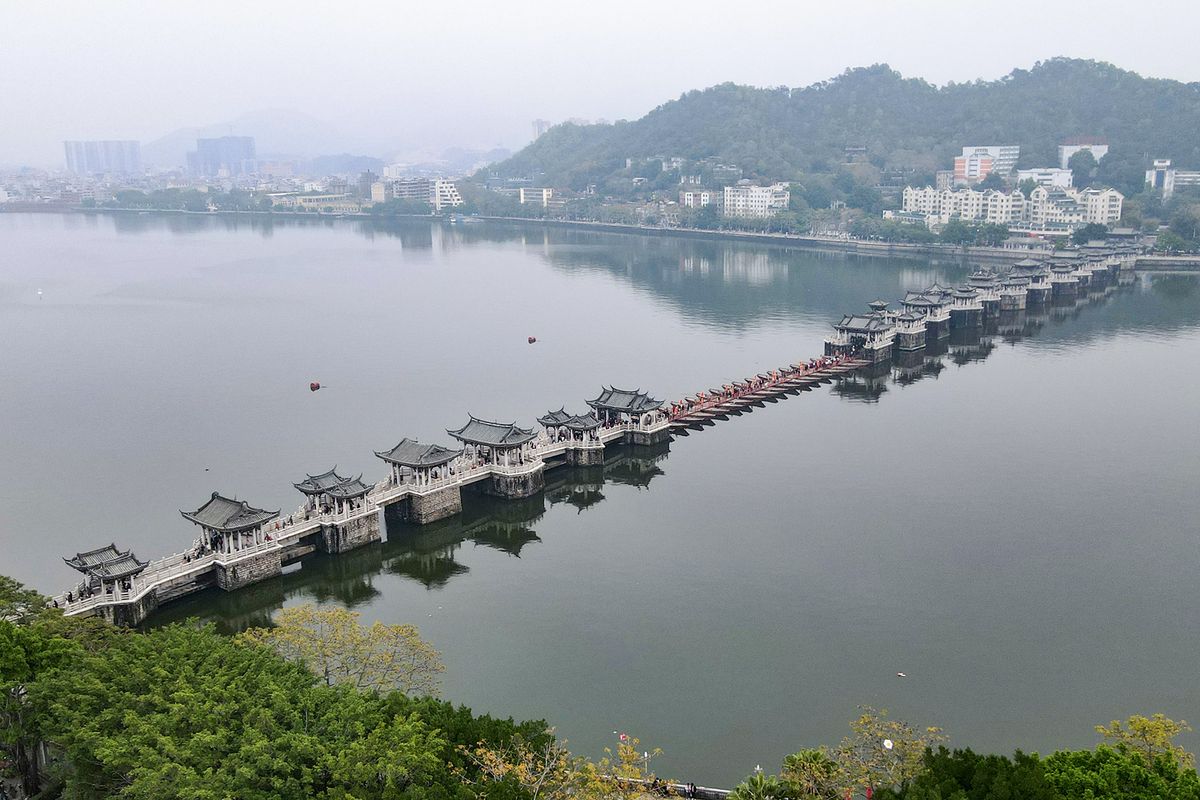
The Han River flows through the heart of the Chaoshan region, linking Chaozhou with Shantou.
Last updated: August 2026. Access and opening hours change — confirm current details before you go.
Frequently Asked Questions
What is Chaozhou known for?
Two things above all: **Chaozhou cuisine** — one of China's great regional kitchens, famous for its seafood, soups and craftsmanship — and the **old city**, a remarkably preserved ancient town with Ming-and-Qing streets, temples and the famous teahouses. It's also the heart of **Chaozhou culture**: the opera, the embroidery and the ceramic traditions that spread with the Chinese diaspora. It's a compact, atmospheric and delicious place to visit.
Is Chaozhou worth visiting?
Yes — especially for food lovers and anyone interested in a genuine, un-touristy old Chinese town. Chaozhou's old city is authentic and lived-in, not a theme park: the ancient streets, the teahouses where locals still gather, and the Guangji Bridge across the Han River. And the food is the draw for many — Chaozhou cuisine is celebrated across China, and eating it at the source is a highlight. It's an off-the-beaten-path gem near the more famous cities.
What should I eat in Chaozhou?
The Chaozhou kitchen is famous for: **fresh seafood** (prepared simply to show the flavor), **beef hotpot and beef balls**, the delicate **teochew-style dishes**, and the local **snacks and street food** of the old town. The city's food is refined and distinctive — 'the most refined cuisine in China,' the saying goes. Follow the local crowds, eat often, and try the specialties: the beef balls, the goose, the seafood and the teas.
What is the old town of Chaozhou like?
The **old town** is a remarkably preserved ancient city: Ming and Qing streets, traditional courtyard houses, temples and shops, still lived-in and working. The centerpiece is the **Guangji Bridge** (also called the 'floating bridge'), a famous ancient structure across the Han River. The **Kaiyuan Temple** is the other highlight — a large, ancient Buddhist temple in the heart of the old town. It's an authentic, atmospheric step back in time.
How do I get to Chaozhou?
**High-speed rail** connects Chaozhou to Guangzhou (about 2–2.5 hours), Xiamen, Shenzhen and Shantou. It's a natural stop near **Shantou** (the other half of the Chaozhou–Shantou cultural region, about 30 minutes away) and works well as a 1–2 day stop on a southern route — Guangzhou, Chaozhou and Xiamen are a possible sequence. The old town is compact and walkable.
How much time do I need in Chaozhou?
**One to two days**: a day covers the old town, the Guangji Bridge, the Kaiyuan Temple and a first taste of the food; a second day lets you go deeper into the teahouses, the craft workshops and the wider food scene. For food lovers, two days is easily justified. It works as a full day from Shantou or as a 1–2 night stop of its own.
What is the Chaozhou teahouse culture?
Chaozhou has a distinctive **gongfu tea** culture — the elaborate, slow ritual of brewing oolong tea in small pots and tiny cups. The teahouses of the old town are the place to experience it: you sit, the tea is brewed with ceremony, and the afternoon unfolds slowly. It's one of the most authentic traditional experiences in southern China, and the teahouses are a highlight of any visit.
More in Guangdong
Guangdong Travel Guide (2026) — Guangdong travel guide