
Guangdong Travel Guide (2026)
Plan Guangdong: Guangzhou's Cantonese food and history, Shenzhen's skyline and tech scene, with seasons, transport and itineraries.
OpenStreetMap Google Maps (opens externally)
Guangdong is China’s gateway province — a fast-moving pair of megacities, Guangzhou and Shenzhen, where Cantonese food culture and China’s modern skyline sit side by side.
For most international travelers, Guangdong is the arrival point: Hong Kong’s neighbour and the landing zone for many long-haul flights. But the province deserves more than a transit stop. Guangzhou is one of China’s oldest trading cities, with a 2,000-year history written in its temples, colonial-era buildings, and legendary food scene. Shenzhen, barely a fishing village in 1980, has become a byword for China’s tech boom and now one of the country’s most striking skylines. This hub guide covers the essentials of both and how to plan them together.
Overview
Guangdong sits on China’s southern coast, wrapped around the Pearl River Delta and bordering Hong Kong and Macau. It has long been China’s most outward-looking region — the starting point of the maritime Silk Road and the homeland of the overseas Chinese diaspora, which is why Cantonese food became the Chinese cuisine most familiar in the West. Today the delta is one of the world’s most densely built urban regions, connected by an almost seamless web of high-speed rail and metro lines. Two cities anchor it: the historic capital Guangzhou and the boundary-pushing newcomer Shenzhen. Beyond them, the province holds quieter corners — the kung fu and ceramics heritage of Foshan, the coastal resort of Zhuhai facing Macau, and the distinctly different Teochew food culture around Chaozhou and Shantou in the east. For a first visit, though, the two big cities are more than enough.
Best time to visit
- October to December is the best window: cooler, drier, and comfortable for walking and eating outdoors.
- March to May is pleasant but humid, with occasional rain as the monsoon builds.
- June to September is hot and humid, with summer storms and the occasional typhoon; if you visit, plan indoor-heavy days and stay flexible.
Getting there and getting around
By air: Both Guangzhou Baiyun (CAN) and Shenzhen Bao’an (SZX) are major international airports with extensive route networks. Hong Kong International Airport is also close for those arriving that way.
By high-speed rail: The two cities are about half an hour apart by train, and both connect deep into the national network — to Guilin, Changsha, Wuhan, and beyond. The metro systems in Guangzhou and Shenzhen are modern, English-signed, and among the best in China.
Within Guangdong: Beyond the two big cities, the province offers Foshan (ancestral halls and kung fu heritage), Dongguan, and the Chaozhou-Shantou region in the east with its distinct Teochew food culture. All are reachable by high-speed rail. Getting around is easy in another sense too: both Guangzhou and Shenzhen have dense, English-signed metro systems, and ride-hailing apps like Didi work across the whole delta, so you rarely need to wait long for a car even at odd hours.
Main destinations
- Guangzhou — the provincial capital and cultural anchor: the Chen Clan Ancestral Hall, the 600-year-old Zhenhai Tower, the Pearl River waterfront, and one of China’s great food scenes, anchored by dim sum breakfast culture. Give it two days.
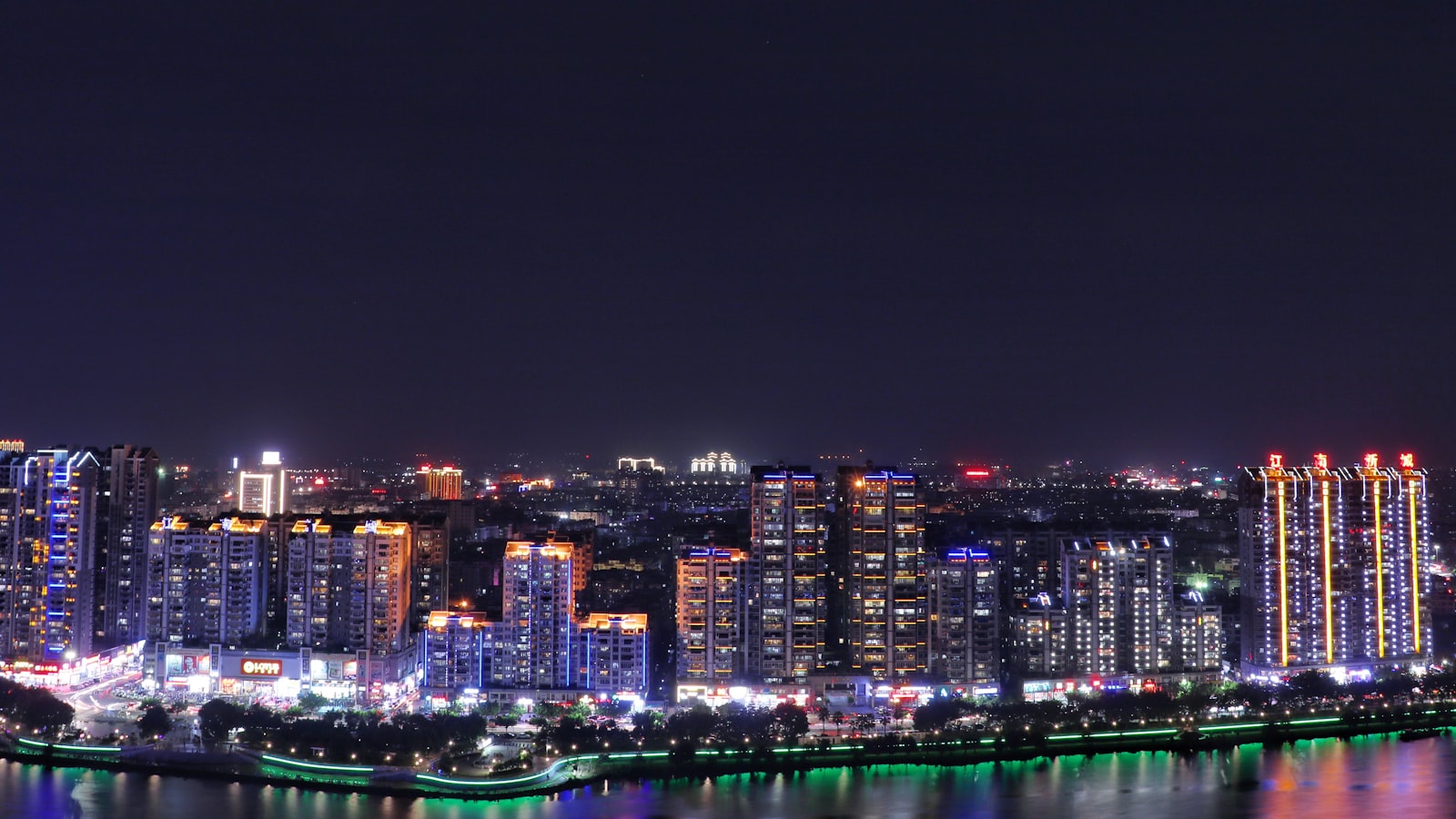
- Shenzhen — the showcase of China’s modern era: a glittering skyline around Futian, the OCT-LOFT creative district, Dapeng Fortress for history, and miles of coastal parks and boardwalks. One to two days is enough to get its measure.
Suggested itinerary
- Day 1 — Guangzhou: arrive, then walk the old city — Chen Clan Ancestral Hall, Shamian Island’s colonial streets, and a proper Cantonese dinner.
- Day 2 — Guangzhou: morning dim sum (go early, with locals), the Pearl River waterfront, and the Canton Tower at sunset.
- Day 3 — Shenzhen: take the half-hour train across, then the Futian skyline, a coastal park (OCT Bay or Dameisha), and the OCT-LOFT district in the evening.
- Day 4 — optional day trip: Foshan’s ancestral halls and kung fu heritage, or head onward by train to Guilin, Hong Kong, or Macau.
Practical tips
- Eat where the locals queue. Cantonese food culture means quality is high everywhere, but the best breakfasts and dinners come from busy neighbourhood restaurants, not tourist streets.
- Use the metro. Guangzhou and Shenzhen metro systems are cheap, fast, and English-signed; buy tickets at the machines or tap with a payment app.
- Beat the heat. If you travel in summer, plan morning and evening outdoor time and retreat to air-conditioned museums and malls in the afternoon.
- Book ahead for big nights. Popular dim sum restaurants and weekend spots fill up; use apps like Meituan or Dianping (both work with a Chinese payment setup) to reserve.
- Connectivity first. Set up Alipay and a VPN or eSIM before you arrive so taxis, maps, and payments work from touchdown.
Food & drink
Cantonese cuisine is the province’s calling card, and it rewards intention. Dim sum is the ritual — a rolling-cart breakfast of har gow (shrimp dumplings), siu mai, rice-noodle rolls, egg tarts and barbecue pork buns, best taken mid-morning among local families. At dinner, roast goose and char siu (barbecue pork) hang in shop windows, congee comes silky and topped with everything from century egg to fish, and seafood is chosen live from tanks. Freshness is the Cantonese religion: ingredients are prized for their own flavor, seasoning is light, and soup is considered essential. Beyond Guangzhou, the east of the province belongs to Teochew (Chaozhou) cooking — a distinct, subtler tradition famous for seafood, braised goose and tea ceremony. Come hungry and eat often; quality is high and cheap eats are everywhere.
Beyond the two megacities
Guangzhou and Shenzhen absorb most trips, but the delta hides rewarding day trips. Foshan, half an hour away, is the home of kung fu — Bruce Lee’s and Ip Man’s ancestral city — and of centuries-old ceramics; its Zumiao temple and Shiwan pottery kilns make a gentler, lower-rise contrast. Zhuhai, facing Macau, offers a long coastal promenade and a relaxed, garden-city mood. Eastward, the Chaozhou–Shantou region is a food destination in its own right, with old-town streets, the Guangji Bridge and some of China’s most refined seafood. All are linked by high-speed rail, so they slot in as day trips or overnighters without breaking the itinerary’s logic.
A short history
Guangdong’s openness is old. Guangzhou (Canton) was for centuries the sole port through which China’s foreign trade was channeled — the Canton System — which made it the country’s window to the world and the jumping-off point for millions of emigrants. That legacy lives on in the colonial arcades of Shamian Island, in the merchant houses of the Chen Clan, and in a Cantonese diaspora that carried dim sum and the province’s dialects to every continent. Shenzhen’s story is the compressed modern mirror: a fishing county designated a Special Economic Zone in 1980, it grew into a megacity within a generation. Together the two cities tell a single story — a province that has spent two thousand years facing outward.
Morning tea is the essential ritual: order by marking a card or pointing, and expect the room to fill with families by mid-morning. If you’re crossing to Hong Kong or Macau, the metro and high-speed rail make both transfers quick — but check current border and visa rules first. Even the street names and temple incense carry that outward-facing memory, which is why Guangdong rewards looking up as much as looking around.
Last updated: August 2026. Air routes, rail schedules and entry rules into Guangdong change — confirm before you go.
Frequently Asked Questions
How many days do I need for Guangdong?
Three to four days covers the two big cities comfortably — a couple of days in Guangzhou for the food and history, and one or two in Shenzhen for the skyline and its parks. With a fifth day you can add a day trip to Foshan's ancestral halls or the colonial architecture of nearby towns.
When is the best time to visit Guangdong?
Autumn (October to December) is the sweet spot — drier and cooler than the oppressive summer. Spring (March to May) is pleasant but can bring rain and humidity. Summers are hot, humid, and typhoon-prone, though air conditioning is everywhere indoors.
How far apart are Guangzhou and Shenzhen?
Close. The high-speed rail link takes roughly half an hour, and frequent trains mean you can easily do both cities in one trip. The metro systems also connect to the wider Pearl River Delta.
Do I need a visa to enter Guangdong?
Entry rules are the same as mainland China generally — most travelers need a visa, though citizens of many countries can use visa-free entry or the 240-hour transit scheme for short stays. Check the [visa-free list](https://chinotrips.com/visa/visa-free-countries/) and current rules before booking.
What is Guangdong famous for food-wise?
Cantonese cuisine, the most widely known style of Chinese food abroad — dim sum, roast goose, congee, and fresh seafood. Guangdong locals are serious about food, so the standard is high and cheap eats are everywhere.