
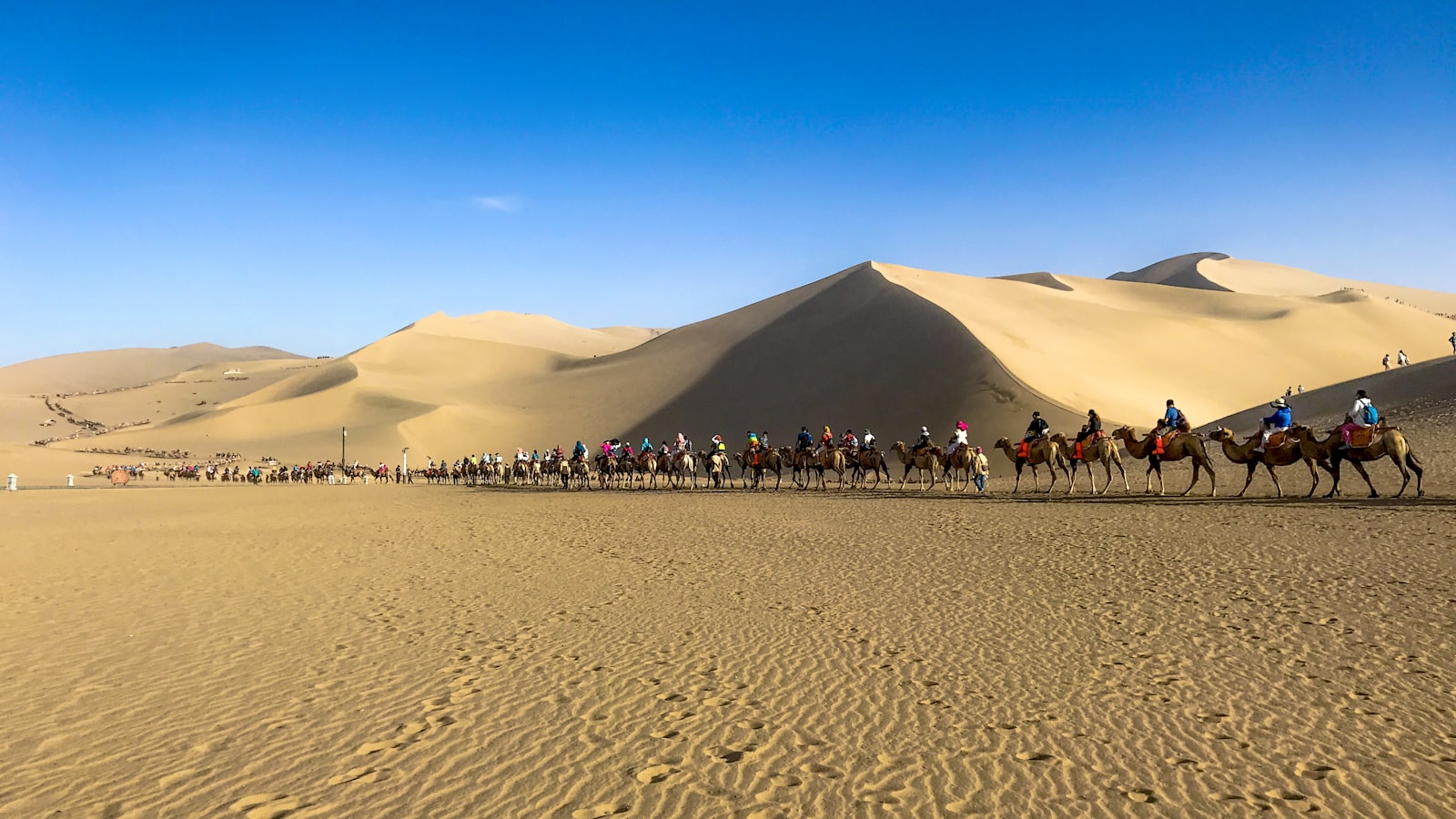
Dunhuang Travel Guide (2026): Mogao Caves & the Silk Road
The essential Dunhuang guide — the Mogao Caves (book ahead), Singing Sand Dunes, Crescent Lake and Silk Road history.
OpenStreetMap Google Maps (opens externally)
Dunhuang is the Silk Road’s greatest art treasure — a desert oasis where Buddhist cave murals have survived for more than a thousand years.
Far from China’s big cities, Dunhuang rewards travelers who make the journey west. This guide covers the essentials.
Overview
Dunhuang was once the crossroads of the Silk Road, where caravans paused between China and Central Asia. Its glory days left behind the Mogao Caves — hundreds of rock-cut Buddhist temples decorated with murals and statues spanning roughly 1,600 years of history. Around the town, the desert offers some of China’s most surreal landscapes: singing sand dunes, a crescent-shaped lake, and ruined passes on the old trade route.
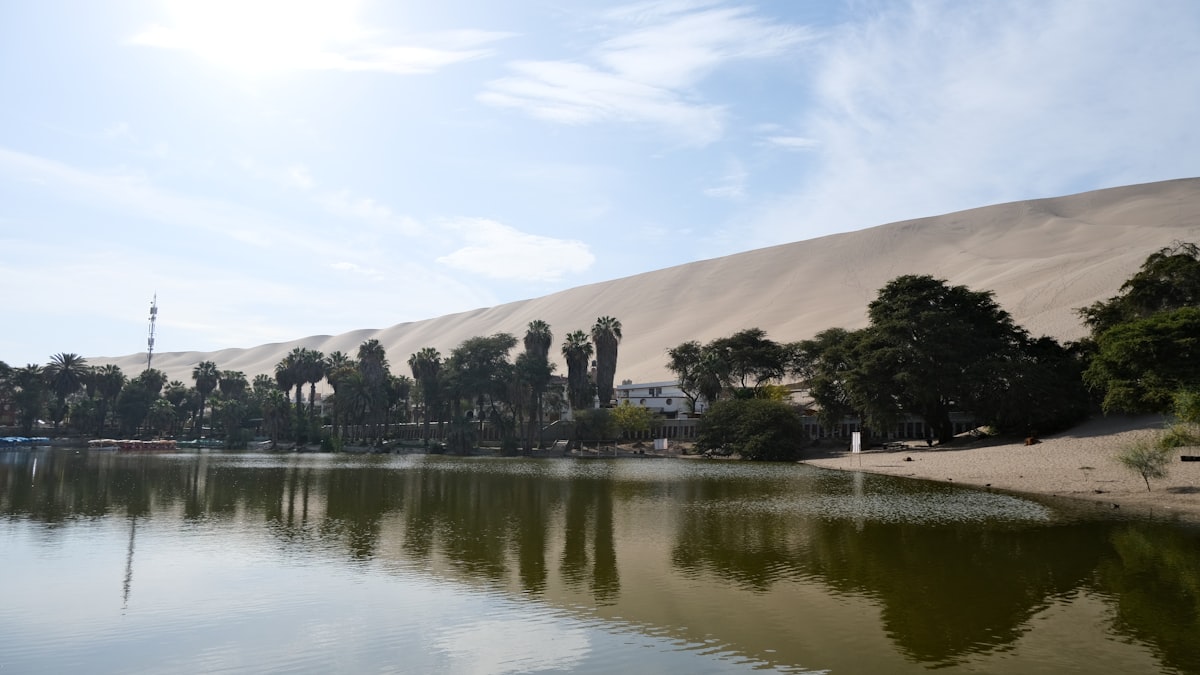
Crescent Lake survives in the heart of the Singing Sand Dunes — a spring oasis that has endured among the dunes for centuries.
How many days
2 days is the standard plan:
- Day 1: Mogao Caves in the morning, then the Shazhou night market in the evening.
- Day 2: Singing Sand Dunes and Crescent Lake, plus Yumen Pass or Yangguan if time allows.
Suggested itinerary
A 2-day plan:
- Day 1 — Mogao Caves: book a timed slot and spend the morning at the Mogao Caves; late afternoon at the Singing Sand Dunes and Crescent Lake for the desert sunset.
- Day 2 — The Silk Road forts: a full-day trip to Yumen Pass and Yangguan Pass and the yardang landforms, then the Shazhou Night Market for dinner.
Have more time? Add a third day for the Dunhuang museum and its replica caves. Dunhuang is the highlight of a Gansu route.
Best time to visit
- May & October: the sweet spot — mild days, clear skies.
- April, June & September: good, with more heat.
- July–August: very hot in the dunes; go early or late in the day.
- Winter (November–March): cold, windy and quiet; some sites scale back services.
Top sights
- Mogao Caves — the main event. A guided, timed visit through a handful of the open caves, lit with the original murals intact. Book ahead.
- Singing Sand Dunes (Mingsha Mountain) & Crescent Lake — sand dunes that ‘sing’ in the wind, and a spring lake that has survived in their midst; camel rides and sunset views.
- Shazhou Night Market — dried fruit, local snacks and Silk Road souvenirs.
- Yumen Pass & Yangguan Pass — ruined gates of the old Silk Road, about an hour from town; stark and atmospheric.
- Yadan Landforms — wind-carved ‘ghost city’ rock formations further into the desert; usually a half-day excursion.
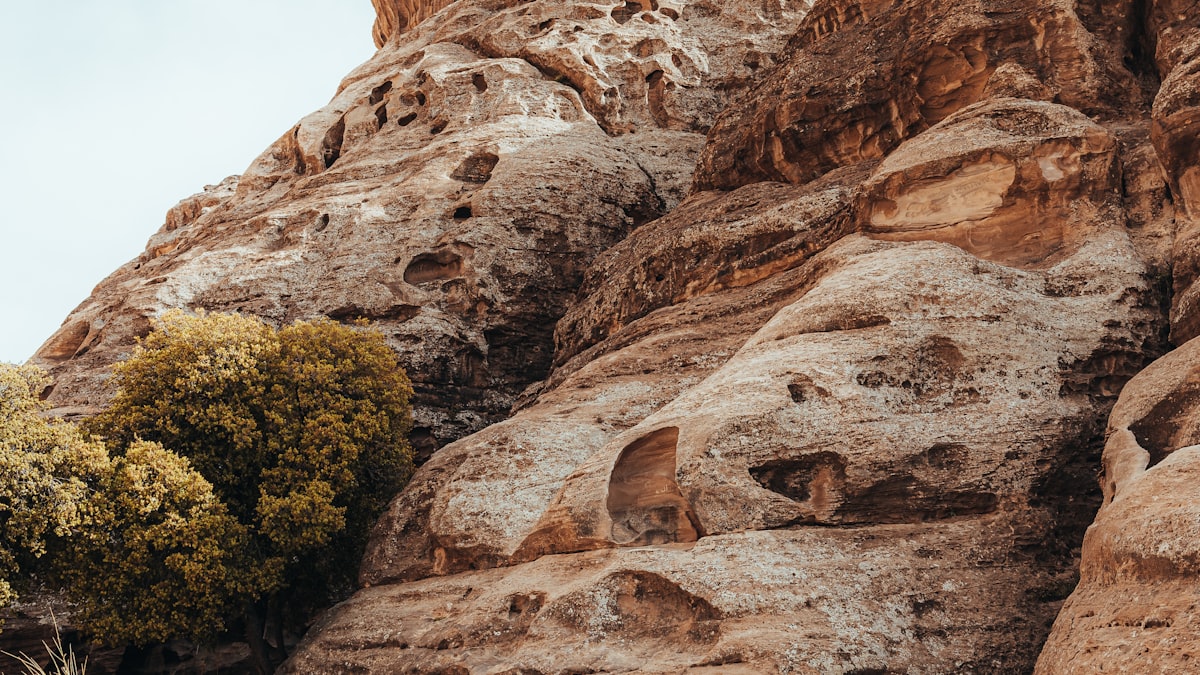
The Yadan ‘ghost city’ landforms are wind-carved rock shapes scattered through the desert east of Dunhuang.
The Mogao Caves in depth
The Mogao Caves are the reason most travelers make the journey west, and understanding what you are seeing makes the visit far richer. The site is a cliff face near the oasis town of Dunhuang, honeycombed with hundreds of cave temples carved and decorated between the 4th and 14th centuries. Buddhist monks, Silk Road merchants and local rulers all funded caves as acts of devotion, and the murals and statues they left behind trace a thousand years of Chinese and Central Asian art.
What survives is astonishing: painted Buddhist narratives, flying celestial figures (apsaras), and scenes of daily life that read almost like documentary records of the Silk Road. The caves also hold an enormous library of manuscripts, discovered in the early 20th century in a sealed library cave, which became one of the most important archaeological finds in Chinese history. That discovery brought Dunhuang to international attention — and, unfortunately, attracted explorers who carried off thousands of manuscripts to museums abroad. Today, a guided visit takes you through a rotating selection of open caves, so you will see a different handful depending on the day. Photography is not allowed inside, which keeps the murals protected and the experience intimate.
A realistic budget
Dunhuang’s remote location makes transport the biggest budget item; the sights themselves are moderate.
- Getting there: flights from Lanzhou, Xi’an or Beijing run roughly ¥600–1,500 each way depending on the season and how early you book; the overnight train from Lanzhou is the budget alternative, with hard sleepers from about ¥300–400.
- Mogao Caves: entry is roughly ¥200–240 (prices change), and it includes the guided tour — book online ahead, as daily slots are capped.
- Dunes and Crescent Lake: the scenic area ticket is typically around ¥110–130; a camel ride adds roughly ¥100, and sandboarding or a dune buggy cost extra.
- Day tours: a shared tour to Yumen Pass and the Yadan landforms runs about ¥300–500 per person; a private car is more.
- Food: meals are cheap — ¥30–60 at the night market or local noodle shops; the oasis grows its own melons and dried fruit.
Common mistakes to avoid
- Booking the Mogao Caves too late. With daily visitor caps, tickets sell out days ahead in high season — reserve the moment your dates are fixed.
- Photographing inside the caves. It is not allowed, and the rules are enforced; respect them and the guides’ requests.
- Visiting the dunes at midday. The sand is scorching at noon; go for sunrise or the late-afternoon golden hour.
- Underpacking for the temperature swing. Desert days are hot and nights cold — a fleece in summer and a heavy coat in winter are non-negotiable.
- Forgetting water and sun protection. Shade is scarce at the dunes and the Yadan landforms; a hat, sunglasses and a refillable bottle are essential.
- Rushing the schedule. Dunhuang is a full two days minimum; a rushed single day means choosing between the caves and the dunes, and missing one you came for.
Where to stay
Dunhuang’s hotels cluster around the Shazhou market and the main avenue leading to the caves, both an easy taxi ride from the sites. The night market area is the liveliest base, with restaurants and souvenir stalls at your door; a quieter option sits along the road toward Mingsha Mountain, nearer the dunes for a pre-sunrise start. Book ahead in May, October and during Chinese holidays, when the town’s modest hotel stock fills quickly.
Practical tips
- Book the Mogao Caves online as soon as your dates are set — with daily caps, availability is the single biggest planning risk.
- Carry water and sun protection — the desert sun is brutal and shade is scarce.
- Dress for temperature swings — scorching days, cold desert nights.
- The caves are a short drive from town — a taxi or the shuttle bus both work.
- Dunhuang is remote — flights and trains connect through Lanzhou, Xi’an or Beijing.
Packing & practicalities
Dunhuang’s climate is extreme in both directions: blazing sun in the day, and sharp cold after dark even in summer. Pack a sun hat, sunglasses and a light jacket or fleece; winter visitors need a heavy coat. A bandana or buff helps against blown sand on the dunes. Water is essential in the desert, though bottled water is sold at the sites, so a refillable bottle keeps the load light. The altitude here is modest and rarely affects visitors, but the air is very dry — lip balm and moisturizer earn their place in your bag.
Getting there
- Flights: Dunhuang Airport (DNH) has direct flights from Lanzhou, Xi’an, Beijing and a few other cities — the practical choice for most.
- Train: an overnight train from Lanzhou is a budget-friendly option; book with your passport, see our train guide.
Getting around
- Taxis: the town is small; a taxi to the caves or dunes is quick and cheap.
- Day tours: for Yumen Pass and Yadan, a shared or private day tour is the easiest arrangement.
- On foot: the town center and night market are walkable.
Food & the night market
Dunhuang sits at the meeting point of Chinese and Central Asian tastes, and the Shazhou Night Market shows it off: dried apricots and raisins from the oasis orchards, lamb skewers, hand-pulled noodles, and the local specialty, a hot and sour noodle soup. It’s touristy, but genuinely good for an evening wander. Daytime, look for small eateries serving Lanzhou-style beef noodles and fresh melons — the oasis-grown Hami melons are a highlight in season.
The desert experience
The Singing Sand Dunes are as much about timing as sights. Sunrise and sunset are the magic hours — cool, golden, and far less crowded than midday. Beyond the camel rides and the Crescent Lake boardwalk, you can walk up the dune ridge for a panorama of the dunes meeting the desert. Bring a scarf for blowing sand, and note that the dunes close in the evening, so check the gate time when you arrive.
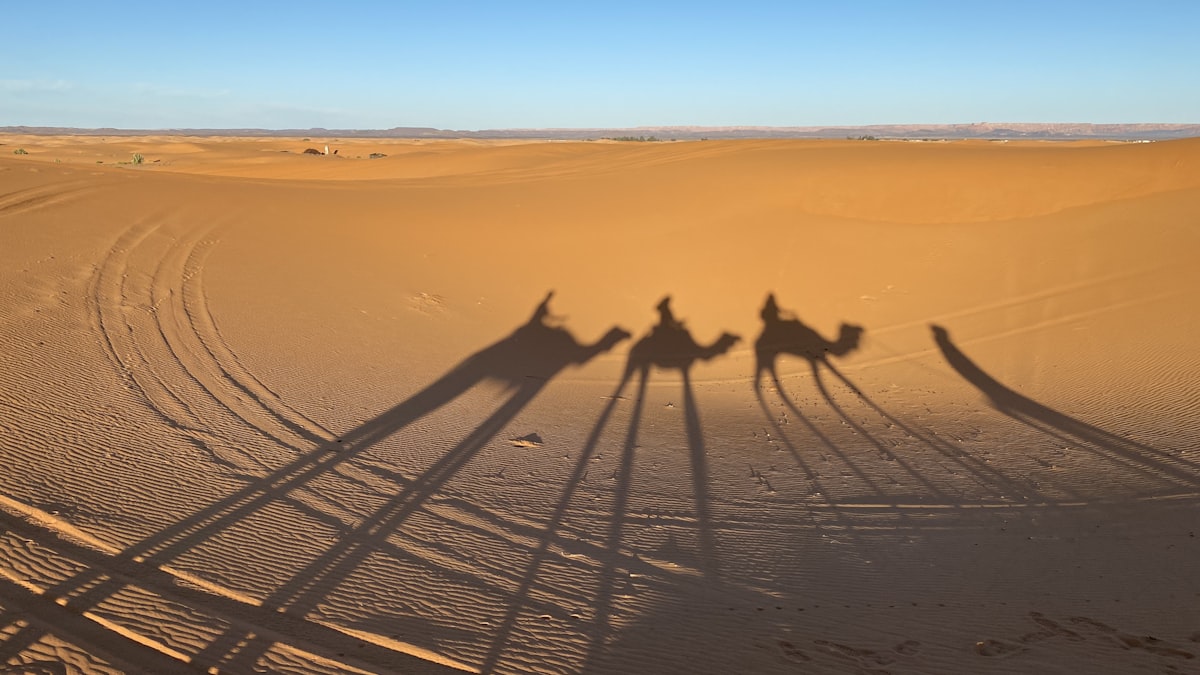
Riding a camel across the Singing Sand Dunes toward Crescent Lake is one of the most memorable experiences in western China.
Where to go next
Dunhuang is the classic western extension of a first China trip: Xi’an is the Silk Road’s eastern end, and Dunhuang its great desert outpost. Many travelers connect it onward to Chengdu or head back east by train.
Last updated: August 2026. Cave openings and ticket rules change — confirm before you go.
Frequently Asked Questions
Do I need to book the Mogao Caves in advance?
Yes — strongly. Mogao has a timed-entry system and daily visitor limits, so tickets can sell out days ahead, especially in high season. Book online with your passport details, then arrive at your assigned time. Walk-up tickets are rarely available during busy months.
How many days should I spend in Dunhuang?
Two days is the standard: one for the Mogao Caves plus the Shazhou night market, and one for the Singing Sand Dunes and Crescent Lake, with time to add Yumen Pass if you're keen. Add a third day for the longer Silk Road sites like Yangguan Pass or the Yadan landforms.
Is the camel ride at Mingsha Mountain worth it?
For most people, yes — riding a camel across the dunes to Crescent Lake is one of the most memorable experiences in western China. Book at the site, follow the guide's instructions, and go early morning or late afternoon to avoid the midday heat.
Can I take photos inside the Mogao Caves?
No — photography is not permitted inside the caves, and only a limited number of caves are open on any given day. Flash and touching are strictly controlled to protect the murals. The experience is deliberately quiet and dark; soak it in rather than document it.
How do I get to Dunhuang?
Most travelers fly to Dunhuang Airport from Xi'an, Beijing or Lanzhou, or take an overnight train from Lanzhou. It's a remote corner of Gansu, so budget a full day to get there and out again. See our [train guide](https://chinotrips.com/how-to/train-tickets/) for booking.
More in Gansu
Gansu Travel Guide (2026) — Gansu travel guide