
Fuzhou Travel Guide (2026): Three Lanes & Seven Alleys
Fuzhou, Fujian's banyan-shaded capital — the Ming-Qing lanes of Sanfang Qixiang, Yongquan Temple on Drum Mountain, hot springs and Min River life.
OpenStreetMap Google Maps (opens externally)
Fuzhou is Fujian’s green, banyan-shaded capital — a city of Ming-Qing lanes, a great mountain temple, hot springs and some of the most underrated food in China. Here’s how to visit it in 2026.
The essentials
- Days needed: 2 days; 1 if you are strictly passing through on the Xiamen–Shanghai rail line.
- Getting there: high-speed rail from Xiamen in about 1 hour, Quanzhou in about 40 minutes, Hangzhou in about 3 hours, and Shanghai in about 4 hours. The airport (Fuzhou Changle, FOC) is about 40–50 minutes from the center.
- Best season: October–December and March–April; avoid the July–September typhoon window.
- Vibe: the least hurried of Fujian’s big cities — tea, old streets, mountain temples and a famously relaxed local culture.
What to do in Fuzhou
Fuzhou’s attractions cluster in the old center around the Three Lanes and Seven Alleys and the Min River, with the mountain temple a half-day east of the city.
- Three Lanes and Seven Alleys (Sanfang Qixiang) — the historic heart of the city: three long parallel lanes (the fang) and seven cross-alleys (the xiang) of traditional Fujian courtyard houses, some 200-plus buildings of them. The lanes are free to wander; a few of the famous former residences charge a small combined ticket (estimate ¥30–50). Go early or in the late afternoon light, when the crowds thin and the white walls glow.
- Yongquan Temple on Drum Mountain (Gushan) — the mountain temple, about a half-day excursion east of the center. The temple’s ancient trees, the bell tower and the panorama over the Min River are the draws.
- West Lake Park — the old classical garden-park in the city center, at its best with morning tai chi and evening lanterns. Free.
- The white and black pagodas — the two ancient pagodas that have watched over Fuzhou for over a thousand years; the white Baita sits beside the old city wall, the Wuta in a hillside temple garden.
- The Min River promenade — the broad river that frames the city; the evening riverbank walk and the bridges are the classic Fuzhou scene.
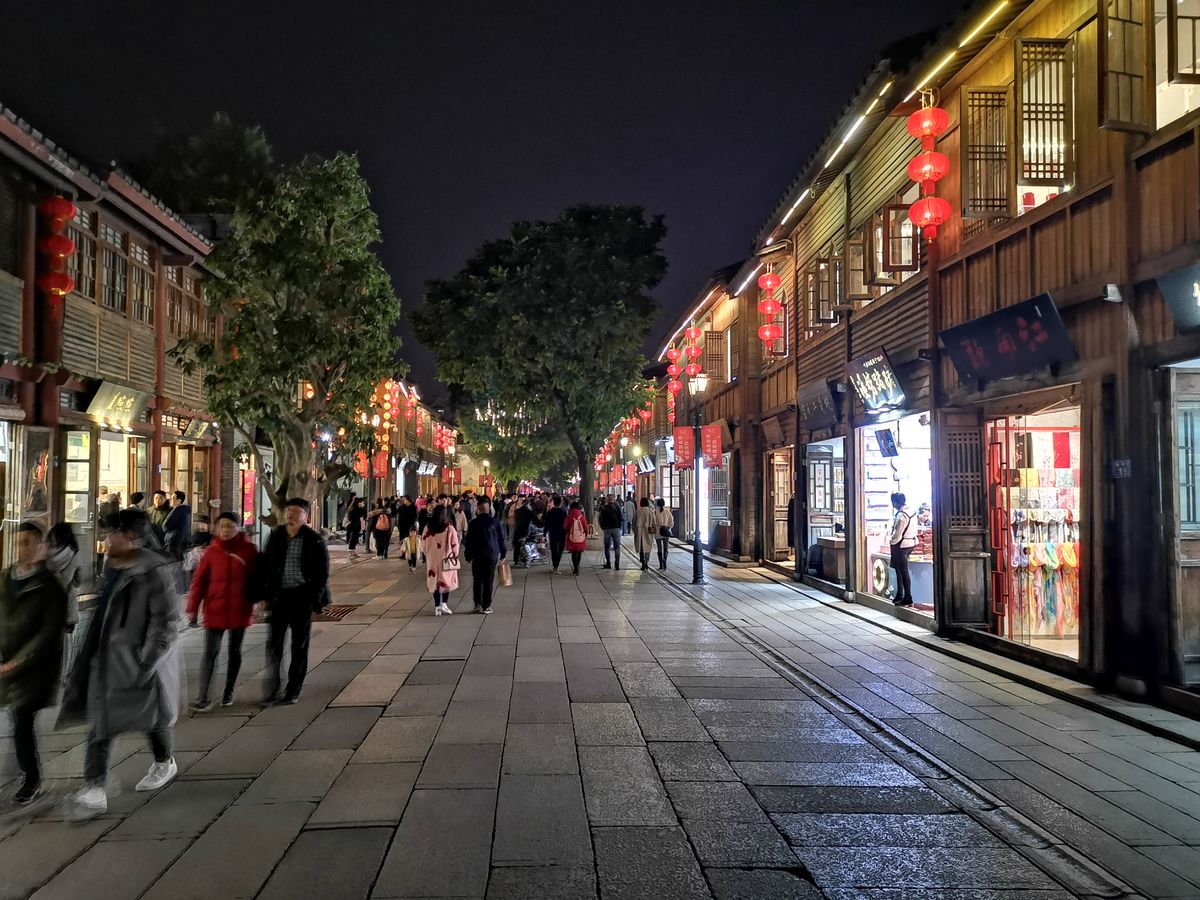
The main street of the Three Lanes and Seven Alleys — more than two hundred Ming- and Qing-era courtyard houses in the heart of Fuzhou.
Three Lanes and Seven Alleys in depth
Sanfang Qixiang is the rare historic quarter that still feels like a neighborhood rather than a museum set. The layout is ancient: three north-south lanes — Yijin, Wenru and Guanglu — with seven cross alleys — Yangqiao, Langguan, Ta, Huang, Anmin, Gong and Jibi — a grid that dates to the Tang dynasty. Behind the stone gateways and tiled roofs are the courtyards, wood-carved verandas and bonsai gardens of the Fujian merchant class, and because the quarter survived the demolition waves of the 20th century largely intact, it reads as a genuine slice of old urban China.
The quarter’s fame is inseparable from its residents. Lin Zexu, the Qing official whose destruction of opium stocks triggered the First Opium War, was born here; the writer Bing Xin and the translator Lin Shu grew up in the lanes; and many of the great houses belonged to the families who later led the overseas Chinese communities of Southeast Asia. The visitor route follows these houses — restored and open as museums — but the real pleasure is simply walking the alleys, stopping at the teahouses and watching the lanes change character from morning to night. At the southern edge, the quarter spills into the modern shopping streets, so the old and new Fuzhou meet at the gate.
Drum Mountain and Yongquan Temple
Gushan rises to about 925 meters on the east bank of the Min River, its slopes wrapped in forest. The temple that gives it meaning, Yongquan Temple, was founded in the Tang dynasty and rebuilt in the early 10th century; for a thousand years it has been one of the most important Chan (Zen) monasteries in southern China. Its halls hold a famous collection of iron-cast Buddha statues, a giant bronze bell, and a library of tens of thousands of Buddhist texts. In the courtyard stand sago palms more than a thousand years old, planted, legend has it, by the temple’s founding monks.
The climb is part of the experience: a stone path climbs through the forest past waterfalls and rock inscriptions, and a cable car runs partway up for those who prefer the view without the ascent. From the temple terrace, the Min River bends below and Fuzhou spreads across the plain — one of the best panoramas in the province. The mountain also holds the Drum of Gushan, a stone formation said to resound like a drum when struck by wind or waves, which gives the mountain its name. Allow a full morning: the cable car up, the temple, and the trail back down.
When to go, season by season
Fuzhou has a humid subtropical climate — mild winters, hot wet summers, and two comfortable shoulders.
- Spring (March–April): mild and increasingly lush; occasional rain but generally pleasant for the lanes and the mountain.
- Summer (May–September): hot and humid with typhoon season from July to September — heavy rain and the occasional transport disruption. If you come in summer, plan outdoor sights for the morning and indoor teahouses and museums for the afternoon.
- Autumn (October–November): the best season — warm, drier, with clear light on the white-walled lanes and the river.
- Winter (December–February): short and mild by Chinese standards, rarely bitter; quiet streets, hot springs at their most appealing, and low hotel prices outside the New Year period.
Where to stay and eat
Stay within walking distance of the Three Lanes and Seven Alleys — the old quarter sits at the center of everything, with the West Lake and the river a short ride away. Around it you find the full range: budget guesthouses in the historic lanes themselves, mid-range chains on the ring roads, and upscale hotels on the Min River with the river view. For a short visit, the lanes are the right base; book ahead on weekends, when Fuzhou fills with domestic travelers.
Fuzhou’s food is the quiet reason to linger. It belongs to the Min cuisine tradition — lighter and more coastal than the spicy inland cuisines:
- Buddha Jumps Over the Wall — the legendary slow-braised soup of abalone, sea cucumber, ham and dozens more ingredients, said to be so fragrant it lures monks over the wall. A splurge dish, served in high-end restaurants; local shops sell budget versions.
- Fish balls, lychee pork and oyster omelets — the everyday classics, best eaten at the snack streets around the lanes for ¥10–25.
- Fuzhou noodles and dumplings — including the local Yanpi dumplings with their translucent wrappers.
- Tea and hot springs — Fuzhou’s famous spring water and tea culture make the local teahouses a genuine experience, not a tourist show.
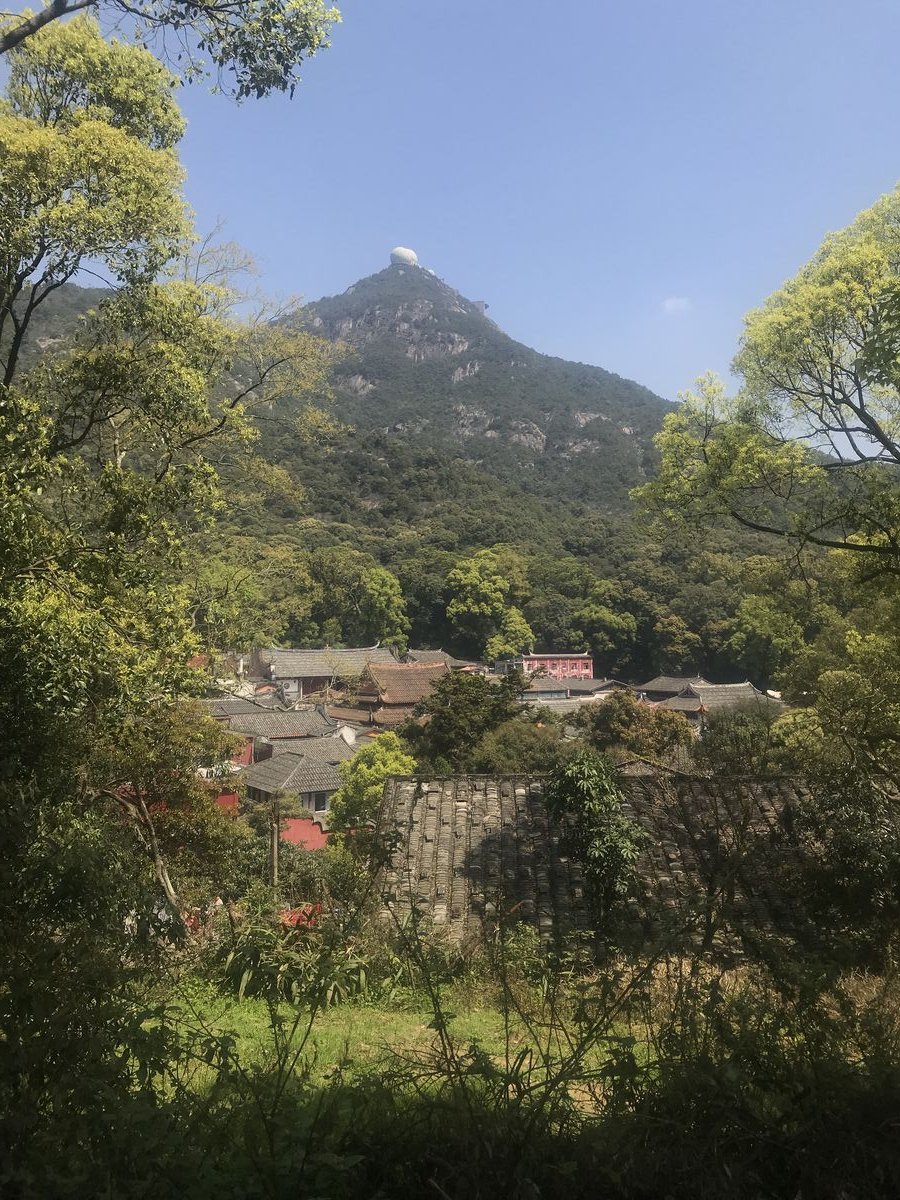
Yongquan Temple on Drum Mountain — a Tang-founded Chan monastery with thousand-year-old sago palms and a panorama over the Min River.
A realistic budget
Fuzhou is one of the more affordable coastal cities in eastern China, cheaper than Xiamen or Shanghai for hotels and food.
- Hotels: ¥250–450 per night for a well-located mid-range hotel; budget hotels ¥120–220; riverside splurges from ¥600. Book ahead for holidays and weekends.
- Sights: the Three Lanes and Seven Alleys lanes are free to walk (about ¥30–50 for the combined residence ticket); Yongquan Temple about ¥15–20 plus the cable car (estimate ¥40–60); West Lake Park free. Budget ¥150–250 in entry and transport for two days.
- Food: snacks ¥10–25; a proper restaurant meal ¥40–90 per person; the full Buddha Jumps Over the Wall banquet is a splurge, often ¥200+ per person at top restaurants.
- Transport: metro rides ¥2–6; short taxis or Didi trips ¥10–25; the trip to Gushan and back about ¥60–100.
A realistic 2-day budget for one person, excluding hotels and long-distance rail, is roughly ¥600–1,000. All figures are planning estimates — prices change with season and demand, so confirm current rates on booking platforms.
Practical tips
- Go to the lanes early. The Three Lanes and Seven Alleys are free but crowded by mid-morning; the best light and the quietest alleys are before 9 a.m. and after 5 p.m.
- Book the mountain on a clear day. Gushan and its temple reward clear weather; the cable car is worth it on a fine day and pointless in low cloud.
- Payment and data: set up Alipay and an eSIM before you arrive.
- Typhoon season: July–September brings storms; check forecasts and keep a flexible itinerary if traveling then.
- Trains: for the coastal legs, see the train ticket guide for buying with a foreign passport.
- Metro: Fuzhou’s metro covers the center and the train station — see the China metro guide.
Combining Fuzhou with the region
Fuzhou is the northern anchor of the Fujian coast, and the natural companion to the province’s more famous stops. Quanzhou, the medieval Silk Road port, is about 40 minutes south by high-speed rail; Xiamen, with its island and Gulangyu, about an hour further. The province’s interior reaches the Wuyi Mountains to the northwest, a UNESCO site of tea terraces and river gorges. Start with the Fujian guide for the province-wide picture, then string the coast together with the Xiamen guide and the Quanzhou guide. Fuzhou is also a convenient entry point for travelers flying into Fuzhou Changle and heading straight down the coast.
Last updated: August 2026. Prices and schedules change — confirm current tickets, reservations and visa rules before you go.
Frequently Asked Questions
Why visit Fuzhou?
Fuzhou is the capital of Fujian and the city most visitors skip on the way to Xiamen — a mistake. Its Three Lanes and Seven Alleys are one of China's best-preserved Ming-Qing urban neighborhoods, Gushan's Yongquan Temple is a great Chan Buddhist mountain temple, and the city is famous for hot springs, banyan trees and a genuinely local food scene. It is also the ancestral home of huge numbers of overseas Chinese, which gives it a distinctive, quietly cosmopolitan character.
How many days do I need in Fuzhou?
Two days is the sweet spot: a day for the Three Lanes and Seven Alleys, the pagodas and West Lake, and a day for Drum Mountain's temple plus the Min River and hot springs. Fuzhou is an easy high-speed rail stop between Xiamen and points north, and many travelers combine one or two nights here with the rest of the Fujian coast.
What are the Three Lanes and Seven Alleys?
Sanfang Qixiang is a 40-hectare historic quarter at the heart of Fuzhou, made up of three parallel 'lanes' and seven 'alleys' of traditional Fujian courtyard houses. It survives as one of the best-preserved Ming- and Qing-dynasty neighborhoods in China, with more than 200 historic buildings including the former residences of Lin Zexu, the Opium War hero, and the writer Bing Xin. It is walkable, atmospheric and full of teahouses and craft shops.
Is the Yongquan Temple worth the climb?
Yes. Yongquan Temple sits high on Gushan (Drum Mountain), a forested hill on the east side of the city. It is one of the most important Chan Buddhist temples in the south, famous for its iron and wooden sculptures, its huge bronze bell, and the thousand-year-old sago palms in its courtyard. The name comes from a stone that echoes like a drum. A cable car runs partway up; allow half a day with the climb and the views back over Fuzhou.
What should I eat in Fuzhou?
Fuzhou is one of China's great regional food cities, gentler and more seafood-forward than the fiery cuisines to the west. The famous 'Buddha Jumps Over the Wall' is a slow-braised banquet soup of dozens of ingredients; everyday dishes are lighter — fish balls, lychee pork, oyster omelets, and the city's distinctive fish and shrimp sauces. Dessert means the local sweetened taro or the famous Fuzhou 'Yanpi' dumplings. Eat where the queues are, and try the hot-spring tea houses.
When is the best time to visit Fuzhou?
October to December and March to April are the best windows — mild, drier and pleasant for walking the lanes and the mountain. Summers are hot and humid with typhoon season from July to September, when heavy rain can interrupt travel. Winters are short and generally mild for China, rarely bitter, which makes Fuzhou an easy off-season add-on.
More in Fujian
Fujian Travel Guide (2026) — Fujian travel guide