
Hong Kong to Mainland China: Complete Travel Guide
How to travel from Hong Kong to mainland China — high-speed rail, metro crossings, buses, flights, visas, payments, and SIM cards.
The border between Hong Kong and mainland China is one of the busiest in the world — and one of the easiest once you know which crossing to use. The high-speed rail station at West Kowloon sits a few metro stops from the city center, yet drops you in Guangzhou about an hour later.
Going from Hong Kong to mainland China is not a simple “continue your trip” step — it is a full international-style border crossing between two separate jurisdictions. Your Hong Kong visa does not let you into the mainland, your Hong Kong dollars do not spend in Shenzhen, and your Hong Kong SIM card will likely stop being useful at the frontier. This guide walks through the transport options, the entry rules, the money switch, and the practical details that trip people up.
First, the basics: two systems, one border
Hong Kong is a Special Administrative Region of China, but it has its own immigration, its own currency (the Hong Kong dollar), its own mobile networks, and its own internet access. Crossing to mainland China means leaving that system and entering a separate one:
- Your entry documents do not transfer. A visa-free Hong Kong visit or a Hong Kong visa does not get you into mainland China. Mainland entry is governed by mainland rules — a Chinese visa, the visa-free list, or the 240-hour visa-free transit scheme.
- Your Hong Kong ID does not transfer. The mainland travel permit that lets Hong Kong residents cross the border (回乡证) is only for Chinese citizens. As a foreign national you use your passport, and you go through the foreigner channels.
- The currency and payment world changes. Hong Kong runs on HKD, cash and Octopus cards. The moment you cross, mainland runs on RMB and phone payments — Alipay and WeChat Pay.
- The internet changes. Google, Instagram, WhatsApp and many Western sites work normally in Hong Kong. Across the border, they are blocked without a VPN.
If you have not yet arrived in Hong Kong, our Entering Hong Kong guide covers the arrival side. This guide assumes you are in Hong Kong and ready to continue into mainland China.
Transport from Hong Kong to mainland China
You have four main ways across, and the right one depends on where you are going and how much you want to spend.
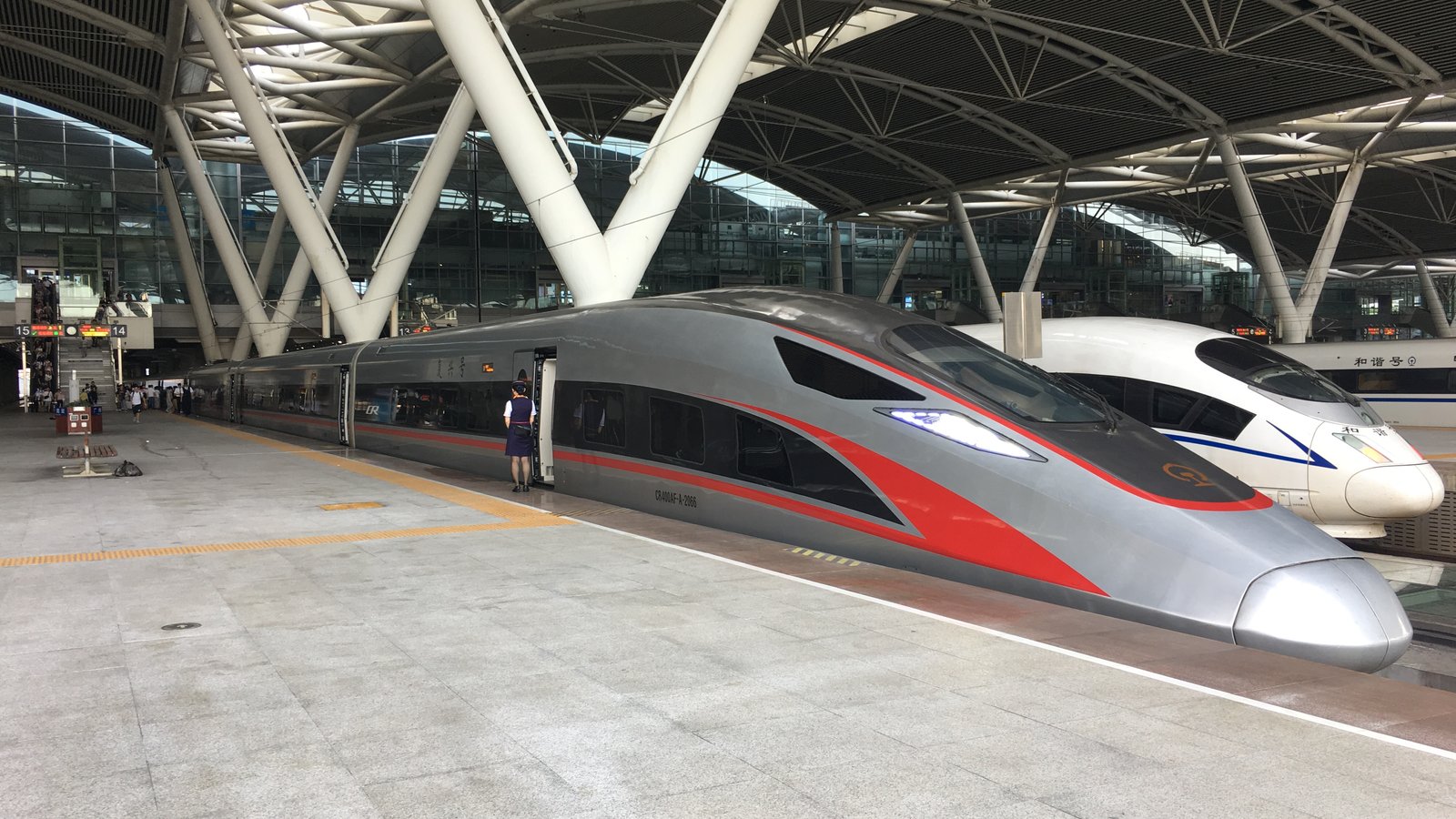
High-speed rail from West Kowloon
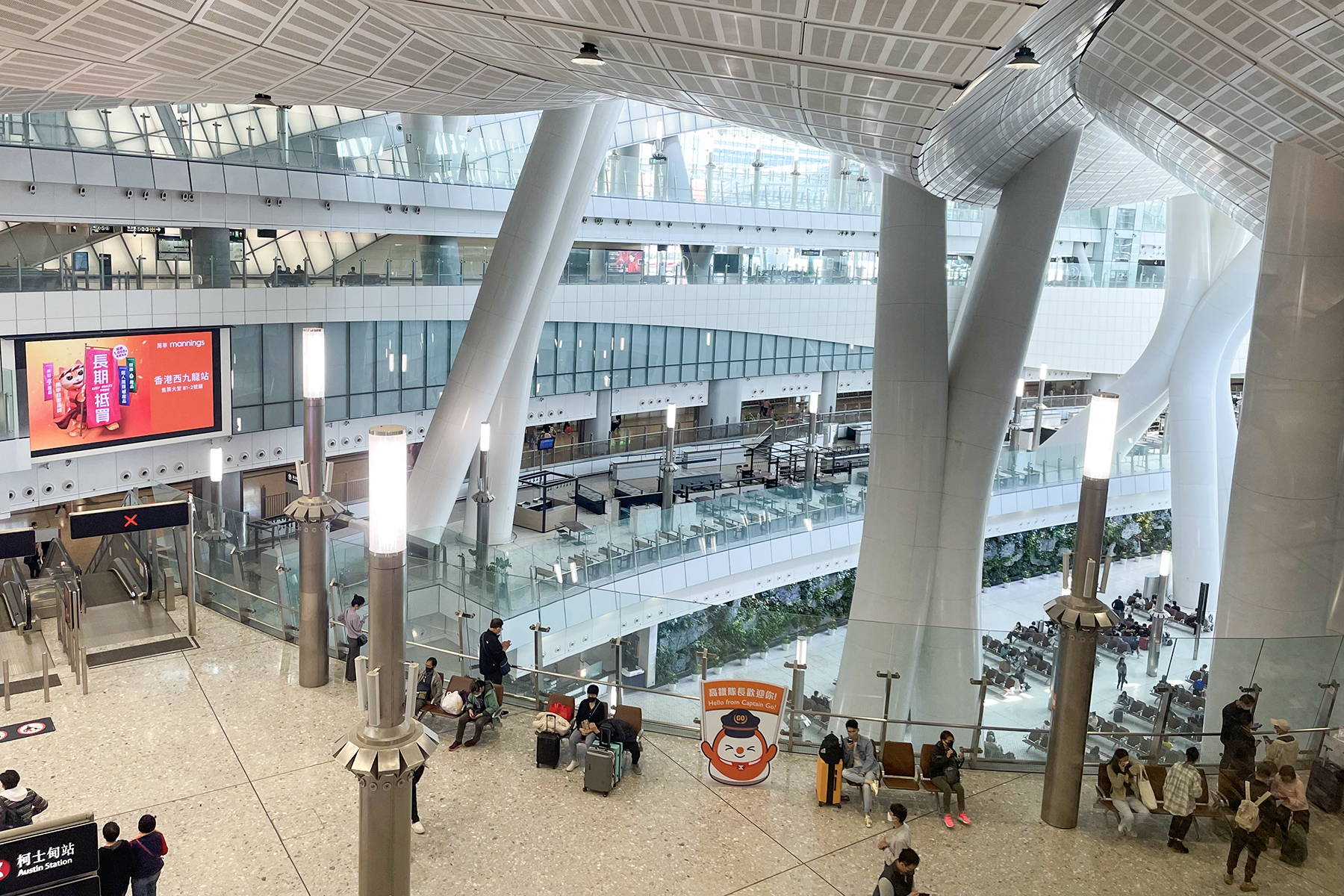
The Hong Kong section of the national high-speed rail network departs from the West Kowloon station, connected to the MTR and to the Kowloon shopping district. Trains run on the Guangzhou–Shenzhen–Hong Kong express line and beyond, with direct services to major mainland cities:
- Shenzhen Futian / Shenzhen North: about 18–25 minutes — effectively a commuter hop.
- Guangzhou South: about 1 hour — the classic day-trip city for dim sum and Cantonese food.
- Shanghai and Beijing: direct high-speed services take roughly 7–8.5 hours and arrive at Shanghai Hongqiao and Beijing West or Beijing Fengtai stations.
Ticket prices vary by class, season and how far ahead you book. As a rough estimate, a second-class ticket costs around RMB 68–90 to Shenzhen, about RMB 200–260 to Guangzhou South, and roughly RMB 900–1,300 to Shanghai or Beijing. These are estimates — prices change, and peak periods like Chinese New Year and Golden Week are far more expensive and sell out. Booking is easiest through the official railway site or apps like Trip.com; see our train tickets guide for a step-by-step.
West Kowloon is a joint immigration point: you pass both Hong Kong and mainland border control inside the station before boarding. This means the crossing is built into your train journey — no separate border stop. Allow at least 60–90 minutes before departure for security and both immigrations, plus time to collect tickets if you bought them offline.
Metro crossings into Shenzhen: Lo Wu and Lok Ma Chau
If Shenzhen is your destination, the metro is the classic budget crossing. Two rail lines cross the border:
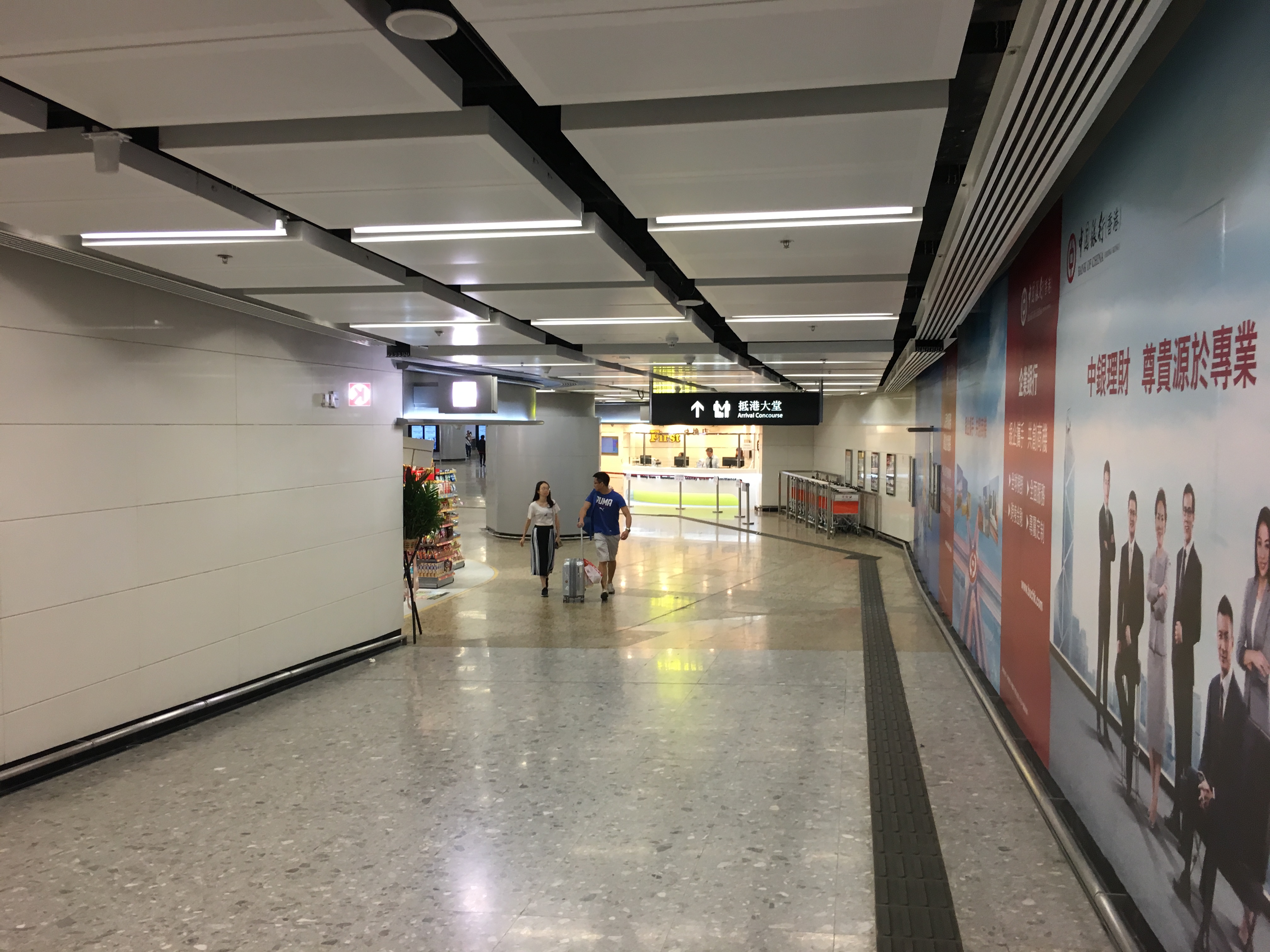
- Lo Wu (罗湖): take the MTR East Rail line to the terminal at Lo Wu. You walk across the border into Shenzhen’s Luohu checkpoint, which connects to Luohu metro station on Shenzhen’s Line 1. Open roughly 06:30–24:00.
- Lok Ma Chau (落马洲): take the Tuen Ma line to Lok Ma Chau, cross into Shenzhen’s Futian checkpoint, and connect to Futian metro station (Shenzhen Line 4). Open roughly 06:30–22:30.
A one-way MTR trip from central Hong Kong to the border costs roughly HKD 45–60 (estimate — fares change). The Shenzhen metro onward is a few RMB. The full process is: MTR to the border → Hong Kong exit → walk across → mainland entry (passport check) → Shenzhen metro or taxi. Budget 45–90 minutes total at the border itself, more at weekends and holidays when Shenzheners queue for Hong Kong.
Cross-boundary buses and the bridges
For points that are not served by rail, buses fill the gap:
- Shenzhen Bay Bridge (深圳湾): buses from several Hong Kong districts cross the Shenzhen Bay Bridge to Shenzhen’s west side. Good for the Bao’an and Nanshan areas and Shenzhen airport.
- Hong Kong–Zhuhai–Macau Bridge: buses from Hong Kong cross the bridge to Zhuhai in about 40–60 minutes, and then you can continue to Macau or deeper into western Guangdong. This is a genuinely useful option for travelers heading to Zhuhai, Zhongshan or on to Macau.
Cross-boundary coach fares are typically HKD 40–90 depending on route (estimate — prices change). Buses are slower than the rail but cover areas the train does not reach.
Flights: Hong Kong to mainland cities
For long distances — Chengdu, Xi’an, Beijing, Shanghai or the northeast — flying is often simpler than a very long train ride, and Hong Kong International Airport has extensive mainland connections. Several Shenzhen/Guangzhou airports also compete for regional fares. The catch is that a flight from Hong Kong to a mainland city is an international flight in immigration terms, so you need your mainland entry documents before you board — the visa or visa-free eligibility — and you clear mainland immigration on arrival. Fares vary widely by route and season; budget roughly USD 80–200 one-way for most domestic mainland routes (estimate — prices change, and holiday periods spike).
Documents and entry rules for mainland China
Your passport needs to satisfy mainland entry requirements, regardless of what Hong Kong allowed. Three routes in:
- A Chinese visa. The default option for most foreign travelers. Obtain it from a Chinese embassy or consulate before you leave home; processing takes several days.
- Visa-free entry. Citizens of around 50 countries can enter mainland China visa-free for stays up to 30 days for tourism, business or transit — no onward ticket required. Check the current list in our visa-free requirements guide. Note that the US is not on this list, so American travelers usually need a visa or the transit scheme.
- The 240-hour visa-free transit. Eligible nationalities can stay up to 10 days without a visa when transiting — see the dedicated section below.
At the border, present your passport to the mainland officer. For many nationalities, fingerprints are scanned on first entry. You may be asked where you are staying and how long; a hotel booking and onward ticket help. Keep the entry stamp — hotels need your passport for registration, and the stamp shows your allowed stay.
The 240-hour visa-free transit from Hong Kong
This is the option that trips up many travelers — but it can also be the reason your Hong Kong trip extends into a mainland adventure. The 240-hour visa-free transit scheme lets citizens of eligible countries stay in mainland China for up to 10 days without a visa, if your trip is a genuine transit:
- You must hold a booked ticket onward to a third country or region within 240 hours of entry.
- Hong Kong counts as either your place of origin or your onward destination in the transit equation.
- The critical catch: you cannot return to the same area you came from. A route like Hong Kong → Guangzhou → Hong Kong does not qualify because you go back to Hong Kong. But Hong Kong → Beijing → (fly to) Tokyo works — Hong Kong is origin, Tokyo is the third-country onward.
- Some transit points count 240 hours from the day after arrival; treat it as 10 days and keep a buffer.
If you are from one of the ~50 visa-free countries and staying 30 days or less, the visa-free entry is usually the better choice — no onward ticket needed. If you are from a non-visa-free country (like the US) with a short mainland side-trip, the transit scheme may be your only visa-free route. Verify the current country list and participating ports on the National Immigration Administration site before you travel.
E-channels and the crossing process
Most land border points have separate channels for foreigners. At peak times expect queues; at Lo Wu on a Sunday the border can take an hour or more. Some airports and selected ports now offer e-gates for foreigners after fingerprint enrollment, but availability varies by port — do not count on it. The process itself is simple: Hong Kong exit → walk across → mainland immigration (passport + often fingerprints) → customs green or red channel → you are in mainland China.
Payments: from HKD to RMB
- Hong Kong side: HKD, Octopus, and increasingly AlipayHK and WeChat Pay HK. Many HK merchants also accept the mainland versions of Alipay and WeChat, but not all.
- Mainland side: RMB, and overwhelmingly phone payments. Once you cross, Alipay and WeChat Pay QR codes are accepted nearly everywhere — markets, taxis, trains, even street food.
- The switch: set up Alipay and WeChat Pay linked to your international card before you leave home or while still in Hong Kong, so they are live the moment you cross. Getting them set up on the mainland side without a mainland phone number or bank card is more friction than it needs to be.
For cash: exchange HKD for RMB at a border money changer or a bank in Shenzhen. Border exchange counters are convenient but often have poorer rates; an ATM in Shenzhen that accepts international cards usually gives the bank rate with a fee. Carry a modest RMB cash buffer — some small shops and market stalls are cash-only, and border-area taxis sometimes expect cash.
Practical crossing notes
- Luggage: there is no per-passenger limit that affects normal tourists, but keep bags manageable for the walk-through crossings at Lo Wu and Lok Ma Chau — there are stairs and long corridors, and at busy times trolleys are useless. The high-speed rail has luggage racks and a limit on dimensions; oversized items may need a ticket.
- Quarantine and agriculture: fresh fruit, meat and dairy products are restricted across the border, and customs officers do random checks. Leaving Hong Kong with a half-eaten sandwich is a classic way to get stopped. See our customs and duty-free guide for the allowances.
- Declaration: if you have nothing to declare, use the green channel. Large cash (over the reporting threshold, roughly USD 5,000 equivalent) must be declared.
- Duty-free: allowances apply per crossing; alcohol and tobacco have limits. Confirm the current figures before you buy in bulk.
Returning: mainland back to Hong Kong
Returning works the same way in reverse. You exit mainland at the same kinds of checkpoints, present your passport at mainland exit, walk across, and enter Hong Kong on Hong Kong rules — which for most nationalities is visa-free. A few notes:
- Keep your mainland exit stamp or the system record; hotels and onward travel rarely need it, but it documents your stay.
- The 240-hour transit clock only runs while you are inside mainland; exiting stops it. If you used the transit scheme, make sure you leave mainland before 240 hours elapsed, not just before your flight home.
- Currency in reverse: change leftover RMB back to HKD at a bank or money changer on the Hong Kong side, or keep a little for your next mainland visit. Unused RMB is easy to spend on future trips; the change-back rate is the costliest part.
SIM cards and data: the internet gap
- Hong Kong SIMs have roaming agreements onto mainland networks, but data roaming is expensive and — importantly — the mainland firewall applies to whoever you roam onto. Google Maps, Gmail, Instagram and WhatsApp will not load normally without a VPN.
- The clean setup for crossing: a mainland SIM bought at a mainland carrier shop (real-name registration with your passport required) or, easier, a travel eSIM purchased before you go that routes through a mainland carrier. Our SIM card vs eSIM guide and mobile data in China guide compare the options in detail.
- VPN: install and test a VPN before you leave Hong Kong if you need Western services — once you cross, app stores and many sites are restricted, making installation much harder.
Putting it together
For most travelers the practical recommendation is simple: if you are going to Shenzhen, take the metro (Lo Wu or Lok Ma Chau) or the 18-minute high-speed rail hop; if you are going anywhere else, take the high-speed rail from West Kowloon. Fly for the very long hauls. Set up Alipay and WeChat Pay while still in Hong Kong, carry a little RMB cash, sort your mainland data before crossing, and make sure your mainland entry documents — visa, visa-free list, or 240-hour transit — are settled before you reach the border. Two jurisdictions, one seamless itinerary.
For connections within mainland China once you cross, our metro, airport and high-speed rail guide covers getting around Shenzhen, Guangzhou and beyond.
Last updated: August 2026. Policies and prices change often — confirm before you go.
Frequently Asked Questions
Can I use my Hong Kong entry or visa to enter mainland China?
No. Hong Kong and mainland China run separate immigration systems. Your Hong Kong visa, visa-free entry stamp, or Hong Kong ID does not grant you entry to mainland China. To cross into mainland you must satisfy mainland entry rules — a valid visa, the visa-free list, or the 240-hour transit scheme. Chinese citizens use the Mainland Travel Permit for Hong Kong and Macau Residents (回乡证), which does not apply to foreign nationals.
Which is faster: high-speed rail or the metro border crossing?
It depends on your destination. High-speed rail from West Kowloon is fastest for going far — about 1 hour to Guangzhou South and roughly 18–25 minutes to Shenzhen's Futian or North stations. The metro crossings (Lo Wu and Lok Ma Chau) are usually cheaper but involve two train rides plus two border queues, so they only win for trips to Luohu, central Shenzhen, or when you want the lowest fare.
Can I use the 240-hour visa-free transit if I arrive from Hong Kong?
Yes — Hong Kong counts as your place of origin or onward destination for the transit scheme, as long as your route is a genuine transit. You need a booked ticket onward to a third country or region within 240 hours. A round trip like Hong Kong → Shanghai → Hong Kong does not qualify, because you return to the same entry area. Confirm the current port and country lists before you travel.
Do I need RMB cash, or can I pay by phone once I cross?
Phone payment works almost everywhere in mainland China, so the ideal setup is Alipay or WeChat Pay linked to your international card before you cross. Carry a modest amount of RMB cash as backup — the border and smaller Shenzhen shops may not accept cards, and some money changers only deal in cash. Exchange HKD to RMB at a border money changer or, better, an ATM in Shenzhen for a bank rate.
Will my Hong Kong SIM card work when I cross into mainland China?
Usually poorly. Hong Kong SIMs rely on roaming agreements, data is expensive, and mainland networks block services like Google, Instagram and WhatsApp regardless of which carrier you roam onto. The cleaner option is a mainland SIM or a travel eSIM bought before you go, plus a VPN for Western apps. Our [SIM card vs eSIM guide](https://chinotrips.com/how-to/china-sim-vs-esim/) compares the two.
Is there a health or customs declaration to complete when crossing by land?
As of August 2026, there is no routine health declaration for normal entry. At the land border you simply pass through immigration, then customs. If you have nothing to declare — no large cash, no restricted food — you use the green channel. If you are carrying goods above the duty-free allowance or restricted items, you complete a declaration and use the red channel.