
Nanchang Travel Guide (2026): Tengwang & Poyang Lake
Nanchang, Jiangxi's capital — the Tengwang Pavilion, the birthplace of the PLA, Poyang Lake's bird wetlands and a fiercely spicy noodle scene.
Nanchang, China
Open an external map for this location.
OpenStreetMap Google Maps (opens externally)
Nanchang is the riverside capital most high-speed rail passengers speed past — home to one of China’s four great pavilions, the birthplace of the PLA, and some of the spiciest noodles in the country. Here’s why it deserves a stop in 2026.
The essentials
- Days needed: 1–2 days in the city; add a day for Poyang Lake or a half-day rail hop to Jingdezhen.
- Getting there: high-speed rail from Changsha in about 1.5 hours, Wuhan in about 2 hours, Hangzhou and Shanghai in 2–3 hours, and Guangzhou in about 4 hours. The airport (Nanchang Changbei, KHN) is about 40 minutes from the center.
- Best season: October–November and March–April for comfortable weather; November–February for Poyang Lake’s migrating cranes. Summers are hot and humid.
- Vibe: a proud provincial capital with a Revolutionary-era identity and a serious food culture — still refreshingly un-touristy.
What to do in Nanchang
The two landmarks that matter — the Tengwang Pavilion and Bayi Square — sit on opposite sides of the compact old center, with the Gan River running between them.
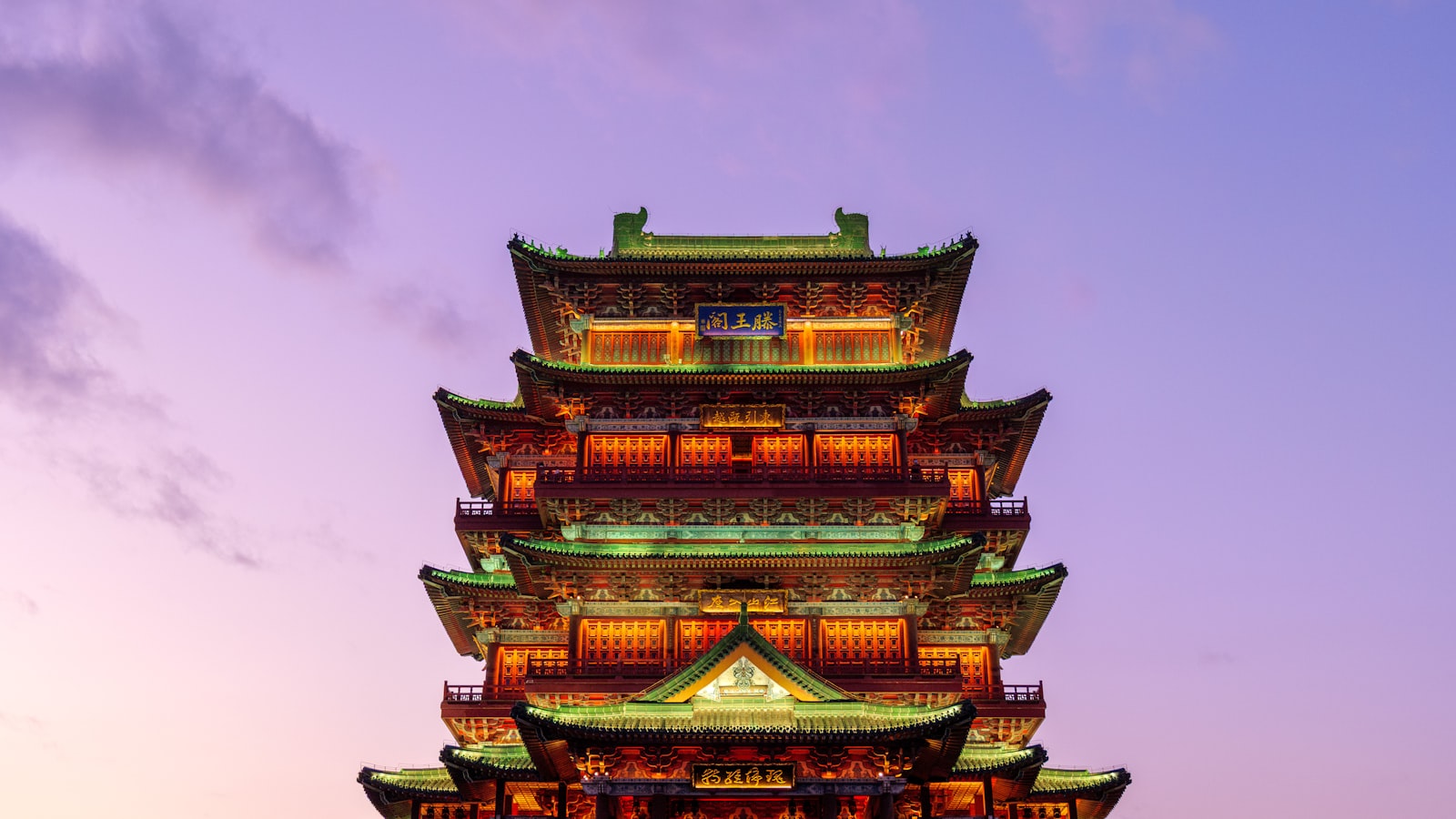
- Tengwang Pavilion — the great Tang-era tower on the east bank of the Gan River. Climb the nine stories for the river view and the modern sculptures and murals inside, and try to catch the evening light, when the rebuilt pavilion glows over the water. Admission is about ¥50 (estimate; confirm current pricing). Give it 1.5–2 hours.
- Bayi Square — the enormous central plaza anchored by the August 1st Uprising Monument, the biggest of its kind in the country. It is at its best in the evening when the fountains and crowds come out.
- August 1st Uprising Memorial — a short walk from the square, the museum where the 1927 uprising is staged in vivid dioramas and documents. Free but reserve ahead with your passport.
- The Gan River promenade — the riverside walk between the pavilion and the new Bayi Bridge is the classic Nanchang evening stroll; the bridge lights up after dark.
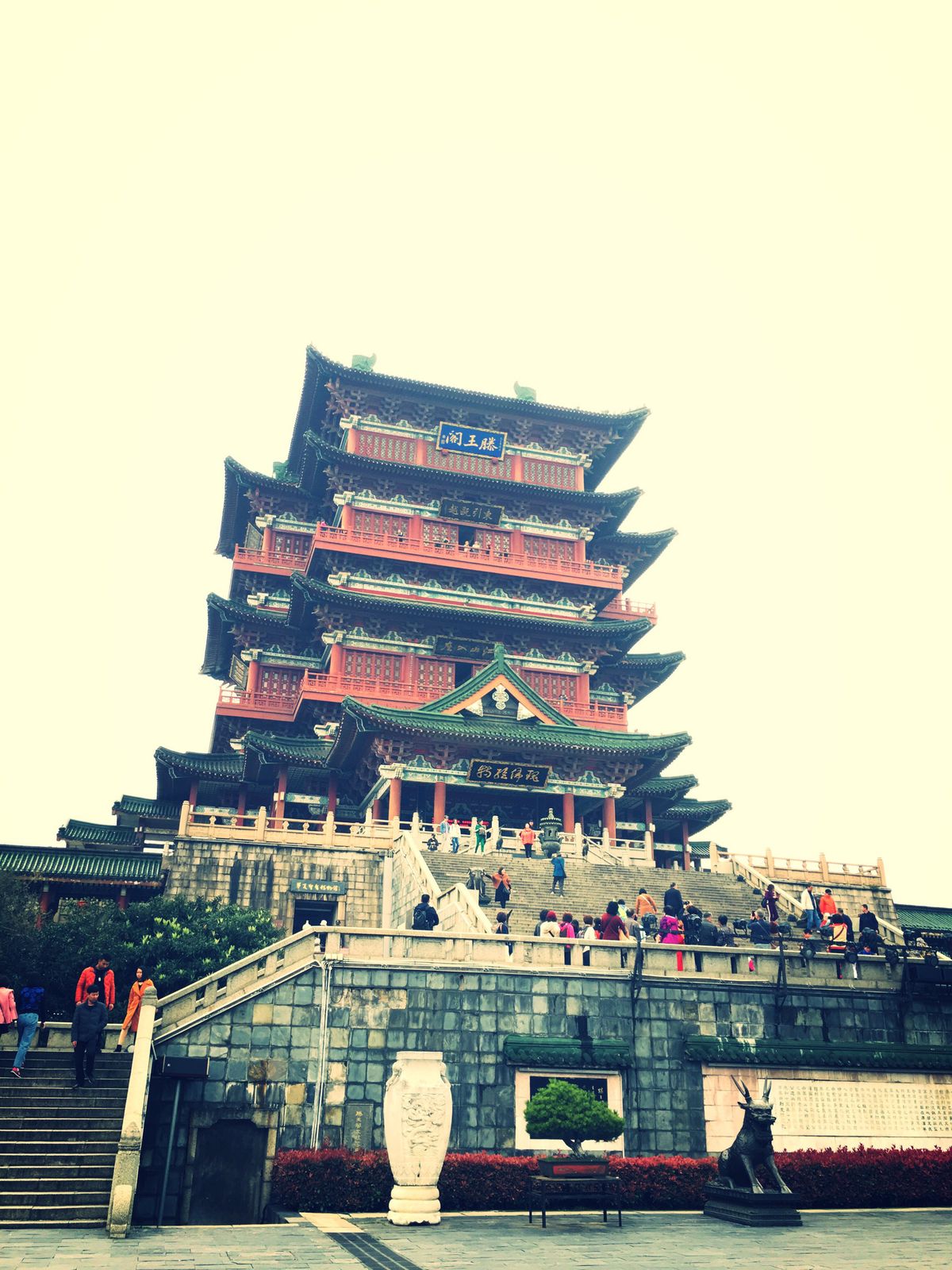
The Tengwang Pavilion rising over the Gan River — rebuilt nine stories high, still reciting Wang Bo’s Tang-dynasty preface.
The story of the Tengwang Pavilion
The pavilion is a poem given a building. Built in 653 by Li Yuanying, Prince Teng, a son of the founding Tang emperor, it was the pleasure tower of his Jiangxi fief. In 675, at a famous riverside banquet, the young poet Wang Bo dashed off the “Preface to the Pavilion of Prince Teng” — a piece of parallel prose so admired that the pavilion’s fame has never faded. The poem gave the structure its emotional weight: the view of the river at dusk, the solitary autumn sky, the sense of dynasties passing like the water below.
The building itself has been destroyed and rebuilt more than twenty times. What stands today is a 1989 reconstruction, a grand nine-story tower with green-and-gold roofs, rebuilt on a concrete base because the original site had been swept away by the shifting river. Purists note it is modern; nobody minds, because the point of the pavilion was never the timber but the poetry and the view. Inside, the floors trace the history — calligraphy of the preface, bronze reliefs of the poet, and galleries of the four great towers of China. From the top, the Gan River bends toward Poyang Lake, and it is easy to see why Wang Bo was moved to write.
Poyang Lake and the region
China’s largest freshwater lake lies just north of the city, and it changes character completely across the year. In summer it swells into a vast inland sea; in winter it shrinks into braided channels and exposed mudflats that become one of East Asia’s great bird-watching sites. Between November and February, tens of thousands of cranes, storks and geese winter here — including the largest remaining flock of Siberian cranes — and the sunrise bird counts at the wetlands are extraordinary. Because the lake is so large, visits are usually organized around a single access point (commonly near Wucheng on the southern shore, or from the Lushan side to the north). Access and boardwalk sites change with the water level, so book a tour or confirm the current access point in advance.
The other essential side trip is Jingdezhen, the porcelain capital, about 1.5 hours by high-speed rail — one of the easiest and most rewarding day trips from Nanchang, with the ancient kiln sites and ceramics markets that have supplied China for a thousand years.
When to go, season by season
Nanchang has a muggy, four-season climate typical of the Yangtze basin.
- Spring (March–May): mild and increasingly humid, with plum rains arriving in May. The city is green, and this is one of the comfortable windows for the pavilion and riverside.
- Summer (June–August): hot and humid, often above 33°C with heavy rain. This is low season for comfort but the river and evening square are lively; plan sightseeing for early morning and after sunset.
- Autumn (September–November): the best season — drier, cooler, and the wetlands begin to fill with birds. October is peak domestic tourism; November is the sweet spot.
- Winter (December–February): cold and damp, but this is prime bird season at Poyang Lake and the museum-heavy city days are perfect winter refuge. Hotel prices drop outside the Chinese New Year period.
Where to stay and eat
Stay near the Gan River between the pavilion and Bayi Square — the riverside high-rises have the views, the streets behind them have the food, and the metro makes the rest easy. Budget and mid-range hotels cluster around Bayi Square and the rail station area; the riverside tends to be mid-range and upscale.
Eating is the reason many people remember Nanchang. Jiangxi cuisine — Gan cai — is proudly, sometimes aggressively spicy, built around fresh river fish, chili, and the province’s famous rice noodles:
- Nanchang rice noodles — the signature breakfast: dry-tossed noodles with chili oil, pickled long beans and pork, or in a broth. About ¥8–15.
- Wagang soup — a local clay-pot slow-cooked soup, often with pork ribs and lotus root.
- River fish and Gan dishes — braised and steamed, seriously spicy; say “bu la” if you need it mild.
- Bayi Square night market and the snack streets — graze through stinky tofu, fried dumplings and grilled skewers for ¥5–15 each.
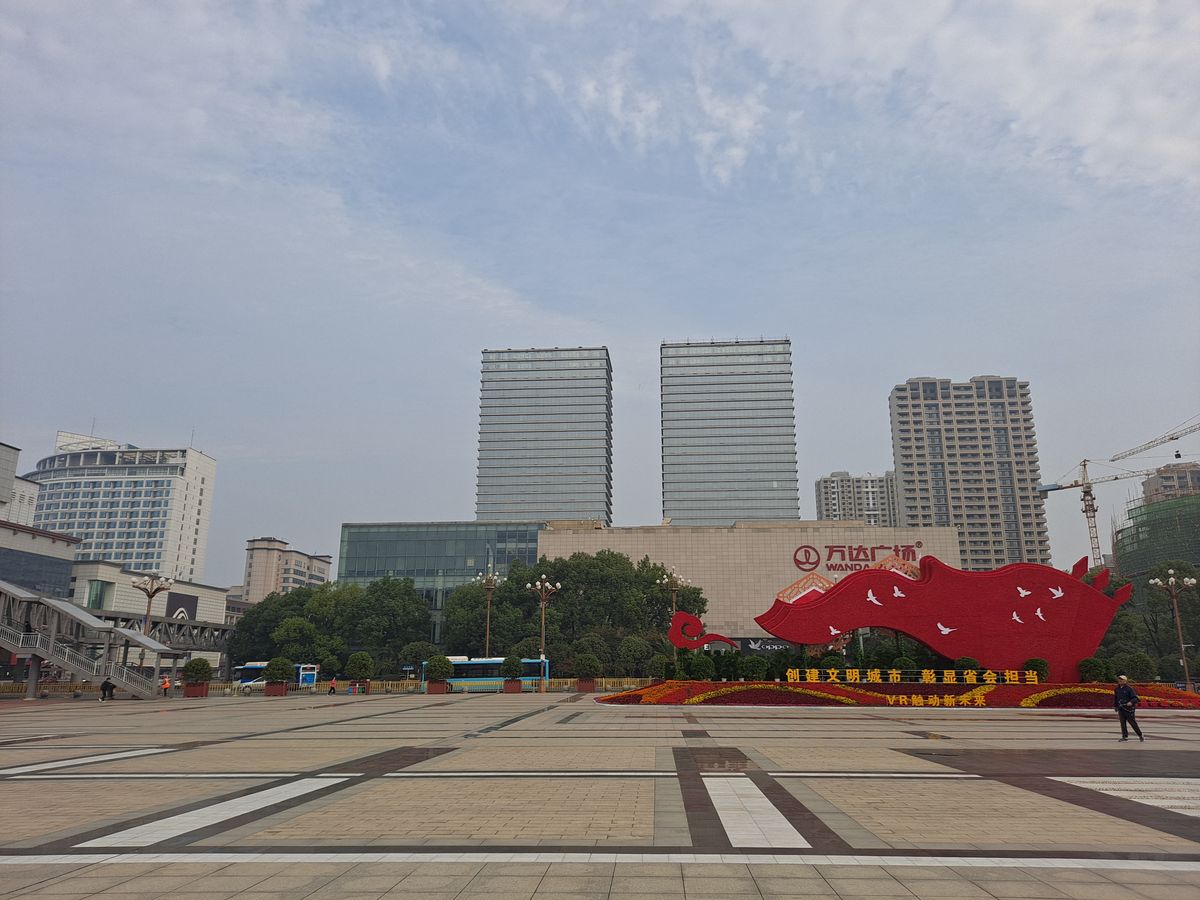
Bayi Square and the August 1st Uprising Monument — the ‘Hero City’ identity written across the center of Nanchang.
A realistic budget
Nanchang is an affordable provincial capital, roughly on a par with Changsha and noticeably cheaper than Beijing or Shanghai.
- Hotels: ¥200–400 per night for a good mid-range room; budget hotels ¥120–200; riverside splurges from ¥500–700. Book ahead on national holidays.
- Sights: the Tengwang Pavilion about ¥50; Bayi Square free; the August 1st Uprising Memorial free but reserve ahead. Budget ¥100–150 total in entry fees.
- Food: street snacks and noodles ¥8–25; a proper restaurant meal ¥40–80 per person; hotpot or a group spread ¥80–150.
- Transport: metro rides ¥2–6; short taxis or Didi trips ¥10–25. A day of city transport rarely exceeds ¥40.
A realistic 2-day budget for one person, excluding hotels and long-distance rail, is roughly ¥500–800. All figures are planning estimates — prices change with season and demand, so confirm current rates on booking platforms.
Practical tips
- Book the free sights ahead. The August 1st Uprising Memorial and other state museums use real-name reservation; bring your passport and book a slot.
- Mind the spice. Jiangxi chili is not decorative. Order “bu la” when you need mild, and keep milk tea or yogurt on the table.
- Payment and data: set up Alipay and an eSIM before you arrive.
- Metro: two lines cover the center — see the China metro guide for the system-wide picture.
- Trains: for the run to Jingdezhen or the longer legs to Shanghai and Guangzhou, see the train ticket guide.
- Poyang Lake: go in winter, pick a single access point, and confirm the boardwalk status before traveling out to the lake.
Combining Nanchang with the region
Nanchang sits on a natural rail corridor between Changsha and the coast, and it is the gateway to the rest of Jiangxi. The classic combination is a Changsha–Nanchang–Jingdezhen–Shanghai route along the high-speed spine: the Changsha guide covers the food capital one stop west, and the Jingdezhen guide the porcelain capital one stop east. Further afield, Wuhan up the Yangtze, the Wuyuan villages to the northeast, and Lushan mountain at the edge of Poyang Lake all make natural extensions. For the broader picture, the two-week China route threads the Yangtze corridor into a single plan.
Last updated: August 2026. Prices and schedules change — confirm current tickets, reservations and visa rules before you go.
Frequently Asked Questions
Why visit Nanchang?
Nanchang is the capital of Jiangxi and a city most travelers pass through rather than stop in — which is a shame. The Tengwang Pavilion, made immortal by a Tang-dynasty poem, is one of China's great riverside landmarks; the city is also the birthplace of the People's Liberation Army, with Bayi Square and the memorial to the 1927 uprising to prove it. It is the practical base for Poyang Lake's bird wetlands and an easy rail hop to Jingdezhen.
How many days do I need in Nanchang?
One to two days in the city: half a day for the Tengwang Pavilion and the riverside, a morning for Bayi Square and the August 1st Uprising Museum, and the rest for food. Add a second day if you want to see Poyang Lake or take the short high-speed rail run to Jingdezhen. Most travelers use Nanchang as a one-night stop on the Changsha–Jingdezhen–Shanghai corridor.
What is the Tengwang Pavilion?
The Tengwang Pavilion (Tengwang Ge) is one of China's four great historic towers, first built in 653 during the Tang dynasty by Li Yuanying, Prince Teng. It became famous through Wang Bo's 'Preface to the Pavilion of Prince Teng,' one of the most celebrated pieces of Chinese prose. Destroyed and rebuilt many times, the current structure dates to 1989, rises nine stories over the Gan River, and is the best place to understand why the poem is still recited today.
Why is Nanchang called the 'Hero City'?
On August 1, 1927, Communist forces staged the Nanchang Uprising against the Nationalist government — the event later treated as the founding of the People's Liberation Army. The date gave the city its nickname and its signature name: the 'Bayi' (August 1st) institutions, from the square and the memorial hall to the bridge and the beer. The August 1st Uprising Memorial is free and is the place to learn the story.
Is Poyang Lake worth visiting?
Yes, if you time it. Poyang Lake is China's largest freshwater lake, and in winter (roughly November to February) its wetlands host enormous flocks of migratory waterbirds, including the critically endangered Siberian crane. The southern lake also shows the famous 'star of Poyang' sandbars in the dry season. It is easiest as a half-day or full-day trip from Nanchang; the lake is enormous, so pick one site (often near Wucheng or the Lushan side) and confirm access before you go.
What should I eat in Nanchang?
Jiangxi food is among the spiciest in China, and Nanchang's signature is rice noodles — served dry with chili, pickled vegetables and pork, or in soup. Try the breakfast rice noodles, 'Wagang' soup, and the local specialty of steamed or braised river fish. Say 'bu la' (not spicy) clearly and keep milk tea or yogurt handy; the chili is not a garnish here.