
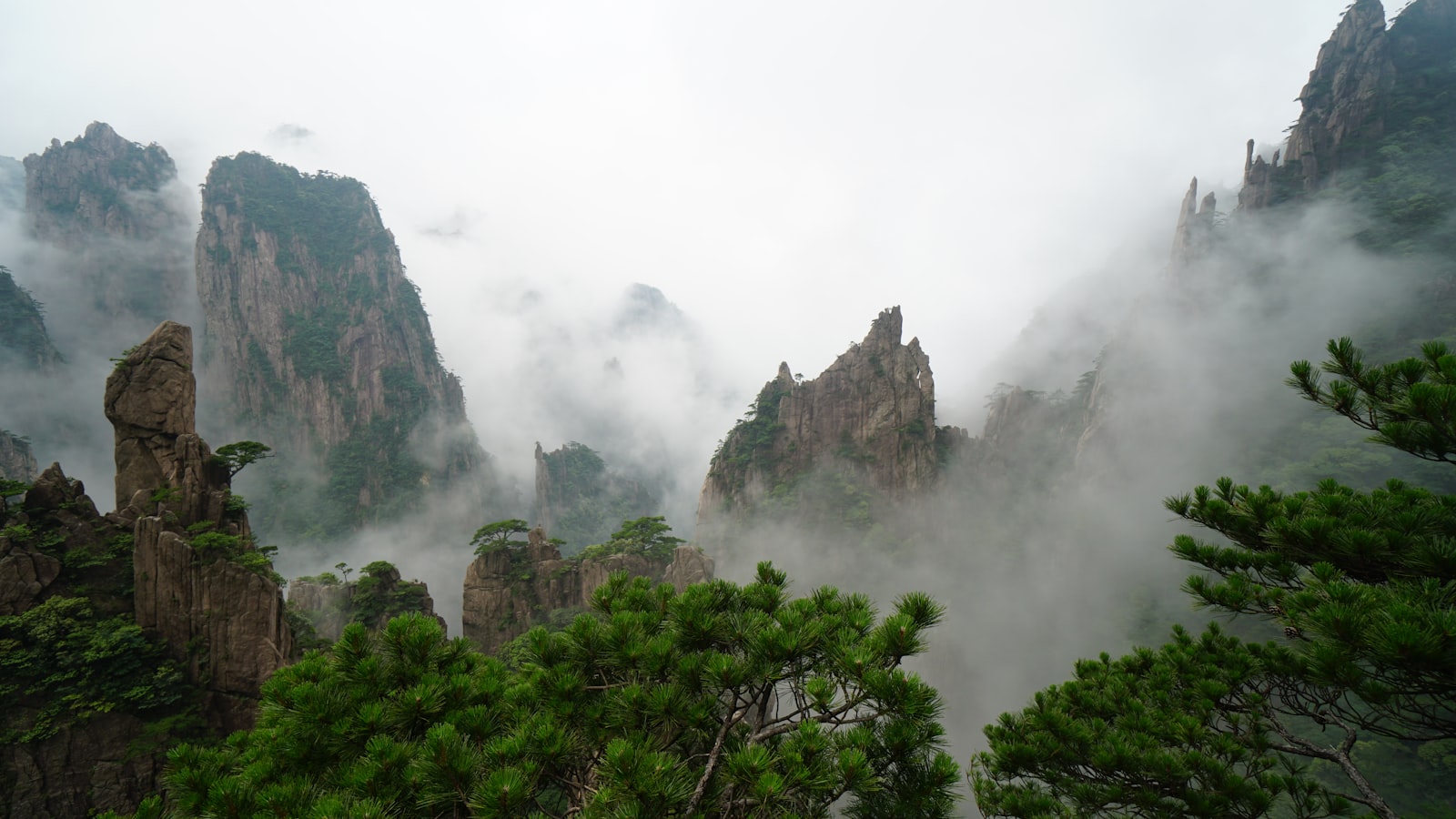
Zhengzhou Travel Guide (2026): Ancient Capital & Rail Hub
Zhengzhou, Henan's capital — the Shang dynasty ruins, the great Henan Museum, the Yellow River, and the practical hub for Shaolin and the ancient capitals.
Zhengzhou, China
Open an external map for this location.
OpenStreetMap Google Maps (opens externally)
Zhengzhou is China’s most important rail crossroads — the city where the country’s high-speed lines meet — and beneath that busy modern surface lies one of China’s oldest capitals. It’s the practical gateway to the Shaolin Temple, the ancient capitals of Luoyang and Kaifeng, and home to a world-class provincial museum.
Most visitors pass through Zhengzhou in a day. This guide makes the case for stopping, with the city’s genuine highlights, how long you need, and how to use it as the base for the Central Plains.
The essentials
Zhengzhou is the capital of Henan province, in the flat heart of the North China Plain. Its modern identity is defined by transport: it sits at the crossing of the Beijing–Guangzhou and Xuzhou–Lanzhou high-speed rail lines, making it one of the best-connected cities in China — a fact that shapes how most people use it.
But Zhengzhou’s history is much older. Over 3,600 years ago it was a capital of the Shang dynasty, and archaeologists have found the remains of that ancient city beneath and around the modern one — including sections of its massive rammed-earth walls that still stand in the city center. That makes it, alongside Anyang, one of the best places in China to touch the very earliest Chinese civilization.
For the visitor the practical equation is simple: arrive by train, see the museum and the ruins, eat a bowl of huimian, and use the city as the launch pad for the Shaolin Temple and the neighboring ancient capitals.
How many days
One day covers the city’s highlights. Two days adds the Shaolin Temple or the Yellow River. A workable shape:
- Day 1: the Henan Museum in the morning (it’s a two-hour visit at least), then the Shang dynasty ruins and Erqi Tower in the afternoon, with a huimian dinner.
- Day 2 (optional): a full-day trip to the Shaolin Temple, or a half day at the Yellow River Scenic Area.
If you’re moving between Xi’an and the east, Zhengzhou slots in naturally as a one-night stop — it’s roughly 2.5 hours from Xi’an by high-speed rail and a short hop to Luoyang and Kaifeng.
Top sights, grouped by theme
The great museum
- Henan Museum — one of China’s finest provincial museums, and the single best reason to stop in Zhengzhou. The collection spans the whole sweep of Chinese history, but the highlight is the ancient bronzes: magnificent Shang and Zhou dynasty ritual vessels, jade carvings and the museum’s signature exhibit, a set of nine bronze ding vessels. The building itself is dramatic, and the exhibits are world-class. Plan at least two hours.
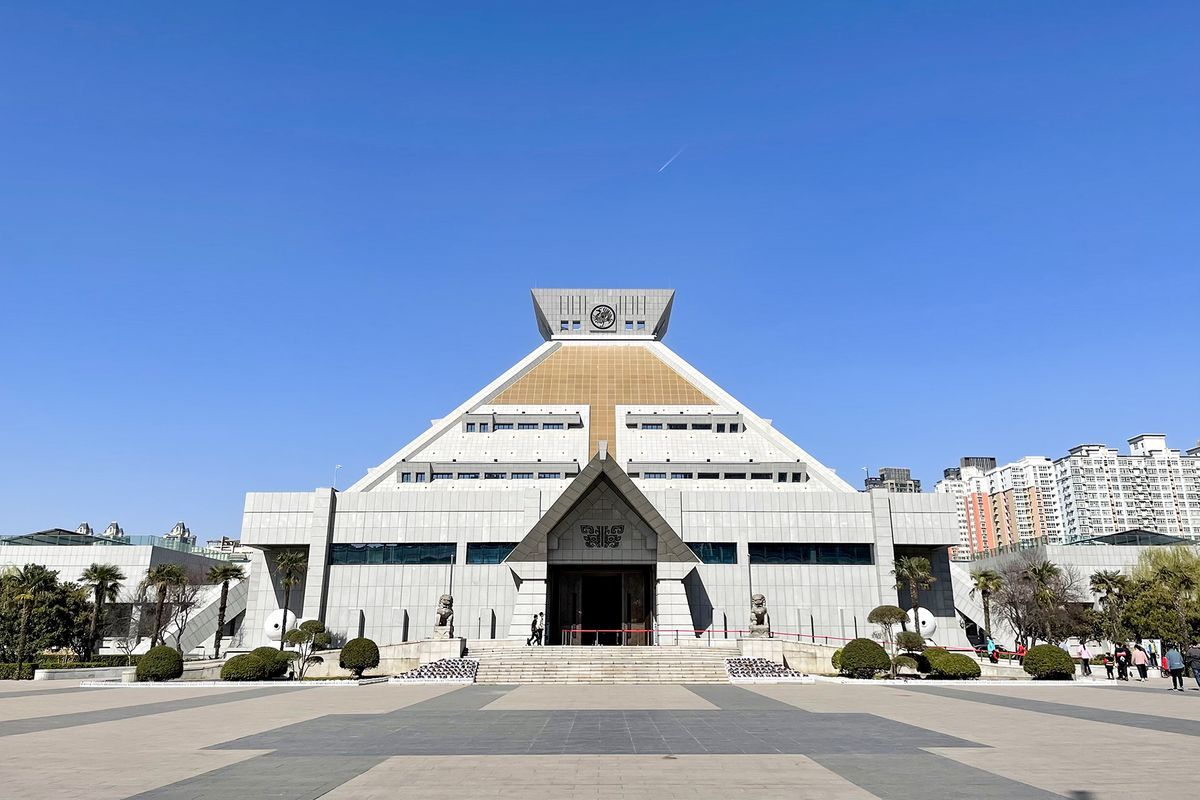
The Henan Museum is Zhengzhou’s cultural centerpiece — one of China’s finest collections of ancient bronzes and jade.
The ancient capital
-
Shang dynasty city ruins — the remains of the 3,600-year-old Shang capital that gave the city its claim to ancient history. Sections of the massive rammed-earth walls still rise from the ground, and the Shang City Ruins Park preserves the archaeology with walkways and displays. It’s a rare chance to stand where China’s earliest recorded civilization stood.
-
Erqi Memorial Tower — the twin-towered monument in the heart of the city, built to commemorate a 1920s rail workers’ strike. It’s the symbol of modern Zhengzhou, sitting in a busy commercial square and best seen at night when it’s illuminated.
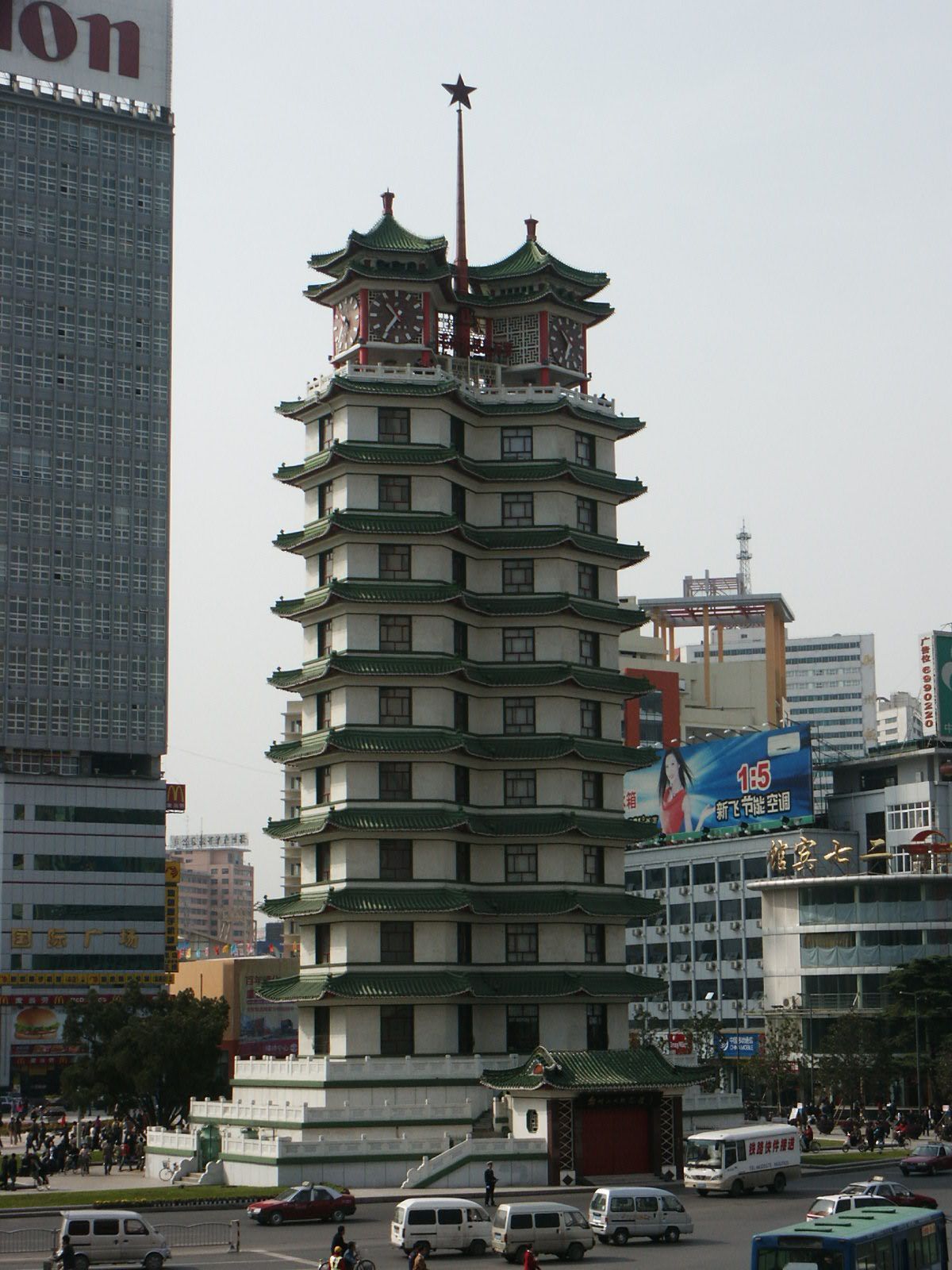
Erqi Tower marks the center of modern Zhengzhou — a striking landmark in the city’s busiest square.
The old city and local culture
- City God Temple — a beautifully restored temple complex in the old part of the city, a quiet contrast to the tower blocks around it. It’s a working temple, atmospheric and rarely crowded, and a good place to see local religious life up close.
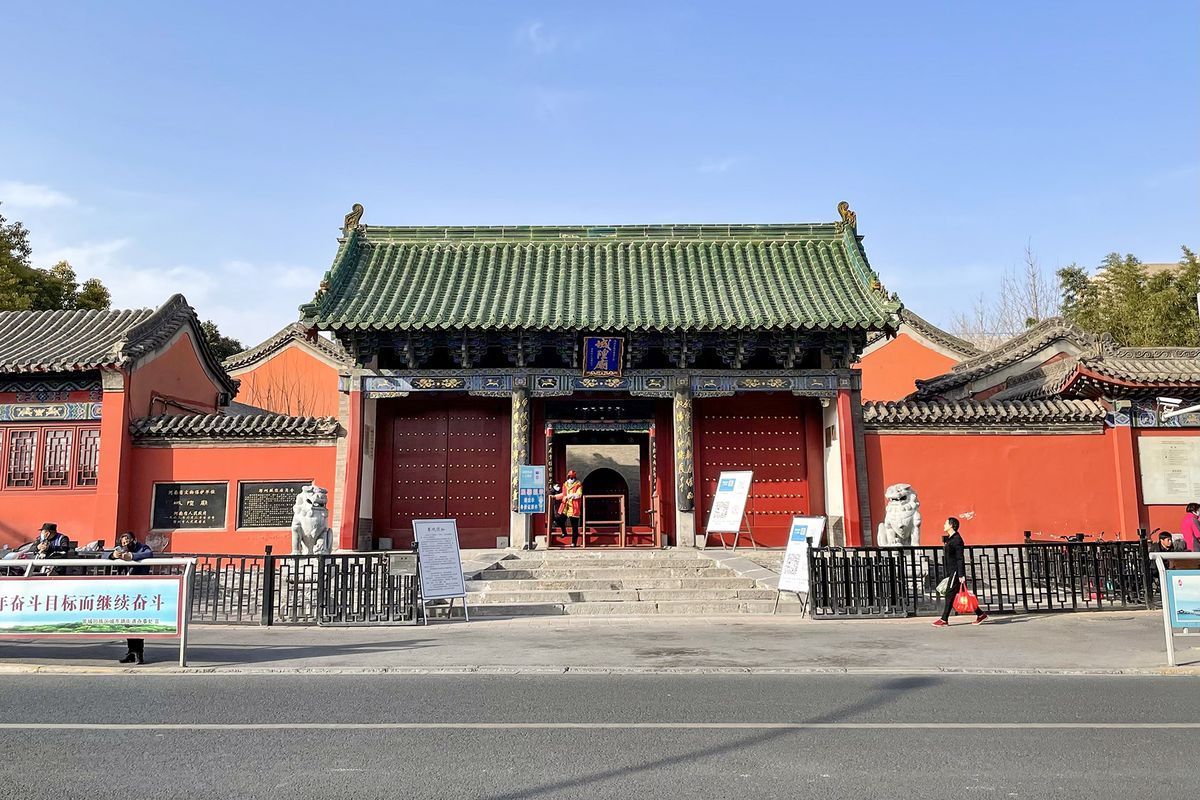
Zhengzhou’s City God Temple is a quiet, working temple in the heart of the old city — a contrast to the modern towers around it.
Beyond the city
-
The Yellow River — Zhengzhou sits just south of the Yellow River, and the Yellow River Scenic Area to the northwest offers views over China’s great river, with statues and gardens along the bank. The nearby Huayuankou is the site of a famous (and tragic) 1938 dike breach and a key place for understanding the river’s power.
-
The Shaolin Temple — about 1.5 hours away at Mount Song, this is the region’s headline sight: the cradle of Chinese kung fu, with the famous performances, the temple halls and the Forest of Pagodas. It’s a full-day trip from Zhengzhou and the reason many travelers come to Henan at all. See our dedicated Shaolin Temple guide for the complete plan.
Best time to visit
- April to May: mild, green and comfortable — the best window.
- September to October: clear, crisp autumn weather, ideal for the ruins and the Yellow River.
- Summer (June–August): hot and humid, though the museum and indoor sights are fine.
- Winter (November–March): cold and grey, but the city empties out and hotel prices drop.
Zhengzhou is a transport hub, so avoid the very peak travel periods (National Day, Chinese New Year) when the station is chaotic and trains sell out.
Where to stay and eat
Where to stay: the city center around Erqi Square is the most convenient base — near the tower, the old city and good food, with easy metro access. For onward rail travel, staying near Zhengzhou East station (where most high-speed trains arrive) saves hassle on arrival and departure days. Mid-range hotels run roughly ¥250–500 a night (estimates, prices change with demand).
What to eat: Zhengzhou’s signature dish is huimian — hand-stretched noodles in a rich, lamby broth, the comfort food of Henan. Breakfast is hulatang, a thick, peppery soup with beef and vegetables that’s the local version of a strong start. Beyond that, the food is hearty North China fare: braised meats, steamed buns and big bowls of noodles. The streets around Erqi and the old city are the best hunting ground.
Budget
Zhengzhou is cheaper than the big eastern cities — it’s a workaday provincial capital. A rough daily budget for planning (per person, estimates and prices change):
- Budget: ¥150–300 — hostel or budget hotel, noodle shops and street food, metro and buses.
- Mid-range: ¥350–700 — comfortable hotel near the center or East station, restaurant meals, taxis for the sights.
- Sightseeing day trips: the Shaolin Temple adds roughly ¥150–400 depending on transport and whether you take a tour.
Set up Alipay before you arrive — cashless payment covers everything from noodles to museum tickets.
Getting there and around
Getting there: Zhengzhou is the heart of China’s high-speed network. Zhengzhou East station connects to Beijing (about 2.5 hours), Xi’an (about 2.5 hours), Luoyang (about 40 minutes), Kaifeng (about 30 minutes), and Shanghai (about 4–5 hours). The airport (Zhengzhou Xinzheng, CGO) has domestic flights plus some international services. Book rail tickets with your passport — see our train ticket guide.
Getting around: the metro covers the center, the main station and the airport rail link. Taxis and Didi are cheap for the sights. The Shaolin Temple is reached by tour bus, public bus or private driver — see the Shaolin guide for the details.
Practical tips
- Use Zhengzhou as a base, not a destination — it’s most valuable as the launch pad for Luoyang, Kaifeng and the Shaolin Temple, all within a short train or car ride.
- Give the Henan Museum time — it’s world-class, and rushing it is the most common mistake.
- Check your station — Zhengzhou has several; most high-speed trains use the East station, while some services use Zhengzhou station in the center.
- Carry your passport — museum tickets require real-name booking, same as most Chinese sights.
- Get an eSIM sorted before landing — see our China eSIM guide.
Combining with the Central Plains
Zhengzhou is the natural hinge of a Central Plains route: from Xi’an you can head east through Zhengzhou, take the short hop south to the Shaolin Temple, and continue to the ancient capitals of Luoyang (Longmen Grottoes) and Kaifeng (the old Song dynasty capital). Each is within about an hour of Zhengzhou by rail. Our Luoyang guide, Kaifeng guide and the Central Ancient Capitals route lay out the full journey, and the Xi’an guide covers the great city to the west.
Last updated: August 2026. Attraction prices, hours and train schedules change — confirm before you go.
Frequently Asked Questions
What is Zhengzhou known for?
Zhengzhou is China's most important transport hub, where the country's two main high-speed rail lines cross — which is why most travelers pass through. But it's also an ancient capital: over 3,600 years ago it was a capital of the Shang dynasty, and the remains of that city's walls still stand in the middle of the modern metropolis. Its Henan Museum is one of China's great museums, and it's the practical base for the Shaolin Temple and the ancient capitals of Luoyang and Kaifeng.
How many days do I need in Zhengzhou?
One day covers the city's highlights — the Henan Museum in the morning and the Shang dynasty ruins plus Erqi Tower in the afternoon. Two days lets you add the Yellow River area or the Shaolin Temple as a day trip. If you're on the classic Central Capitals route, Zhengzhou works best as a one-night base rather than a long stop.
Is Zhengzhou worth visiting, or just a transit hub?
It's more than a transit hub. The Henan Museum alone justifies a stop — it's one of the finest provincial museums in China, with a spectacular collection of Shang and Zhou bronzes, jade and the famous 'nine ding' exhibit. The Shang dynasty city walls are the oldest surviving city walls in China. That said, the city's modern center is workaday rather than beautiful, and most first-timers time their stop to connect to the Shaolin Temple and the neighboring ancient capitals.
How far is the Shaolin Temple from Zhengzhou?
The Shaolin Temple at Mount Song is about 1.5 hours from central Zhengzhou by car or tour bus. It's the region's headline excursion — the kung fu performances, the temple halls and the Forest of Pagodas make a full day. See our dedicated [Shaolin Temple guide](https://chinotrips.com/zhengzhou-shaolin/) for the complete plan, including how to combine it with Luoyang.
What should I eat in Zhengzhou?
Zhengzhou's signature dish is huimian (烩面), a hearty bowl of hand-stretched noodles in a rich mutton-and-lamb broth, often served with spring onions and chili oil. The city is also famous for hulatang, a peppery beef soup eaten for breakfast, and for the wider Henan repertoire of braised and steamed dishes. The old city area around Erqi is the best place to find authentic, cheap local food.
What is the best time to visit Zhengzhou?
April to May and September to October are the sweet spots — mild weather, clear skies and comfortable walking. Summers are hot and humid, and winters can be cold and grey, though the museum and indoor sights work year-round. The city is a transport hub, so expect crowds around National Day and Chinese New Year when everyone is on the move.