
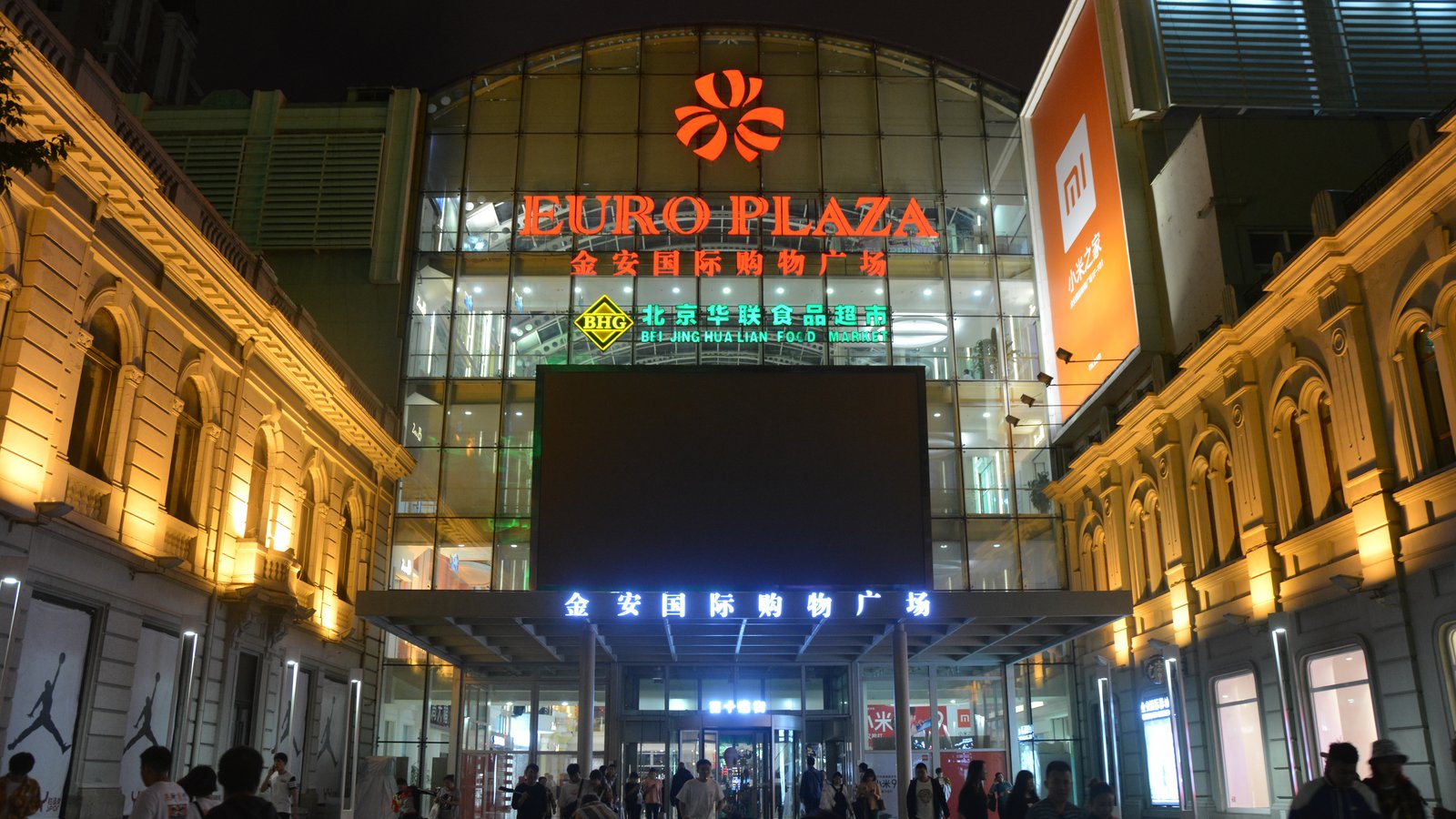
Harbin Year-Round Travel Guide: Beyond the Ice Festival
Harbin isn't just winter. Ice festival highlights, summer on Sun Island, Russian architecture and food, plus how to plan every season.
OpenStreetMap Google Maps (opens externally)
Harbin is famous for one thing — a city built from ice every January — but the city that hosts it is a layered, Russian-flavored place that makes sense in every season. Here is how to plan a trip that goes deeper than the festival.
Most travelers know Harbin as the home of the International Ice and Snow Festival, and that alone is reason enough to brave one of the coldest winters in China. But the “Ice City” is also a city of music, a museum of Russian architecture, a summer retreat from the heat, and a base for some of the most unusual day trips in the country. If you only ever see Harbin through a snow-sculpture brochure, you are missing three-quarters of it.
The quick essentials
- Where it is: the capital of Heilongjiang province in far northeast China, on the south bank of the Songhua River.
- Days needed: two full days for the city’s core; three if you add Sun Island, a Jewish-heritage route and a day trip. Add separate days for Yabuli, Jingpo Lake or Mohe.
- Getting there: high-speed rail from Beijing in about 5 hours, Shenyang in about 2.5, and Changchun in about 1. The airport, Harbin Taiping (HRB), is about 30–40 km from the center.
- Vibe: a broad, chilly, proudly northeastern city that wears its Russian history and its winter both as badges of honor.
Why Harbin deserves more than winter
Harbin was not built by Chinese hands alone. In 1898 it became a construction hub for the Chinese Eastern Railway, a Russian-built line cutting across Manchuria to Vladivostok, and for the next three decades it grew into a strange, wealthy, cosmopolitan railway town. Russians, Jews, Poles, Germans and Japanese mingled with Chinese merchants and migrant workers. After the 1917 Revolution, tens of thousands of White Russian refugees settled here, at times giving Harbin one of the largest Russian and Jewish communities in East Asia.
That history left a physical city that looks like nowhere else in China: Orthodox onion domes, Art Nouveau apartment blocks, cobbled pedestrian streets and a European grid plan. It also left cultural habits — western bakeries, red sausage, and a serious musical tradition that earned Harbin UNESCO’s “City of Music” designation in 2010, the first Chinese city to receive it. You can chase the ice festival in one day, or you can spend a week inside this story. The second version is the better trip.
Winter: the season everyone knows
The winter window runs late December to late February, and it is genuinely extraordinary.
Ice and Snow World
The festival’s main venue is the Ice and Snow World — an enormous park of palaces, towers and slides carved from blocks cut from the frozen Songhua River and illuminated after dark. Go in the evening; the lights are the point. Allow several hours, dress for minus 20–30°C, and expect a major ticket (typically ¥300+, estimate). It opens in early January and winds down in February.
Sun Island snow sculptures
Across the river, Sun Island hosts the International Snow Sculpture Art Expo — large, intricate works in packed snow, a quieter and more artistic counterpart to the Ice World. Visit it early in the day before the crowds.
The city and the river
- Central Street (Zhongyang Dajie) — a 1.4-km pedestrian avenue of early-20th-century European facades, laid with the distinctive “bread-stone” paving bricks. In winter it is strung with lights and carnival stalls; even in minus 25°C it is packed.
- Saint Sophia Cathedral — the green-domed Byzantine church on Zhaolin Street, built 1907 as a Russian Orthodox cathedral, now an architecture museum. It is Harbin’s most photographed building and looks best at dusk, when it is floodlit against snow.
- Songhua River ice — the river freezes thick, and locals turn it into a playground: ice skating, sleds, ice slides, and the famous winter-swimming (dongyong) clubs who plunge into a hacked-open hole. It is free to wander and bizarrely fun.
For the full festival logistics — dates, the cold, packing, and what it really costs — see our dedicated Harbin Ice and Snow Festival guide and the China winter itinerary.
Summer: the season people miss
Harbin’s summer is short but excellent. July highs hover near 28°C, nights stay cool, and the low humidity is a relief after Beijing or Shanghai. This is when the city’s other personality comes out.
- Sun Island stops being a snow venue and becomes a wetland park — boardwalks, reed beds, lotus ponds, bike rentals and shaded lawns on a big island in the Songhua. Take the cable car across the river for the view.
- The Songhua riverside fills with people: evening walks along the flood-control monument esplanade, boat rides, cold beer, and vendors grilling skewers. Sunset here, with the big river and the bridges, is one of Harbin’s best free experiences.
- Central Street in summer is a different place — ice-cream queues, live music, and outdoor terraces under the European facades. The Modern Hotel’s ice pops, which locals line up for even in January, are at their most reasonable in July.
- The Harbin Summer Music Festival (roughly June–August, running since 1961) brings orchestral and folk concerts to halls and outdoor stages across the city — a fitting echo of the “City of Music” title.
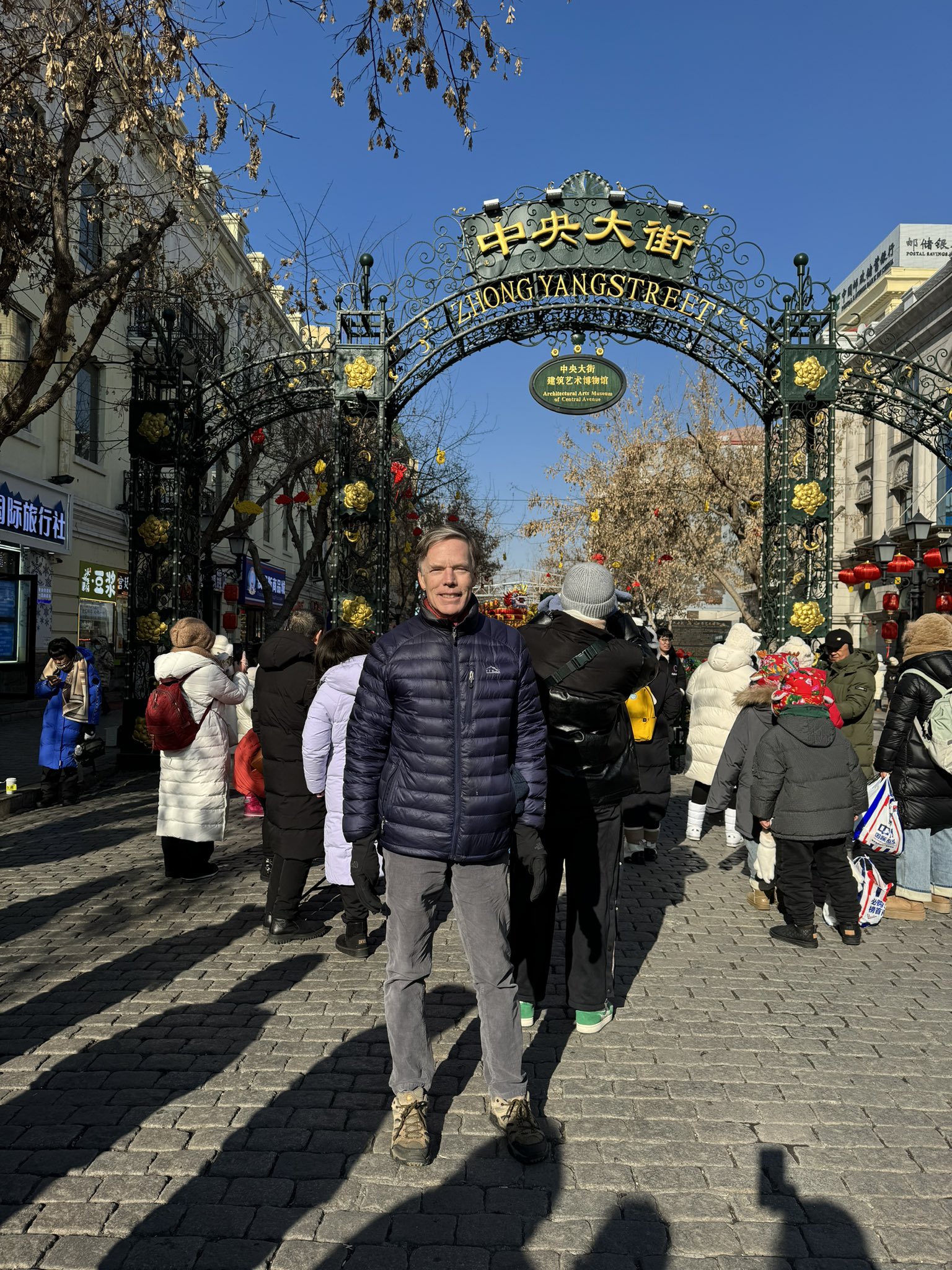
Central Street in summer — ice-cream queues, live music and Russian-era facades.
Spring and autumn: the underrated windows
- Spring (May–June): the ice breaks up, the river returns, and the city greens quickly. You lose the ice festival but gain thin crowds, comfortable weather, and the St Sophia district without snow. The Jewish-heritage and architecture routes are far more pleasant to walk now.
- Autumn (September–October): crisp, clear and golden. Harbin’s parks and the Sun Island wetlands turn color, and this is arguably the best season for slow city wandering and photography.
Neither season draws the festival crowds, which makes them the right choice if you want the city itself rather than the spectacle.
History and culture in depth
The Russian architecture walk
Start at Central Street and work outward. More than 70 buildings along the avenue survive from the early 20th century, in Baroque, Byzantine, Art Nouveau and eclectic styles — many designed by Russian and Jewish architects. The Modern Hotel (Ma’dier), built 1906, is the grandest Art Nouveau survivor. From the street, cross to Zhaolin Park, whose 1963 ice-lantern show started Harbin’s ice tradition, then the Saint Sophia Cathedral complex. For a deeper look, the Daowai district (道外) south of the center preserves “Chinese Baroque” buildings — western facades fused with Chinese ornament, a style unique to Harbin.
The Jewish heritage
Harbin’s Jewish community, which peaked in the 1920s at over 20,000 people, left synagogues, schools, bakeries and cemeteries. The Old Jewish Synagogue on Tongjiang Street has been restored and functions as a cultural and concert hall; the Jewish New Synagogue on Jingwei Street houses a Jewish history museum. It is a small, moving trail, and one that almost no first-time visitor knows to walk.
Music
Harbin’s orchestras, conservatory and summer festival all descend from its Russian and Jewish musical culture. If you are in the city, check the concert listings at the Old Synagogue and the Harbin Concert Hall — a chamber concert in a restored 1900s building beats another shopping street.
What to eat
Harbin’s food is its own fusion of Russian and northeastern (Dongbei) cooking.
- Guo bao rou — the sweet-and-sour crispy pork said to have been invented in Harbin, adapted to Russian tastes at the end of the Qing dynasty. Order it everywhere; the best versions are shatteringly crisp.
- Harbin red sausage (hongchang) — a smoked pork sausage with Lithuanian and Russian roots, sold at Qiu Lin and countless delis. Eat it sliced cold or fried.
- Russian western food — the classic is Huamei Western Restaurant on Central Street, open since 1925, serving borscht, beef stew and bread in a grand old dining room; Tadushi (Tadosi) near the street is the atmospheric alternative.
- Modern ice pops — the famous milk-and-cream ices from the Modern Hotel kiosk, eaten year-round. Even in January locals queue in the cold; in summer they are the city’s favorite dessert.
- Dongbei staples — thick dumplings, braised pork, and the “northeast three treasures” of potatoes, eggplant and peppers stewed together. Portions are huge and prices are low: a filling meal for two usually runs ¥80–150 (estimate).
For the wider culinary picture, our China food tour routes through the northeast too.
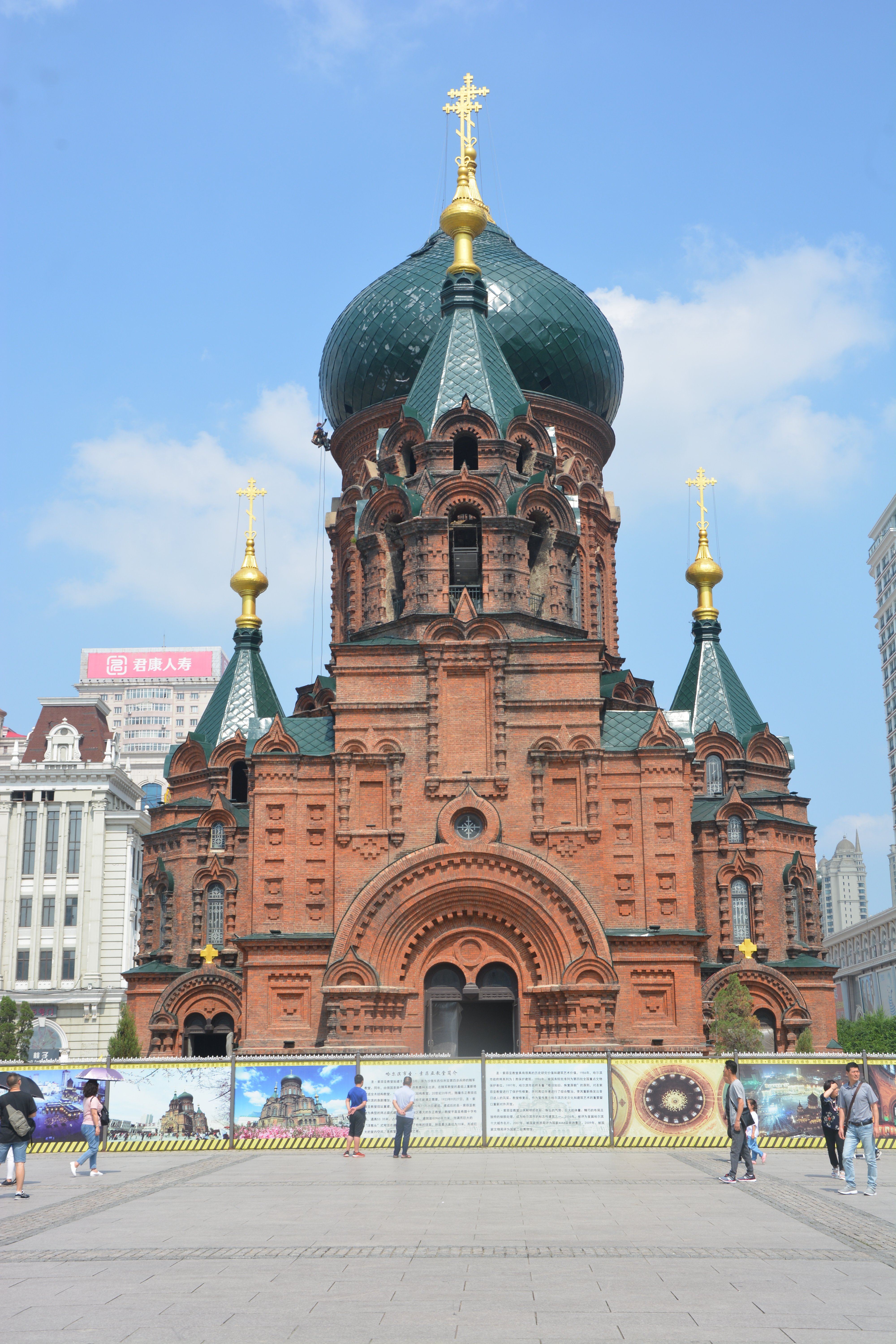
Saint Sophia Cathedral — built as a Russian Orthodox church in 1907, now Harbin’s architecture museum.
Getting around
- Airport to city: shuttle buses run roughly every 30 minutes to the center, about ¥20 and an hour (estimate); a taxi or Didi is 40–60 minutes and more expensive. Confirm the current rate at the desk.
- Metro: Harbin’s metro system (lines 1, 2 and 3) reaches Central Street, the railway stations and parts of the airport corridor; single rides are a few yuan. Fares are cheap and the stations are warm — useful in winter.
- Trains: two main stations — Harbin (city center, classic) and Harbin West (high-speed). The high-speed network fans out to Beijing, Shenyang, Changchun, Qiqihar and Mudanjiang. For overnight connections and sleeper options, see our China overnight trains guide.
Beyond Harbin: the region
Harbin is the natural base for some of China’s most unusual excursions.
- Mohe — China’s northernmost town, with the “Arctic Village” at 53°N, temperatures that can fall below minus 40°C, and the (rare, often exaggerated) chance of auroras. Reach it by flight from Harbin in about two hours, or by overnight train. See our Mohe, China’s northernmost town guide.
- Yabuli — China’s premier ski resort, about 2–3 hours from Harbin by road or train, with long groomed runs and modern lifts. Covered in the Yabuli and Changbaishan ski guide.
- Jingpo Lake — a huge volcanic barrier lake south near Mudanjiang, about 1.5–2 hours by high-speed rail then a short transfer. The Diaoshuilou Waterfall freezes spectacularly in winter and fills with boat tours in summer.
- Wudalianchi — the “Five Linked Lakes” volcanic landscape and UNESCO geopark a few hours north, known for its cone-shaped volcanoes, mineral springs and cured-egg mud pools.
Season-by-season: what to do and how to dress
- Winter (Dec–Feb): ice festival, snow sculptures, river ice play, Russian streets in snow. Dress: thermal base layers, a down or heavily padded coat, hat covering the ears, gloves, a scarf, insulated boots, hand warmers. Keep electronics in inner pockets.
- Spring (May–Jun) and autumn (Sep–Oct): architecture walks, Jewish-heritage trail, parks, river promenades. Dress: layers — a light jacket plus a sweater; mornings and evenings are cool.
- Summer (Jul–Aug): Sun Island wetland, riverside evenings, music festival, Central Street ice cream. Dress: light clothing; a thin layer for cool nights; bring rain gear and mosquito repellent for the wetlands.
A realistic budget
Harbin is affordable by Chinese standards, with winter prices at the peak. Rough planning guidance (per person, CNY — estimates, prices change with season and demand):
- Hotels: ¥200–500 a night for a comfortable mid-range room; less in low season, more in January. Book January well ahead.
- Sights: the Ice and Snow World is the big ticket, typically ¥300+; Sun Island and the city’s museums are more modest, roughly ¥30–100 depending on venue.
- Food: street snacks and ice pops ¥5–30; a restaurant meal ¥40–80 per person; a Russian-western dinner ¥100–200 with drinks.
- Transport: metro rides a few yuan; the airport shuttle about ¥20; day-trip rail and transfers vary widely — check current tickets.
A realistic 3-day city budget for one person, excluding long-distance rail and the Ice World ticket, is roughly ¥1,200–2,200 (estimate). Confirm current rates on booking platforms before you lock plans.
Practical tips
- Pay and data: set up Alipay and an eSIM before you arrive.
- Passport always: you need it for hotel check-in and every train ticket.
- Winter phone care: batteries die fast in the cold — keep your phone in an inner pocket, not your coat’s outer pocket.
- Book ahead in January: hotels and trains fill during the festival peak; go mid-week if you can.
- Pack properly: for the winter, see our China winter packing list.
The honest takeaway
Harbin’s winter is a world-class spectacle and rightfully famous. But the city that hosts it — the Russian facades, the Jewish and musical heritage, the riverside summers, the food that fuses East and West — rewards the traveler who comes in any season. Plan the festival if you want the frozen fairy tale; plan May or September if you want the city itself. Either way, come hungry, dress for the weather, and leave time to go deeper than the ice.
Last updated: August 2026. Policies and prices change often — confirm before you go.
Frequently Asked Questions
Is Harbin worth visiting outside winter?
Yes — and that is the point of this guide. Harbin is famous for its ice festival, but the city is genuinely a year-round destination. Summers stay mild and dry compared with Beijing, the riverside and Sun Island are at their best, the Russian-era streets glow in long evening light, and the Harbin Summer Music Festival has run since 1961. May–October is a comfortable, far less crowded window.
When exactly is the best time for the ice festival?
Roughly late December to late February. The Ice and Snow World opens in early January and closes as the weather warms in February; January is the peak, with the ice at its best and the crowds and cold at their fiercest. Check the exact dates for your travel year, book hotels and trains well ahead, and go mid-week.
How cold does Harbin really get in January?
Expect minus 20–30°C, sometimes colder with wind, and records below minus 35°C. It is a dry cold, which is more bearable than a damp one, but you need thermal base layers, a down or heavily padded coat, a hat covering the ears, gloves, a scarf, insulated boots and hand warmers. Keep your phone in an inner pocket — batteries drain fast in deep cold.
What food is Harbin famous for?
Russian-influenced western restaurants like Huamei (since 1925), guo bao rou (the sweet-and-sour crispy pork invented in Harbin), smoked red sausage with Russian roots, Modern-brand ice pops sold on Central Street even in January, and hearty northeastern (Dongbei) stews and dumplings. Portions are generous and prices are low.
How do I get from Harbin airport to the city?
Harbin Taiping International Airport (HRB) is about 30–40 km from the center. Airport shuttle buses run into the city in roughly an hour and cost around ¥20 (estimate); taxis or Didi take 40–60 minutes depending on traffic. The metro now also reaches parts of the airport area, but the shuttle remains the simplest arrival option.
What can I combine with a Harbin trip?
Yabuli, China's biggest ski resort, is about 2–3 hours away; Jingpo Lake, the volcanic barrier lake south near Mudanjiang, is a half-day by high-speed rail; Mohe, China's northernmost town, is a short flight or an overnight train; and Wudalianchi's volcanic lakes and springs lie a few hours north. All make natural extensions to a Harbin base.