
Leshan Giant Buddha Guide (2026): 71m Cliff Buddha
Day trip to the Leshan Giant Buddha from Chengdu — the 71m cliff carving, the riverside walkway and cruise views, and how to beat the queues.
OpenStreetMap Google Maps (opens externally)
The Leshan Giant Buddha is the largest stone Buddha in the world — a 71-meter figure carved into a cliff where three rivers meet, still gazing across the water after more than a thousand years.
It’s the most famous day trip from Chengdu, easy by high-speed rail, and usually paired with Mount Emei. This guide covers the two ways to see it — from the cliff walkway and from a boat — and how to do it without wasting half your day in a queue.
Overview
Leshan sits about 120 kilometers south of Chengdu, where the Min, Dadu and Qingyi rivers converge. The Giant Buddha was carved in the 8th century during the Tang dynasty, in part to calm the dangerous waters of the confluence for passing boats. Work is said to have taken around 90 years.
The statue is seated, hands on knees, facing the river. Standing beside its head or looking up from its feet, you get a real sense of the scale: the shoulders are broad enough for a crowd, and the ears alone are roughly the height of a person. It has been listed as a UNESCO World Heritage Site along with Mount Emei since 1996. The site is managed as part of the wider Leshan scenic area, which also includes Lingyun Temple and the riverfront below the cliff.
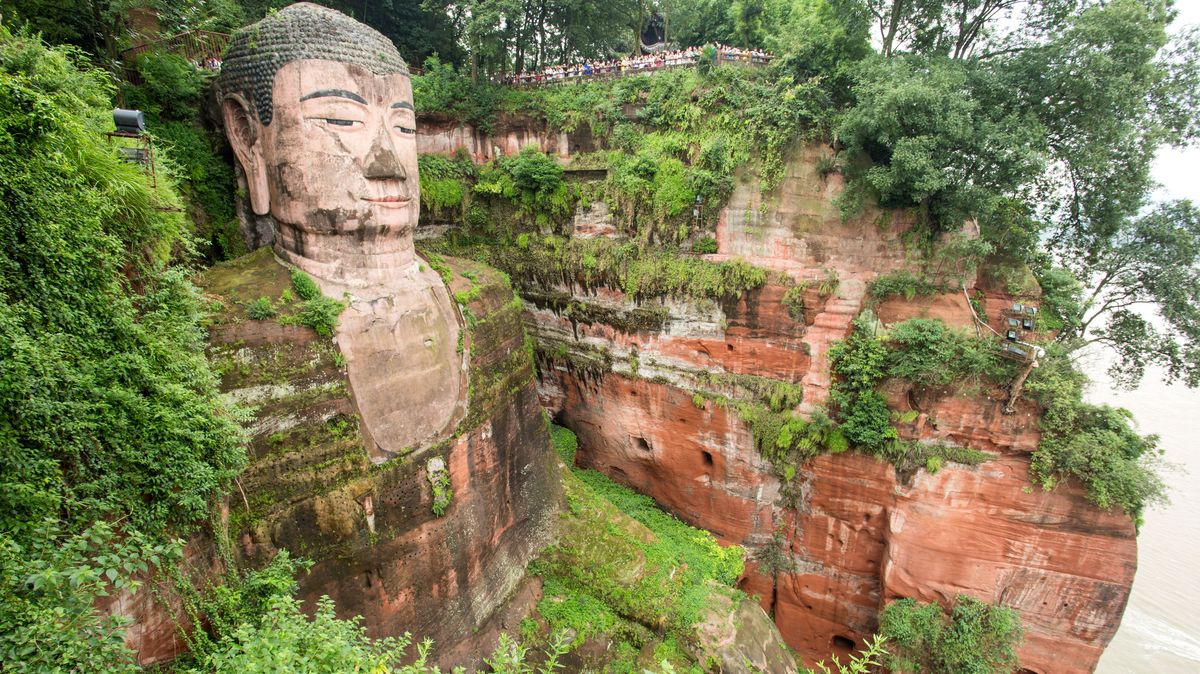
The seated Leshan Giant Buddha, at 71 metres, is the largest stone Buddha in the world.
How many days
The Buddha itself is a half-day sight — you can see it properly in three to four hours. Most travelers do it as a day trip from Chengdu, either:
- Morning option: early train to Leshan, see the Buddha from the walkway, take the afternoon boat, return to Chengdu.
- Combined option: Buddha in the morning, then continue to Mount Emei for one or two nights, returning to Chengdu afterward. Overnighting on Emei lets you catch the summit sunrise the next morning.
Suggested itinerary
A half-day plan (from Chengdu):
- Morning: high-speed rail from Chengdu (about 1 hour), then head straight to the site.
- The Buddha: the riverside walkway down past the Giant Buddha, the boat view from the river, and Lingyun Temple on the way out.
- Return: back on the train to Chengdu by late afternoon, or continue to Mount Emei and stay the night at its base.
Have more time? Combine Leshan with Mount Emei on a two-day loop — see the Sichuan route.
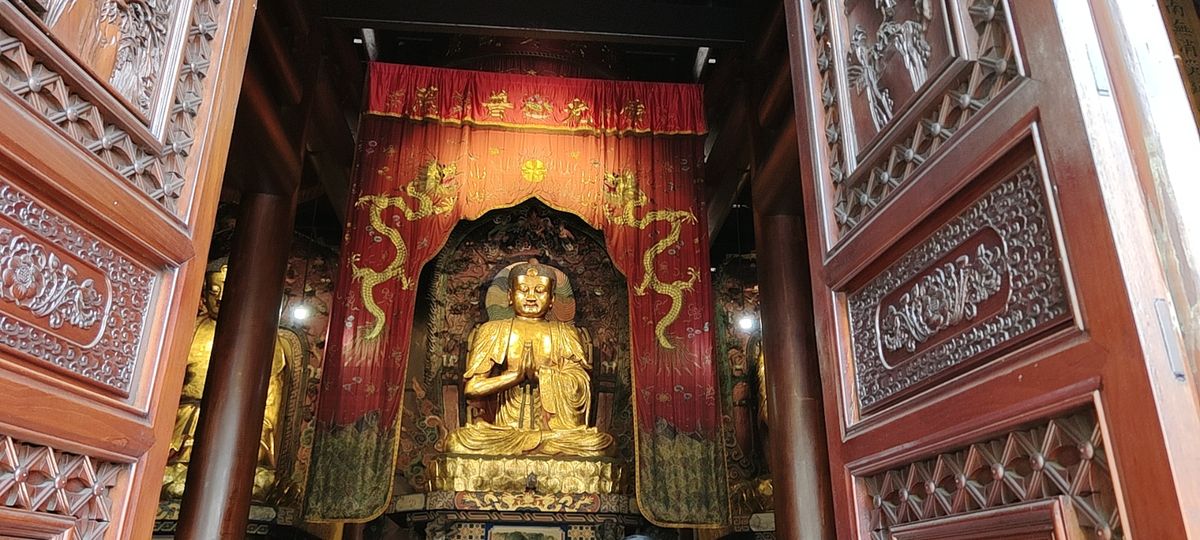
Lingyun Temple sits on the ridge above the Buddha, part of the same Leshan scenic area.
Best time to visit
- Spring (March–May) and autumn (September–November): the sweet spots — comfortable weather and moderate crowds outside holidays.
- Summer (June–August): hot, humid and busy with domestic tourists; afternoons can bring rain.
- Avoid Chinese holidays: especially the May Day break and National Day week (October 1–7), when queues at the walkway can be very long.
Top sights
- The Giant Buddha — the 71-meter seated figure, seen close-up from the cliff walkway that runs down beside it.
- The riverside walkway (nine bends plank road) — a stone staircase hugging the cliff beside the statue, leading from the head down to the feet.
- The boat view — the classic full-body shot from the river; the ferry-style boats pause in front of the statue so you can take in the whole figure.
- Lingyun Temple — the temple complex on the cliff above the Buddha, part of the same site.
- The confluence viewpoint — from the Lingyun ridge you can see the meeting of the three rivers that shaped the site’s history.
Getting there
- By rail: high-speed trains from Chengdu reach Leshan in about one hour. From the station, a short bus or taxi ride brings you to the scenic area. Book with your passport — see our train guide.
- By road: direct buses and organized tours from Chengdu also reach the site; the drive takes a couple of hours.
- By boat from Mount Emei: travelers combining the two sights often arrange transport through their Emei hotel.
Getting around
- On foot: the scenic area is compact — the walkway, the temple and the viewpoint are all within a short walk of the main entrance.
- Shuttle buses: small shuttle buses cover the distance from the ticket area to the temple entrance. In summer, they run frequently through the middle of the day when the site is busiest.
- Boats: the viewing boats depart from a dock near the site; buy tickets at the dock (cashless payment is standard). Morning sailings have the best light on the statue’s face.
The history of the Buddha in depth
The Leshan Giant Buddha is more than a spectacle — it was an engineering project with a practical purpose. In the 8th century, the confluence of the Min, Dadu and Qingyi rivers was notorious for dangerous currents that sank boats, and the Tang dynasty monk Haitong conceived of carving a colossal Buddha to calm the waters and protect passing vessels. Sculpting the cliff face reportedly took about 90 years, beginning in 713 and finishing in 803, outlasting Haitong himself.
The statue was carved directly into the sandstone cliff, which made drainage a constant problem. A sophisticated system of gutters and channels, hidden in the Buddha’s hair, robe folds and behind the ears, carries rainwater away from the carving — an early feat of engineering that helped the figure survive more than a thousand years of monsoons. The scale still astonishes: the shoulders are about 28 meters wide, the head is roughly 14.7 meters tall, and the ears are about 7 meters long. Stone “Great Buddha” statues elsewhere in China are large; this one is on a different order of magnitude.
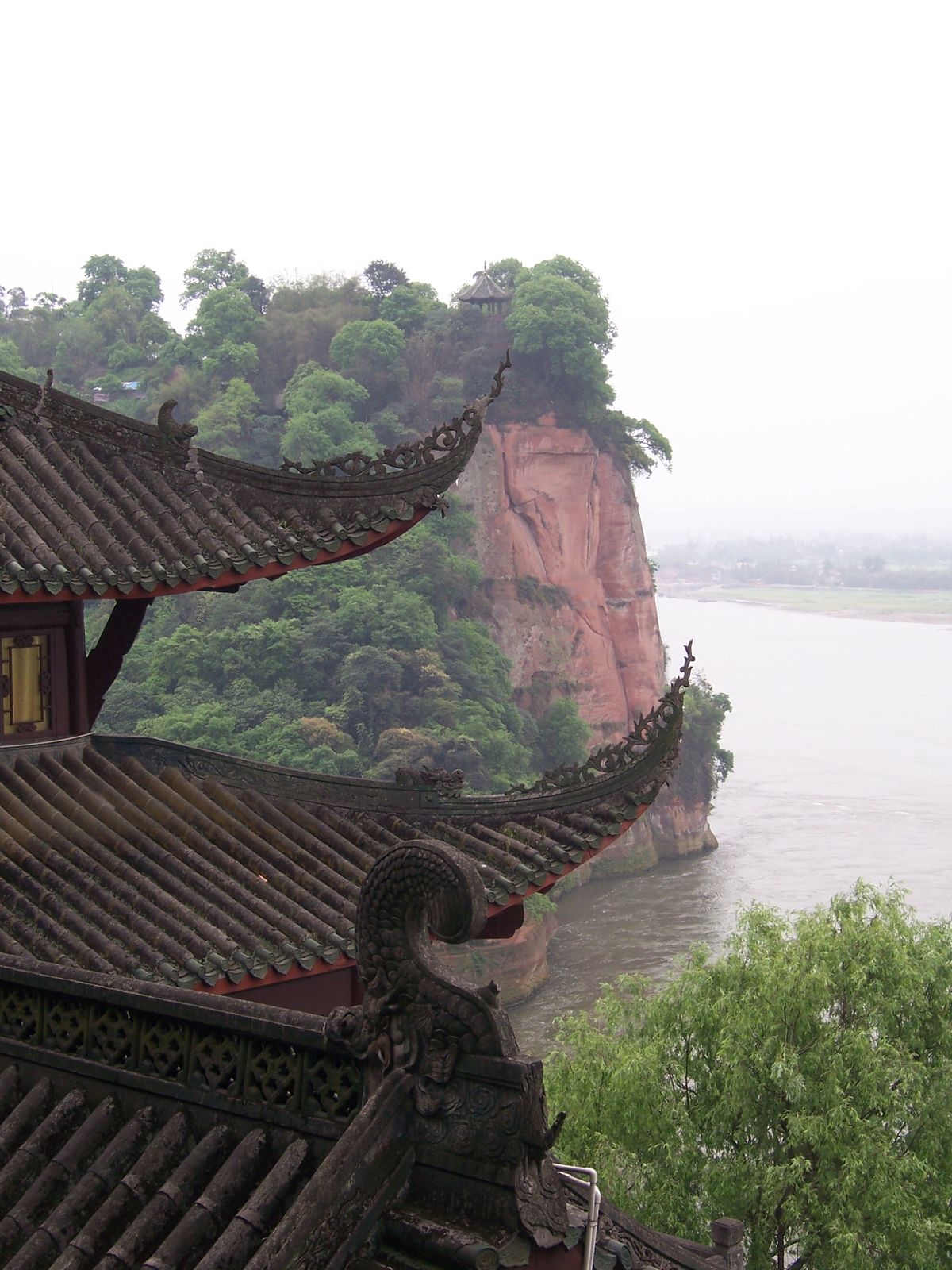
The boat view from the river shows the whole seated figure against the cliff face.
A realistic budget for the day trip
A day trip from Chengdu to Leshan is one of the cheaper big sights in China.
- Transport: high-speed rail from Chengdu to Leshan is roughly ¥50–60 each way in second class; the bus or taxi from the station to the scenic area adds ¥10–30.
- Entry tickets: the scenic area ticket is typically around ¥80–90 (prices change and are confirmed at the site), and includes the walkway and Lingyun Temple.
- The boat: the river cruise adds roughly ¥70–100 per person — worth it for the full-body view if you have the time.
- Meals: a simple lunch in Leshan runs ¥30–60; the town is famous for local specialties such as Qishan tofu.
- Guides: a private guide or full-day tour from Chengdu with transport can run ¥500–1,000 per person, which simplifies the logistics but is not required.
Common mistakes to avoid
- Arriving at midday. The walkway queue builds from mid-morning; the opening hour or a late-afternoon arrival means far shorter waits.
- Doing only the walkway or only the boat. They show different things — the close-up scale versus the full-body view — and many travelers regret skipping one.
- Underestimating the stairs. The nine-bends plank road is steep and long; anyone with mobility concerns should prioritize the boat.
- Forgetting to book rail tickets with a passport. High-speed rail bookings in China are tied to your passport details — see our train guide.
- Scheduling it on a Chinese holiday. The May Day and National Day breaks make queues genuinely painful; move the visit by a week if you can.
- Carrying large bags. The site involves a lot of walking and stairs; store luggage at your Chengdu hotel or in a locker.
Pairing Leshan with Mount Emei in practice
The Leshan Buddha and Mount Emei share a UNESCO listing, and they combine naturally into a two-to-three-day loop from Chengdu. The classic order is Leshan first — it is the easier day and the weather is less of a factor — then continue southwest to Emei for a night or two. Trains and buses connect the two towns in under an hour, and many hotels in both arrange transfers.
If you want the Emei sunrise, book the mountain overnight before you leave Chengdu, because summit rooms sell out in autumn and on weekends. A common mistake is to treat both as day trips from Chengdu — doable on paper, but it turns two of China’s most atmospheric sights into a rushed double commute. With one overnight on Emei, the loop becomes relaxed, and you return to Chengdu with both sights properly seen.
Practical tips
- Go early: arrive at opening time to beat the worst of the walkway queue — the line builds fast.
- Choose the boat on busy days: if the walkway queue looks long, the boat gives you the full view with far less waiting.
- Wear sensible shoes: the walkway is steep and can be slippery after rain.
- Cashless is the norm: set up Alipay before you arrive — tickets, boats and shuttle payments all take mobile payments. Allow a little extra time at the ticket area on weekends — the site draws large domestic tour groups, and the entrance can be busy.
Where to go next
Leshan is usually combined with Mount Emei for a two-to-three-day loop from Chengdu, and both are easy extensions of a Chengdu itinerary. For a longer trip, continue the classic route east to the terracotta warriors of Xi’an or north to Beijing’s history.
Last updated: August 2026. Ticket and boat prices and walkway access change — confirm before you go.
Frequently Asked Questions
How big is the Leshan Giant Buddha?
The seated Buddha is about 71 meters tall, making it the largest stone Buddha in the world. It was carved into the cliff face over roughly 90 years, beginning in the 8th century during the Tang dynasty, at the confluence of three rivers.
Walkway or cruise — which view is better?
Both, if you can manage it. The walkway takes you down the cliff beside the Buddha — close-up and impressive, but it's a long staircase and the queue can be long. The cruise gives you the classic full-body view of the whole statue from the river, and is the better option if you're short on time or mobility.
How long are the queues for the walkway?
On a normal weekday the staircase is manageable; on weekends and especially during Chinese holidays, the line to walk down beside the Buddha can stretch to one to two hours or more. Go early (right at opening) or take the boat to skip the worst of it.
How do I get there from Chengdu?
High-speed trains run from Chengdu to Leshan in about an hour, then a short bus or taxi ride to the scenic area. It makes an easy day trip, and it's simple to add Mount Emei on the way. Book rail tickets with your passport — see our train guide.
Can I combine the Leshan Giant Buddha with Mount Emei?
Yes — they're a natural pair and share a UNESCO listing. A common plan is a day for the Buddha plus a half-day in Leshan, then a day (or two) on Mount Emei, either as a loop from Chengdu or continuing southwest. Book accommodation on Emei in advance if you want the sunrise.
Do I need a visa for the Leshan Giant Buddha?
The same mainland China rules apply — many passports are visa-free for up to 30 days, and others can use the 240-hour transit scheme. Check your situation before booking.
More in Sichuan
Sichuan Travel Guide (2026) — Sichuan travel guide