

Chengdu in Autumn: City, Pandas & West Sichuan Colors (2026)
Chengdu in autumn — ginkgo, cooler pandas and hotpot in the city, plus Jiuzhaigou, Yading and Miya Luo for West Sichuan's best colors.
OpenStreetMap Google Maps (opens externally)
Chengdu in autumn is a two-part trip: a mild, foggy city of ginkgo, pandas and hotpot, plus western Sichuan’s short golden window — Jiuzhaigou, Yading and the red-leaf valleys. This guide covers the when, the routes, the food and the practical details.
Chengdu rarely tops anyone’s list for scenery, and that is the point. In autumn the Sichuan Basin city turns comfortably mild — warm enough for a t-shirt at midday in October, cool enough for a jacket at night — while the mountains to the west put on their one big show of the year. You get the city’s relaxed rhythm (teahouses, hotpot, pandas) and, a short flight or train away, some of China’s best autumn landscapes. Here is how to make the most of it.
Why autumn is Chengdu’s sweet spot
Chengdu’s climate is famously grey: the basin traps cloud and fog, winters are damp, and summers can be hot and sticky. Autumn is the exception. From mid-September the humidity drops, the sun starts winning the mornings, and daytime highs settle into a comfortable range — roughly 25°C in September, 20°C in October and 15°C in November (estimates, and it varies). Even the fog becomes atmospheric rather than oppressive.
The timing matters even more if you are heading west. Jiuzhaigou’s forests and Daocheng Yading’s golden larches are at their best for a short window in October, and the dry autumn weather is exactly what makes the mountain scenery reachable. Plan September to November around those peaks, and you get a city trip and a landscape trip in one.
Weather and when to go, month by month
Autumn in western Sichuan means one weather rule: the higher you go, the colder and the more changeable it gets. Chengdu itself is mild, but Jiuzhaigou (2,000–3,100 m) and especially Yading (3,700–4,700 m) have sharp temperature swings — cold, sometimes freezing mornings, warm sun at midday, and cold again after sunset.
- September — warm in Chengdu, still green in the mountains. A good time for the city, hotpot and the pandas, and for avoiding crowds. The higher valleys are only just starting to turn.
- October — the main event. Jiuzhaigou and Miya Luo peak mid-month to early November; Yading is golden through the month. Chengdu is at its most pleasant. Book everything early — this is also the month of National Day (Golden Week, 1–7 October), the one stretch to avoid.
- November — the city’s ginkgo turns gold, and the mountain crowds thin out. The valleys keep some color into early November, but snow and closures become more likely at the passes later in the month.
If you have one ideal window, the second half of October covers the city, Jiuzhaigou and Yading at once. Our autumn travel in China guide places Sichuan in the wider national picture if you are planning a longer trip.
Chengdu city in autumn
 , and the city does its best seasonal work in four easy visits.
People’s Park (Renmin Gongyuan) — the classic Chengdu stop in autumn, especially from late October when the ginkgo trees along the central avenues turn gold. It is also the easiest place to experience a teahouse: order a cup of jasmine tea (¥20–40, estimate) and watch the locals play cards, sing opera and get their ears cleaned. Mid-morning is the lively window, and the light is softer.
Kuanzhai Alley (Kuanzhai Xiangzi) — the restored old streets are at their best when the weather is mild, which autumn is. Walk the three lanes (Wide, Narrow and Well Alleys) in the late afternoon, when the light hits the grey-brick courtyards and the street food comes out. It is touristy, but the autumn atmosphere is genuine, and the lane-side snacks — sugar-grilled skewers, dandan noodles, fried dumplings — are a good warm-up for dinner.
The Giant Panda Base (Chengdu Research Base) — the single best reason to time Chengdu for cooler weather. Pandas overheat easily, so on an 18–22°C autumn morning they are far more active than on a summer day: eating bamboo, rolling, occasionally climbing. Arrive near opening (around 7:30–8:00) to catch the feeding window before the crowds build. Entry is roughly ¥55 (estimate, prices change) and the metro-plus-shuttle connection from the city is easy. If pandas are a priority, our pandas beyond Chengdu guide covers the less-crowded alternatives.
Dujiangyan — about an hour from Chengdu by train or bus, this 2,200-year-old irrigation system is a calm, green day trip and a nice change of pace. In autumn the water is lower and the light is soft; walk the old Anlan Suspension Bridge over the Min River, then lunch on the local river fish. Entry is around ¥80 (estimate, prices change).
The big-ticket western Sichuan colors
Chengdu is the gateway to some of China’s most famous autumn scenery, and October is when it all lines up. These are the four that matter.
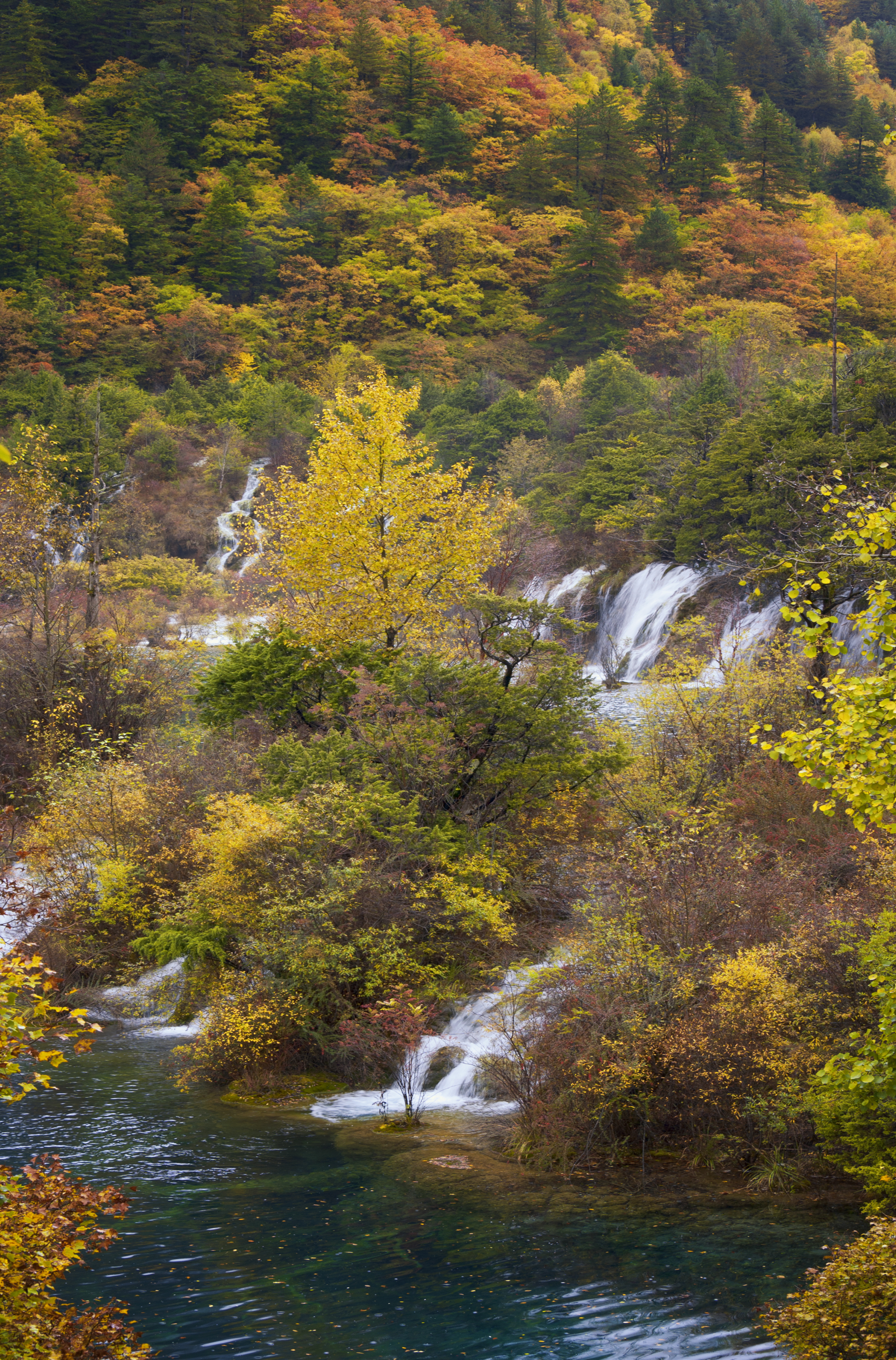
Jiuzhaigou — the valley of turquoise lakes and waterfalls is at its best from mid-October to early November, with late October the classic peak. The autumn weather is crisp and clear, the forests turn gold and red around the lakes, and the crowds thin out after National Day. Entry is by timed reservation with a sightseeing shuttle, roughly ¥250–300 in the high season including the shuttle (estimate, prices change). It sells out in October, so book the moment your dates are fixed. See our autumn Jiuzhaigou route for the full itinerary.
 .
.
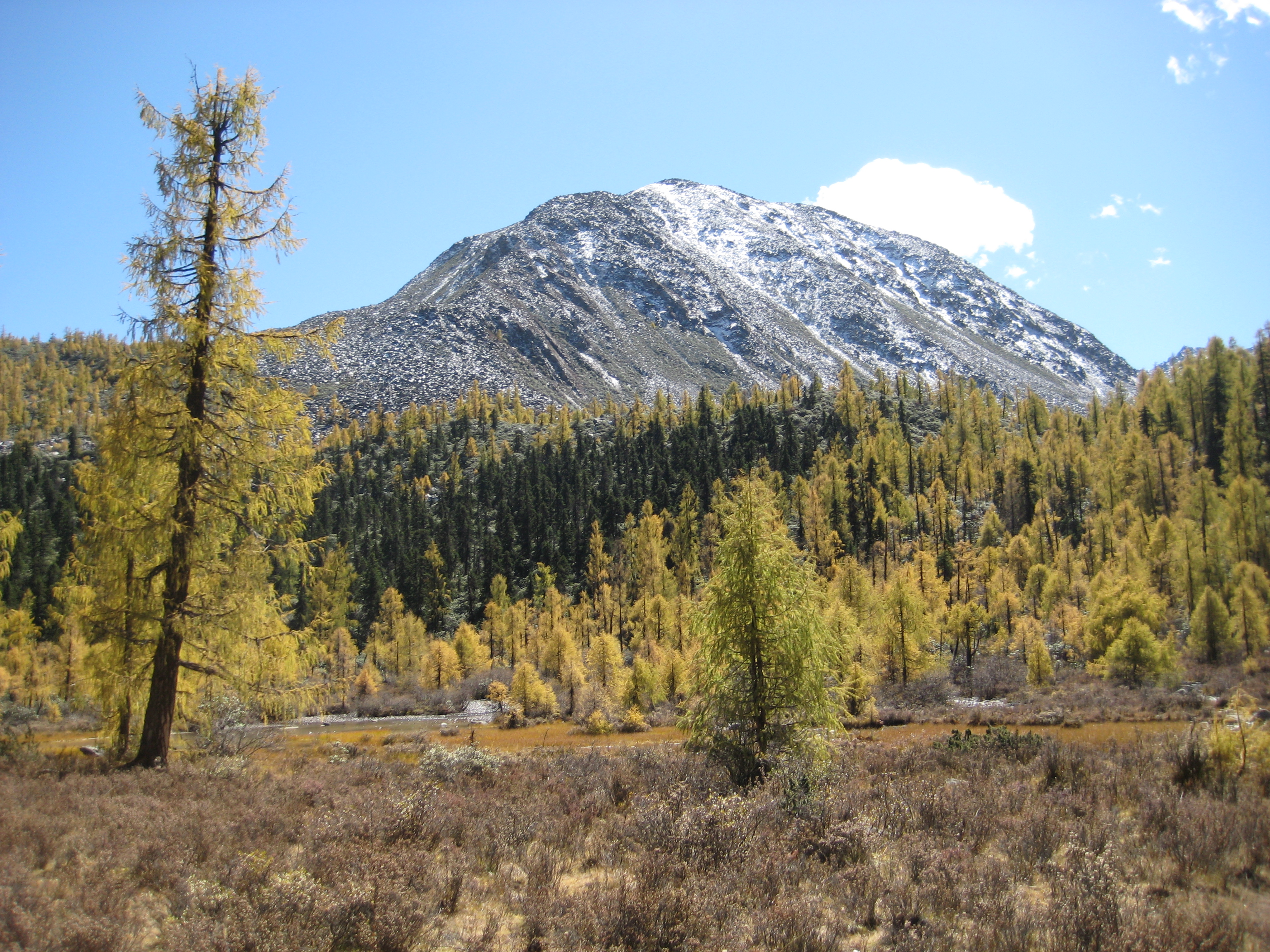
Daocheng Yading — often called the last pure land on the planet, this high valley under the Three Sacred Mountains is golden in October, when the larch forests turn yellow against the snow peaks and the grasslands glow. It is higher (3,700–4,700 m) and more demanding than Jiuzhaigou — the famous five-hour hike to Milk Lake is a real climb — so respect the altitude, walk slowly and carry warm layers. Fly from Chengdu to Daocheng Yading Airport (one of the world’s highest) or take the long scenic bus route; either way, plan at least five days. Park entrance plus the sightseeing bus runs to roughly ¥270 (estimate, prices change).
Miya Luo — the red-leaf valley near Li County, on the route northwest from Chengdu toward Jiuzhaigou, peaks from mid-October to early November when the maple and oak forests turn scarlet across the hillsides. It is less organized than Jiuzhaigou, so it works best as a scenic stop on a road trip rather than a destination on its own.
Siguniang Mountain — the four-peaked massif near Xiaojin, about a 3–4 hour drive from Chengdu, with alpine meadows and larch forests at their best in October. The Changping and Shuangqiao valleys give day-hike access without needing mountaineering gear. It is lower-key than Jiuzhaigou and Yading, and quieter.
Two route suggestions
Chengdu + Jiuzhaigou (5 days) — the classic and easiest to arrange. Days 1–2 in Chengdu (pandas, People’s Park, a hotpot dinner), day 3 take the high-speed rail or a morning flight to Jiuzhaigou, day 4 a full day in the valley, day 5 return. Add a day for Huanglong’s travertine pools if you have it. Our Chengdu to Jiuzhaigou route spells out transport, tickets and timing in detail.
Chengdu + Yading (6–7 days) — fly Chengdu to Daocheng, then two days in the Yading valley (Short and Long trekking routes), a rest day for the altitude, and fly back. October is peak season; book flights and the park permit well ahead. If the altitude worries you, Jiuzhaigou is the gentler choice.
If your dates are flexible, an early-to-mid November version of either trip trades a little color for far fewer people — especially at Jiuzhaigou, where late October is the busiest window.
Autumn food in Chengdu
Autumn is a food season as much as a scenery season, and Chengdu does it well. The city’s year-round obsession is hotpot — the numbing, spicy broth that is the Sichuan signature. In autumn the pot feels right: the evenings are cool, and the seasonal additions arrive — lotus root, taro, autumn mushrooms and river fish in the broth. A proper hotpot dinner runs roughly ¥80–200 per person (estimate, prices change), and the locals will tell you the spicy broth is the point.
Beyond hotpot, autumn brings the national harvest to Chengdu’s tables: hairy crab (the prized autumn delicacy, shipped down from the east, at its best in October and November), roasted chestnuts sold warm from street-side carts, and persimmons in the markets. The teahouse culture also peaks in autumn — a warm afternoon in People’s Park is exactly what the season is for. See our autumn food season guide for the wider seasonal eating.
Getting there and around
Chengdu’s transport is the reason the whole trip works, and it improved a lot recently.
- To Jiuzhaigou — the fastest route as of August 2026 is the high-speed railway from Chengdu to Huanglong Jiuzhai station, roughly a 2-hour ride (about ¥100–200, estimate, prices change), then a shuttle to the park. Flights to Jiuzhai Huanglong Airport are the flexible backup, and the scenic 8–10 hour bus remains the budget option. For the full comparison, see our Chengdu to Jiuzhaigou route.
- To Yading — fly from Chengdu to Daocheng Yading Airport (about 1 hour, ¥500–1,200 estimate) or take the long bus route. October flights sell out, so book as soon as dates are firm.
- Around Chengdu — the metro (¥2–8 per ride) covers People’s Park, Kuanzhai Alley and the panda base connection; the city is also flat and bike-friendly on mild autumn days.
Everything — train and flight tickets, park reservations, food delivery — runs through your phone in China, so set up Alipay before you arrive.
Avoiding the Golden Week crowds
The one week to avoid is Golden Week, 1–7 October, when the whole country travels: Jiuzhaigou hits its annual capacity limits, flights and hotels triple in price, and the scenic spots are wall-to-wall. The good news is the autumn season is longer than the holiday — the first half of October before the 1st and, much better, the second half after the 7th both deliver the same colors with a fraction of the crowds. If your dates must fall in early October, book Jiuzhaigou’s timed-entry ticket the moment it opens and accept the crowds in the city.
Packing and practical notes
- Layer everything. Chengdu: light layers and a jacket. Western Sichuan: warm jacket, fleece, beanie and gloves for cold mornings near or below freezing at altitude in late October.
- Sun and altitude. The plateau sun is intense even in cool air — bring sunglasses and sunscreen. Western Sichuan climbs well above 3,000 m; take day one slowly and drink water.
- Book the big-ticket items early. Jiuzhaigou timed tickets, October flights and the popular hotpot places all fill up.
- Start the panda base early. Opening time is the active window, before the mid-morning crowds and the warmest part of the day.
- Build in a spare day. Mountain weather in October can close a pass or fog in a landing strip; a buffer day makes the trip resilient.
The bottom line
Chengdu in autumn is one of China’s easiest two-in-one trips: a mild, foggy city of pandas, ginkgo and hotpot, with western Sichuan’s short golden window a short flight or train away. Go in the second half of October for the best of both, book Jiuzhaigou and Yading well ahead, skip Golden Week, and layer up for the mountains. Start with our Chengdu travel guide for the city basics, then plan the mountains around the October color peak.
Last updated: August 2026. Policies and prices change often — confirm before you go.
Frequently Asked Questions
Is autumn the best season to visit Chengdu?
For most travelers, yes. Summer is hot and humid, winter is grey and cold, but autumn brings mild, comfortable days — around 20°C in October — with the city's ginkgo trees turning gold and the surrounding mountains at their most colorful. It is also one of the least rainy windows in western Sichuan, which matters if you are heading to Jiuzhaigou or Yading.
When do the ginkgo trees turn gold in Chengdu?
Usually **late October to mid-November**, with mid-November often the peak in People's Park and the city's tree-lined streets. The timing shifts with the weather each year, so check recent photos if your dates are flexible. The rest of the city still looks lovely in October — the autumn mood is about the mild weather, the street food and the cozy evenings more than any single tree.
When should I visit Jiuzhaigou and Yading in autumn?
Jiuzhaigou peaks from **mid-October to early November** (late October is the classic window); Daocheng Yading is at its best for about **all of October**, with golden larch forests against the snow peaks. Both are high-altitude and weather-dependent, so build in a spare day. For a full plan see our [Chengdu to Jiuzhaigou route](https://chinotrips.com/itineraries/chengdu-jiuzhaigou-route/).
Are the pandas more active in autumn?
Yes. Pandas hate heat, so on a mild 18–22°C autumn morning they are noticeably more lively than on a 30°C summer day. Go to the Chengdu Panda Base near opening time — the morning feeding is the active window — and you will see them eating bamboo, playing and sometimes climbing. See our [pandas beyond Chengdu](https://chinotrips.com/itineraries/panda-beyond-chengdu/) guide for the other places to see them.
How do I get from Chengdu to Jiuzhaigou in autumn?
The fastest option as of August 2026 is the **high-speed railway** from Chengdu to Huanglong Jiuzhai station, roughly a 2-hour ride, then a shuttle to the park entrance. Flights to Jiuzhai Huanglong Airport still run and are the flexible backup. The classic **scenic bus route** (about 8–10 hours) remains the budget choice. Timed-entry park tickets and transport both book up in October, so arrange everything well ahead.
What should I pack for Chengdu and western Sichuan in autumn?
Layers are the whole game. Chengdu needs light layers and a jacket for the evenings; Jiuzhaigou and Yading need a warm jacket, fleece, beanie and gloves for cold high-altitude mornings that can sit near or below freezing in late October. Add sun protection (the plateau sun is fierce), a light rain shell, comfortable walking shoes, and any altitude remedies — western Sichuan climbs well above 3,000 meters.
More in Sichuan
Sichuan Travel Guide (2026) — Sichuan travel guide