

Mount Emei Guide (2026): Golden Summit, Cloud Sea & Monkeys
Mount Emei, one of China's sacred Buddhist peaks — the Golden Summit, cloud seas and sunrise, cable cars, temples and the famous macaques.
OpenStreetMap Google Maps (opens externally)
Mount Emei is one of China’s four sacred Buddhist mountains — a forested peak in Sichuan whose 3,077-meter summit carries a golden temple complex and, on good days, one of the great sunrises in China.
It’s also where you meet the macaques. Between the temples, the cable cars and the famously thieving monkeys, Emei is a two-day adventure that pairs naturally with the Leshan Giant Buddha. This guide covers the essential plan.
Overview
Mount Emei rises in southwest Sichuan, about 150 kilometers from Chengdu. It has been a Buddhist holy site for over a thousand years, with monasteries and temples scattered from the foothills to the summit — dozens of them, some very old. The mountain is a UNESCO World Heritage Site together with the Leshan Giant Buddha.
The summit, called the Golden Summit (Jinding), is crowned by a tall bronze statue of Samantabhadra and a temple complex with golden roofs. On clear days you look out over a rolling sea of clouds; in the early morning, the sunrise over that cloud sea is the experience most people come for. The middle slopes are where you’ll meet the macaques, and the lower trails are where you’ll find the tea houses and noodle stalls that fuel the climb.
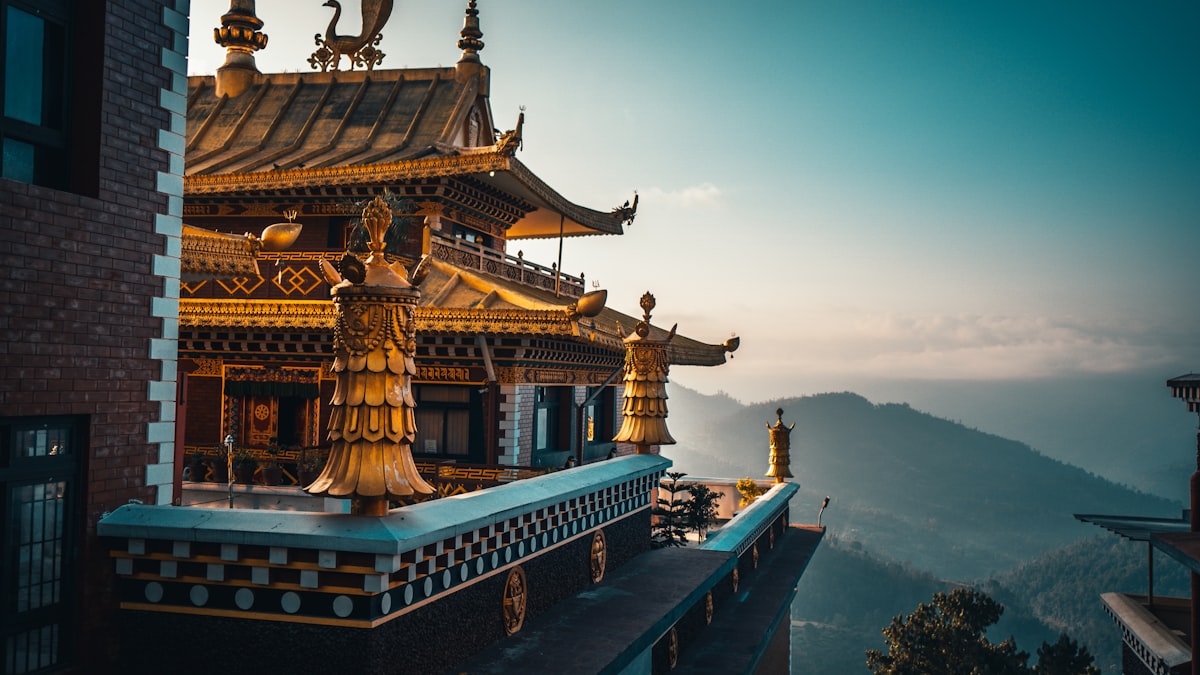
The Golden Summit’s golden-roofed temple and tall bronze statue of Samantabhadra crown Mount Emei’s 3,077-meter peak.
How many days
Two days is the classic plan:
- Day 1: from Chengdu, take the high-speed train to Emei, then park buses and the cable car partway up. Visit a mid-mountain temple like Wannian Temple, and stay overnight on the mountain (book ahead).
- Day 2: catch the early cable car to the Golden Summit for sunrise, explore the summit, then descend and return to Chengdu.
If you only have one day, you can do the summit as a long day trip by bus plus cable car, but you give up the sunrise.
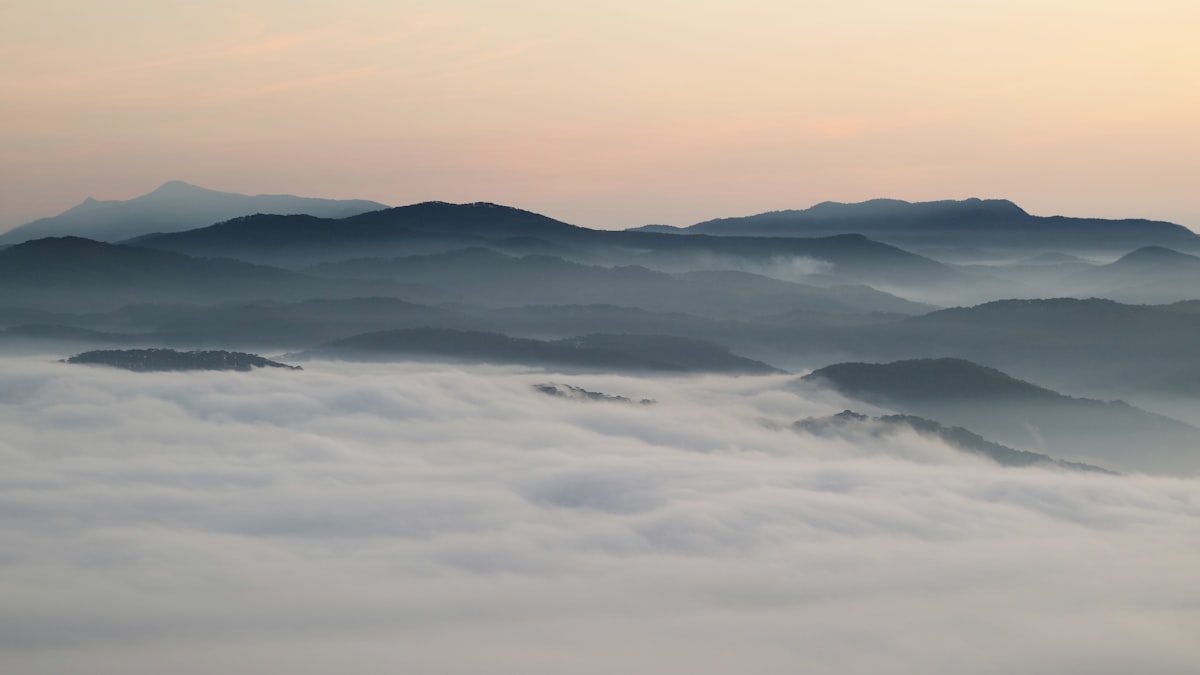
Sunrise over the sea of clouds from the Golden Summit is one of the classic images of China — and it’s only reliably possible if you stay overnight on the mountain.
Suggested itinerary
A 2-day plan:
- Day 1 — Up the mountain: from the base, visit Qingyin Pavilion and the monkeys on the way up, then take the cable car to the summit area for the night.
- Day 2 — Golden Summit: sunrise at Jinding — the Golden Summit, the cloud sea and, on clear days, snow peaks in the distance — then descend past Wannian Temple.
Have more time? Pair Emei with Leshan’s Giant Buddha on a two-day loop — see the Sichuan route.
Best time to visit
- April–June and September–October: the sweet spots — clearish skies, comfortable temperatures and the best odds for summit views.
- Summer (July–August): green and lush but often cloudy, with rain common; weekends bring crowds.
- Winter (December–February): snow on the upper mountain, quiet trails and a beautiful frozen summit — but cold, and some paths are icy.
- Avoid Chinese holidays: the summit cable cars queue for hours during the May Day and National Day breaks.
Top sights
- Golden Summit (Jinding) — the top of the mountain: the bronze Samantabhadra statue, golden temple halls and the famous cloud-sea panorama.
- The cloud sea and sunrise — the summit’s show, best from the viewing platform just after dawn.
- Wannian Temple — one of the oldest and grandest of Emei’s temples, with a 1,000-year-old bronze hall.
- Qingyin Pavilion — a beautiful spot in the forest where two streams meet, on the walking route between the temples.
- The macaque zones — wild Tibetan macaques along the middle trails; watch them from a distance and keep your snacks hidden.
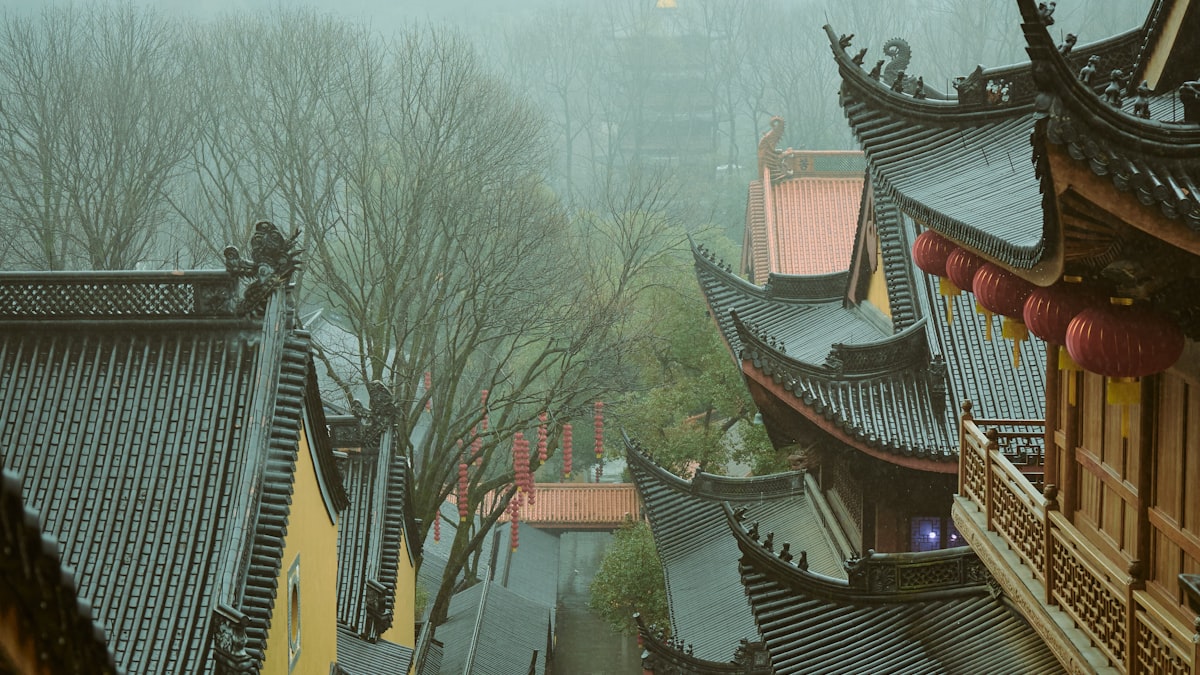
Wannian Temple is one of Mount Emei’s oldest and grandest temples, with a bronze hall that dates back a thousand years.
Getting there
- By rail: high-speed trains from Chengdu reach Emei station in about one hour. From the station, a bus or taxi continues to the scenic area. Book with your passport — see our train guide.
- By road from Chengdu: buses and organized tours also run directly to the mountain.
- From the Leshan Giant Buddha: the two sights are close; many travelers combine them in one loop.
Getting around
- Park shuttle buses: a network of buses carries visitors between the foot of the mountain, the trailheads and the lower cable-car stations — the practical way to climb fast.
- Cable cars: a lower cable car and the summit cable car handle the steepest sections; buy tickets at the stations (cashless payment is standard).
- On foot: the walking trails between temples are the heart of the experience for hikers, but give yourself time — it’s a big mountain.
Mount Emei in depth: a sacred Buddhist mountain
Mount Emei is one of the four sacred Buddhist mountains of China, alongside Wutai, Putuo and Jiuhua. Its Buddhist history runs back more than a thousand years — the first temples appeared in the early centuries of Buddhism in China, and the mountain became a pilgrimage destination for monks and lay travelers from across East Asia. The religion arrived from India along the Silk Road, and Emei, facing the Buddhist heartlands to the southwest, absorbed that influence early.
The summit is dedicated to Samantabhadra (Puxian in Chinese), the bodhisattva of practice and meditative action, whose huge bronze statue — roughly 48 meters including its base, one of the tallest bronze statues in the world — crowns the Golden Summit. The golden-roofed halls around it give the peak its name. Below the summit, dozens of temples and monasteries are strung along the slopes, some of them centuries old. The mountain is also ecologically remarkable: its steep gradient means a wide range of climates, from subtropical forest at the base to alpine scrub at the summit, and the forests shelter a famous population of Tibetan macaques and, at higher elevations, the rare and beautiful spectacle of the giant panda’s relatives in the wider Sichuan hills. The UNESCO listing, shared with the Leshan Giant Buddha, recognises both the cultural and natural significance of the area.
A realistic budget
Mount Emei is a moderate-cost trip, with the summit stay and the stack of park tickets the biggest items.
- Getting there: high-speed rail from Chengdu to Emei is roughly ¥50–60 in second class; the bus or taxi to the scenic area adds ¥20–40.
- Park entry and cable cars: the mountain entry ticket is around ¥160 (prices change); the park shuttle buses and the two cable cars add roughly ¥100–200 depending on how far you ride.
- The overnight: mountain hotels range from basic dormitories (¥150–300) to mid-range rooms (¥400–800), with summit-adjacent properties costing more. Book ahead, especially in autumn and around holidays.
- Food: meals at the base and mid-mountain are ¥30–60; prices rise with altitude, so many travelers bring snacks.
- Guides and extras: a day tour from Chengdu with transport can run ¥500–1,000 per person, but the park’s own buses make a self-guided visit easy.
Common mistakes to avoid
- Skipping the overnight and expecting the sunrise. The dawn cloud-sea view is only reliably possible if you are already on the mountain.
- Ignoring the monkey rules. The macaques steal food, bags and glasses — keep snacks hidden, hold belongings firmly and never tease them.
- Dressing for the foothills. At 3,077 meters the summit is cold, windy and changeable even in summer; a warm layer, waterproofs and gloves belong in every season.
- Rushing the altitude. The summit is high enough that some visitors feel it; go slowly, drink water and take breaks.
- Queuing at the summit cable car at the wrong time. The queues are worst mid-morning and on holidays; an early ascent beats the crowds.
- Booking a vaguely located “mountain hotel.” “On the mountain” can mean anything from a temple guesthouse to a summit hotel — check the exact location, because it affects your sunrise plan.
- Treating it as a day trip from Chengdu. A long single day by bus and cable car is possible but exhausting, and it forfeits the best hours of light.
Practical tips
- Book the overnight early — mountain hotels fill up, especially in autumn and around holidays.
- Guard your belongings from the monkeys: keep food hidden, hold bags firmly and never tease or feed the macaques.
- Dress for the summit, not the foothills: at 3,000 meters it’s cold, windy and changeable even in summer — bring a warm layer, waterproofs and gloves.
- Pace yourself at altitude: the summit is high enough that some visitors feel it; go slowly and drink water.
- Set up Alipay before you arrive — buses, cable cars and mountain stalls all take mobile payments. If you’re staying overnight, book through your hotel or a travel app and check the location — “on the mountain” can mean anything from a temple guesthouse to a summit hotel.
Where to go next
Mount Emei and the Leshan Giant Buddha make a tidy two-to-three-day loop from Chengdu. From Chengdu, the classic route continues east to the terracotta warriors of Xi’an and the history of Beijing, or north into the mountains toward Jiuzhaigou.
Last updated: August 2026. Cable-car operations and weather conditions change — confirm before you go.
Frequently Asked Questions
Do I need two days for Mount Emei?
Two days is the classic plan if you want the sunrise and the Golden Summit in good light: day one to climb or ride partway up and stay overnight on the mountain, day two to reach the summit early. If you're short on time, a long single day is possible by bus plus cable car, but you'll miss the early-morning light.
Is the sunrise at the Golden Summit worth the overnight?
For most travelers, yes — the summit's sunrise over a sea of clouds is one of the classic images of China, and it's only reliably possible if you're already on the mountain. Weather is a gamble: on cloudy days you see nothing, so check the forecast and accept that it's luck either way.
How do I get from Chengdu to Mount Emei?
High-speed trains from Chengdu reach Emei station in about an hour, then a local bus or taxi continues to the mountain's scenic area. From there the park's shuttle buses and cable cars do the climbing. Book rail tickets with your passport — see our train guide.
Are the monkeys really that bad?
The Tibetan macaques around the middle sections of the mountain are famous for stealing food, bags and even glasses. Keep food out of sight, don't tease or feed them, and hold your belongings firmly. They're wild animals, and staff will tell you the same rules at the trailheads.
Can I combine Mount Emei with the Leshan Giant Buddha?
Yes — they share a UNESCO listing and are only a short distance apart. A popular plan is the Leshan Giant Buddha for a morning, then Mount Emei for a night or two, as a loop from Chengdu. Book the Emei overnight early, especially in autumn.
Do I need a visa for Mount Emei?
The same mainland China rules apply — many passports are visa-free for up to 30 days, and others can use the 240-hour transit scheme. Check your situation before booking.
More in Sichuan
Sichuan Travel Guide (2026) — Sichuan travel guide