
Sichuan Travel Guide (2026)
Plan Sichuan: pandas in Chengdu, the Leshan Giant Buddha, Mount Emei and Jiuzhaigou, with the best seasons, transport and itineraries.
OpenStreetMap Google Maps (opens externally)
Sichuan is a province of two halves — giant pandas and teahouse life in Chengdu, then some of China’s most spectacular mountain scenery just beyond the city.
For many travelers Sichuan is shorthand for pandas and hotpot, but the province is one of China’s most rewarding destinations in its own right. It holds a UNESCO-protected giant Buddha carved into a cliff, one of the four sacred Buddhist mountains in China, and one of the country’s most famous national parks. It also happens to be a food capital. This hub guide ties together the main destinations and how to plan them as one trip.
Overview
Sichuan sits in southwest China, a vast province ringed by mountains and cut by the Min and Jinsha rivers. Its capital, Chengdu, is a laid-back megacity with a famously slow pace of life — teahouses, mahjong parlors, and a panda breeding base on the outskirts. Beyond Chengdu, the landscape climbs sharply toward the Tibetan Plateau, which is exactly where you will find Mount Emei, the Leshan Giant Buddha, and the alpine valleys of Jiuzhaigou. The province is also a cultural crossroads, home to the ancient Shu kingdom’s legacy and today a gateway to western China.
Best time to visit
- Spring (March–May) and autumn (September–November) are the sweet spots: mild weather, clear views, and comfortable trekking conditions.
- Summer (June–August) is hot and humid in Chengdu and brings summer rain to the mountains; Jiuzhaigou can be busy with domestic holiday travel, especially around the National Day break in early October.
- Winter (December–February) is cold but quiet. Jiuzhaigou in snow is stunning, and Mount Emei’s winter sunrises are a classic — just pack for sub-zero temperatures at altitude.
Getting there and getting around
By air: Chengdu’s two airports — Tianfu (TFU) and the older Shuangliu — make it one of China’s busiest air hubs, with many domestic and international connections.
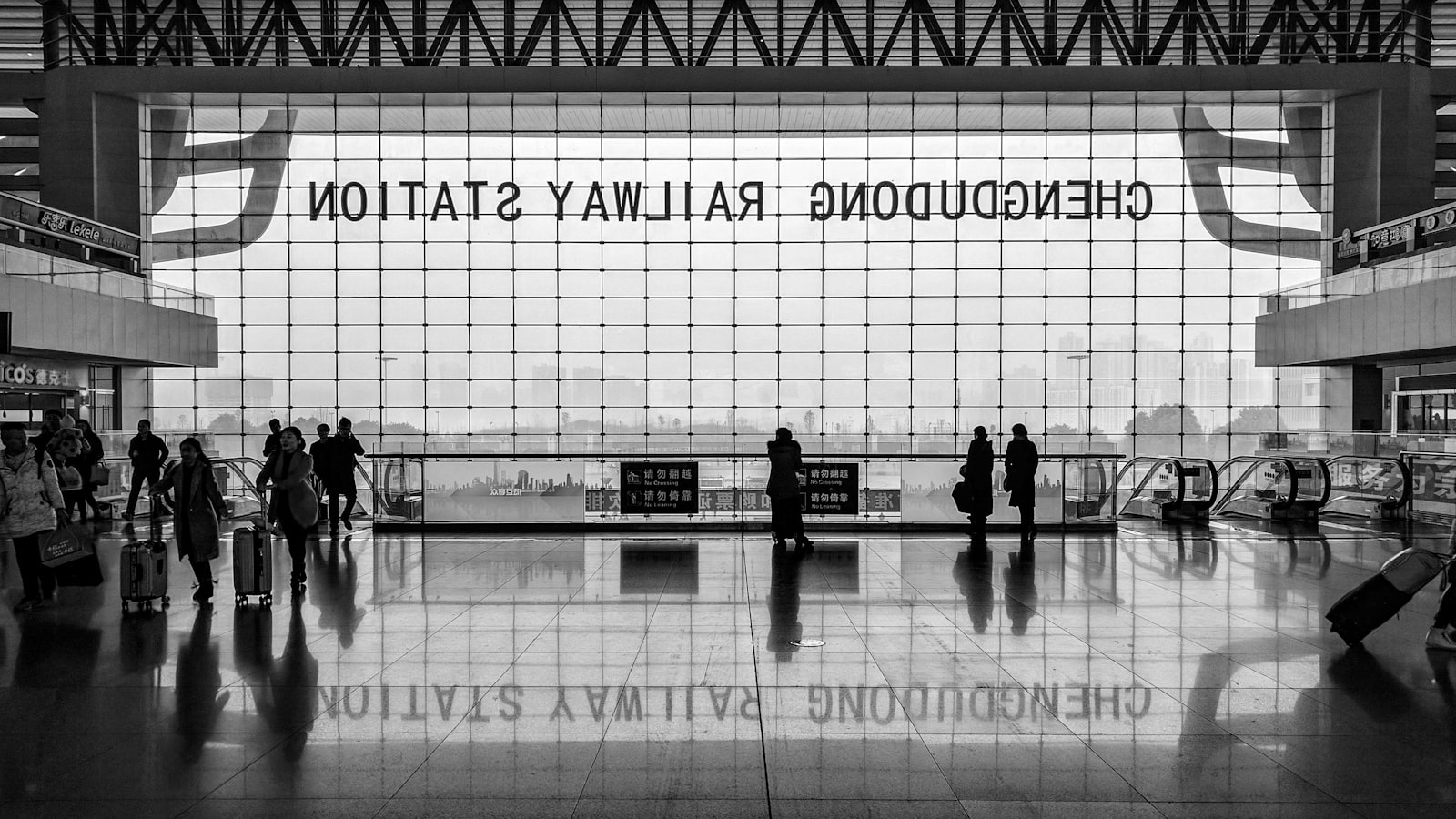
By high-speed rail: Chengdu is about three to four hours from Xi’an, about one hour from Chongqing, and a few hours from Guiyang in Guizhou. Book tickets ahead with your passport — our train guide covers the process.
Within Sichuan: High-speed rail links Chengdu, Leshan, and Emei, so the Buddha-and-mountain loop is easy by train. Jiuzhaigou is the outlier — it is a multi-hour journey by road from Chengdu, though a high-speed rail route now reaches partway and there are flights to the nearby airport at altitude. Allow a full day of travel each way for Jiuzhaigou regardless of mode.
Main destinations
- Chengdu — the province’s heart: giant pandas at the research base, slow afternoons in People’s Park, and Sichuan food that is a destination in itself. Budget two days, and don’t skip the teahouses.
- Leshan Giant Buddha — a 71-metre stone Buddha carved into a cliff face where the Min and Dadu rivers meet, easily reached by rail from Chengdu. Best done as a day trip or a stop on the way to Mount Emei.
- Mount Emei — one of China’s four sacred Buddhist mountains, rising to a golden summit with sweeping views. Rides and cable cars make the ascent possible for most travelers; sunrise at the summit is the classic moment.
- Jiuzhaigou — the showpiece: turquoise lakes, waterfalls, and forested valleys in a national park at high altitude. It sits a long way from Chengdu, so plan at least two to three days and book park entry ahead.
Suggested itinerary
- Day 1–2 — Chengdu: panda base in the morning, then Jinli old street and a hotpot dinner; save an afternoon for a teahouse in People’s Park.
- Day 3 — Leshan + Emei: take the high-speed train to Leshan in the morning, see the Buddha, then continue to Mount Emei’s base for the night.
- Day 4–5 — Mount Emei: ride up to the golden summit, spend a night near the top, and catch the sunrise before descending.
- Day 6–8 — Jiuzhaigou: fly or ride from Chengdu to Jiuzhaigou; give the park a full day or two. If time is tight, cut Emei to a day trip and fly directly to Jiuzhaigou.
Practical tips
- Book park tickets ahead. Jiuzhaigou and Mount Emei sell tickets online with daily caps during peak season; reserve in advance through official channels.
- Mind the altitude. Jiuzhaigou’s park floor sits over 2,000 metres and Mount Emei’s summit around 3,000 metres. Take it slow, hydrate, and talk to a doctor before your trip if you are prone to altitude issues.
- Pack for two climates. Chengdu is muggy in summer and cool in winter; the mountains add a serious temperature drop plus rain, whatever the season.
- Eat strategically. Carry napkins, follow local queues, and have Alipay ready for street food and small eateries.
- Sort out connectivity first. Set up a VPN or eSIM before landing so maps and payments work from day one.
Food & drink
Sichuan cuisine is the province’s most famous export, built on mala — the pairing of fiery chili and numbing Sichuan peppercorn that makes your lips tingle. Hotpot is the essential experience: a bubbling pot of broth (half mild, half spicy is the classic order) into which you cook meats, vegetables, tofu and offal, then dip in sesame oil and garlic. Mapo tofu, kung pao chicken, dan dan noodles, twice-cooked pork and “water-boiled” fish are the other dishes to seek out. Chengdu’s street food — cold noodles, spicy skewers, sweet potato noodles and the famous “husband and wife” offal slices — rewards grazing. The heat is adjustable; say “bu la” for no spice, and know that the mildest-looking dish can still surprise. Tea and yogurt drinks are the standard fire-extinguishers.
Teahouse culture
Chengdu’s pace of life is the real attraction, and its teahouses are where you feel it. Locals spend hours over a covered-bowl cup of jasmine tea, playing mahjong, having their ears cleaned, or simply napping in a bamboo chair — a tradition of leisure that dates to the city’s days as a tea-trade hub. People’s Park, in the center, is the easiest place to watch it all happen, especially on a weekend afternoon. For something more theatrical, a Sichuan opera performance — with its rapid face-changing act and fire-breathing — is a lively evening, often paired with tea. Budget a slow afternoon for this; it is as much a Chengdu essential as the pandas.
Ordering hotpot well means pacing yourself: start mild, keep the sesame-oil dip going, and save room for the sweet glutinous-rice snacks that end a Chengdu meal. Outside the capital, the same teahouse ritual appears in quieter towns, and the People’s Park scene is at its liveliest on warm afternoons.
Beyond the classic circuit
The panda–Buddha–Emei–Jiuzhaigou loop is the standard route, but Sichuan’s west opens into entirely different country. Kangding and the Ganzi (Garzê) highlands mark the start of Tibetan Kham — grasslands, monasteries and snow peaks along the old Tea Horse Road, now reachable by road from Chengdu in about a day, with altitude to respect. Southward, Zigong is the home of Sichuan’s salt history and its dinosaur fossils, with a small but excellent museum. Closer in, the Qingcheng mountains and the Dujiangyan irrigation system — a 2,000-year-old engineering marvel still in use — make an easy day trip from Chengdu. These extensions turn a food-and-pandas stop into a proper exploration of one of China’s most varied provinces.
Last updated: August 2026. Rail schedules, park entry rules and ticket prices in Sichuan change often — confirm before you go.
Frequently Asked Questions
How many days do I need for Sichuan?
Chengdu itself needs two days. Add a day for the Leshan Giant Buddha and Mount Emei, and at least two to three days for Jiuzhaigou, which is a longer journey from Chengdu. A comfortable first-timer circuit is seven to ten days.
When is the best time to visit Jiuzhaigou?
Autumn (late September to October) is the classic choice for fall colours, but it is also the busiest. Spring is quieter and greener, and winter offers frozen waterfalls and far fewer crowds — just bring warm layers.
Is Sichuan food too spicy for tourists?
Sichuan cuisine is famous for mala (numbing-spicy) flavours, but it is far more varied than just heat. There are plenty of mild dishes, and most restaurants will adjust spice if you ask for 'bu la' (not spicy). Chengdu is one of China's best food cities either way.
How do I get from Chengdu to Jiuzhaigou?
Options keep improving. The Chengdu–Jiuzhaigou high-speed railway now reaches into the area, and there are flights to Jiuzhaigou Huanglong Airport, which sits at altitude. Long-distance buses also run from Chengdu. Times and schedules change, so check the current options before you go.
Can I combine Sichuan with other provinces?
Yes. Chengdu is about three to four hours by high-speed rail from Xi'an, about one hour from Chongqing, and connects easily to Guizhou and Yunnan. It slots naturally into a classic Beijing–Xi'an–Sichuan itinerary.