
Jilin Rime Island Winter Guide: Wusong Island, China
Plan a Jilin Rime Island (Wusong Island) winter trip: when the rime forms, how to get there, where to stay, and what to wear.
Wusong Island, Jilin, China
Open an external map for this location.
OpenStreetMap Google Maps (opens externally)
Jilin Rime Island — the trees along the Songhua River that turn to white crystal every cold dawn. It is one of China’s most photographic winter scenes, and it is surprisingly easy to reach.
In the deep northeast of China, on a low island in the Songhua River near Jilin City, winter performs one of its quietest miracles. For a few hours most cold mornings, riverside willows and elms are sheathed in rime ice — the Chinese call it 雾凇, wùsōng — and the whole island looks like a forest carved from snow and glass. The locals call the thickest coating “tree hangings” and treat it as a daily forecast of the coming dawn. For the traveler, it is the rare winter sight that asks nothing more than an early start, a warm coat, and a tripod.
This guide covers what rime is and why it forms here, when to go for the best show, how to reach the island, where to stay, what to do around Jilin City, how to pair it with Changbaishan and Harbin, and exactly what to wear and photograph at −20°C.
What and where: Rime Island explained
Rime is a solid white coating of ice that forms when supercooled fog droplets freeze the instant they touch a surface. It is not snow and it is not frost: it is frozen river fog. Wusong Island — sometimes written Wusong Dao and also called Rime Island — sits in the Songhua River about 35–40 km north of Jilin City, near the old Manchu town of Wula Street. It is the most famous of several river islands in the area, and it gets the conditions for rime more often than almost anywhere else in China.
The mechanism is simple and reliable. Upstream, the Fengman hydroelectric dam releases relatively warm water, so the Songhua River does not freeze solid downstream the way most northeast rivers do. On cold winter nights — air temperatures around −15°C to −20°C or below — the open water gives off thick steam and fog. That fog drifts onto the low islands and riverside trees, where it freezes instantly into dense white coatings. By dawn, a single tree can be encrusted with rime several centimeters thick on its windward side, bending the branches into what photographers call “rime snow-blossoms.”
Rime ice builds on the windward side of riverside willows — the show is usually over by mid-morning.
Two things make the island the dependable choice: its low elevation keeps it inside the fog layer, and the riverbanks give the wind a long, unobstructed fetch of open water. You will also see smaller rime on the riverbanks inside Jilin City itself, which is free and worth a look, but the island is where the trees are thickest and the scene most complete.
When to go: chasing the best dawn
The rime season runs from roughly mid-December to the end of February, with early to mid-January the most reliable stretch — cold, calm nights following a cold snap give the densest coatings. Two or three days on the island gives you a very good chance of at least one full show, since rime conditions tend to repeat while the cold holds.
The timing rule matters more than the season rule: see it at sunrise, and for the one to two hours after. The ice forms overnight, glows pink and gold in the first light, and starts to fall off as the sun climbs and any breeze picks up — by late morning many trees are bare. Dawn is around 6:30–7:00 a.m. in January, so an unglamorous 5:30 a.m. wake-up is the price of the shot. Check Jilin City’s daily rime forecast (published on local weather services and WeChat channels, often summarized by hotels and homestay owners) the evening before, and ask your guesthouse host — they read the conditions from the thermometer and the wind like a farmer reads the sky.
A cold, clear, windless night is ideal. A thaw, rain, or strong wind strips the ice overnight and there may be little or none by morning; a night that is merely cold but calm often still produces a decent show. Plan the itinerary so the island sits on the days with the coldest forecast, and keep one flexible morning to “repeat” a bad dawn.
Getting there: flights, trains, and the last icy crossing
The gateway is Changchun Longjia International Airport (CGQ), the main airport for both Changchun and Jilin City. From the airport you have two options:
- Airport to Jilin City, then to the island. The high-speed train from Longjia station to Jilin City takes about 40–45 minutes, and the station is close to the airport. From Jilin City, a car or Didi to the island takes roughly an hour; the island has no address worth relying on, so put “Wusong Island” or the Wula Street area into the map and confirm the drop-off point with your homestay in advance.
- Direct airport transfer. Many visitors hire a car for the whole leg — about 1.5–2 hours door to door. It costs more (roughly ¥300–500, estimate) but removes the train-to-taxi shuffle in the cold. Prices change with demand, so confirm on booking apps.
The final crossing to the island is the part that feels like an adventure. In winter the river freezes enough that locals run an ice road or a simple ferry-shuttle across to the island, and the homestays coordinate pickups for guests. Do not wander off across the ice on your own — stick to the marked crossing and follow the local boats, sleds, or trucks. If the river is not safe for vehicles, the shuttle runs on foot or by sled; your host will sort it.
Coming from further afield, the region is well connected by high-speed rail: Harbin to Changchun is about 1.5–2 hours, Shenyang to Changchun about 1 hour, and Beijing to Changchun about 5 hours. The China winter itinerary strings all of this together.
Where to stay: farmstays on the island
For the full experience, stay on the island in a farmstay homestay (农家乐, nóngjiālè). These are simple family guesthouses — heated rooms with thick quilts, often shared bathrooms, and a hearty northeast dinner of dumplings, braised pork, and pickled vegetables served in the communal room. The point is location: you wake up already inside the rime zone, walk a few hundred meters to the riverbank, and watch the trees light up without a frozen 40-minute taxi ride. Rates are typically ¥150–400 per night (estimate) including meals at many places; prices change with demand and the Chinese New Year peak, so book ahead through booking apps or WeChat.
The alternative is a hotel in Jilin City — more comfortable, more choice, but a cold early drive to catch sunrise. A good middle option is staying near the Wula Street side of the crossing, where a handful of guesthouses sit closer to the river.
What to do: beyond the rime
Rime Island itself is a slow, one-morning experience: walk the riverside path at sunrise, watch the trees glow, and photograph the frost on the fences and reeds. There is no museum to rush through. Fill the rest of the trip in Jilin City and its surroundings:
- Jilin City riverside — on rime mornings the city’s own Songhua River banks are lined with white trees for a kilometer or more. Free, easy, and often almost as good as the island.
- Songhua Lake (松花湖) — a long reservoir upstream from the Fengman Dam, frozen and silent in winter, with the dam itself worth a look as the source of the warm water that makes the rime possible.
- Beishan Park (北山公园) — the city’s green hill and temple complex, pleasant for a snowy walk; locals go for the temple views over the frozen river.
- Skiing near Jilin City — the region holds several of China’s best ski resorts, including the big one at Beidahu (北大壶) about an hour from the city, with long groomed runs and a proper resort base. For the heavyweight mountains, see the Yabuli and Changbaishan skiing guide.
- Korean food — Jilin province has a large Korean minority population, so Korean barbecue, cold noodles (naengmyeon), and kimchi are everywhere; the regional capital of Yanji, a few hours east, is the full immersion.
If the island rime does not fire on a given morning, the city riverside is the reliable consolation — the same fog and warm river make a white boulevard that locals photograph on their morning commute. And if a full rime day aligns, the island and the city can both deliver in a single morning: dawn on the island, then a later walk along the city banks before the ice falls.
Rime mornings are brief — the coating falls off once the sun climbs and the wind picks up.
Pairing Rime Island with Changbaishan, Yanji, and Harbin
Rime Island sits in the middle of the northeast’s classic winter circuit, and it pairs cleanly with the region’s two headline acts:
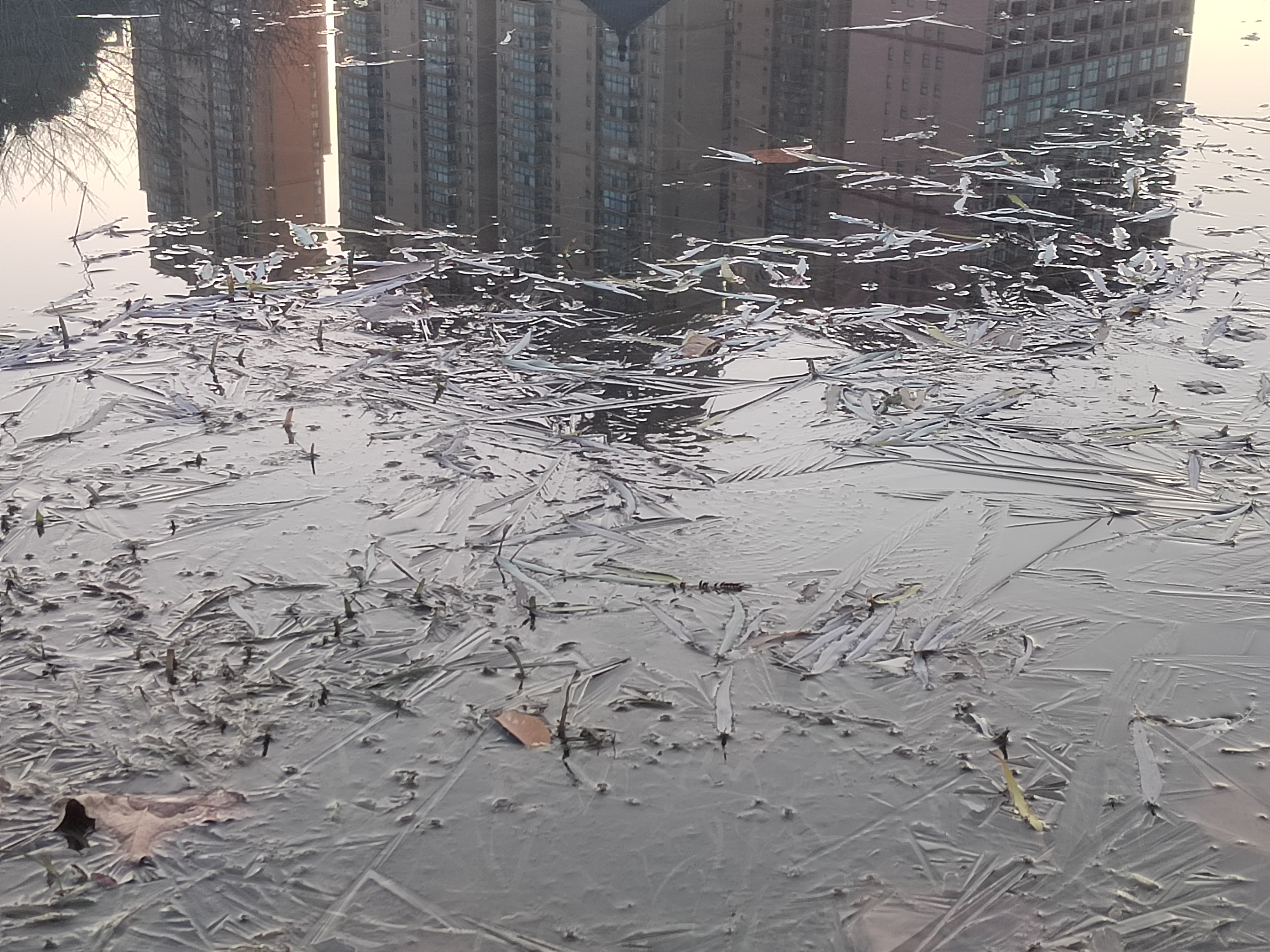
The frozen Songhua Lake upstream from the dam — the same river that feeds the rime fog, still and silent in January.
- Changbaishan and Yanji. Head southeast from Jilin City toward the Changbai Mountains — the dormant volcano, the frozen crater lake Tianchi, the hot springs, and the ski village at the base. Yanji, capital of the Korean Yanbian prefecture, is a food stop on the way. This leg is the mountain counterpart to the river’s rime, and the skiing guide covers the resorts.
- Harbin and the ice festival. North via Changchun or directly by train, Harbin’s Ice and Snow Festival is the region’s biggest winter draw — ice castles, ice lanterns, and the Russian-flavored streets of the old town. It sits a natural rail leg away, and the Harbin Ice and Snow Festival guide is the deep dive.
- Changchun itself. The provincial capital — an hour or so by train — is worth a stop for the Puppet Emperor’s Palace, covered in the Changchun travel guide. For the truly northern traveler, Mohe, China’s northernmost town, is the extreme cold destination beyond Harbin.
A common week-long shape: arrive Changchun, spend a morning at Rime Island, move southeast for Changbaishan and Yanji, then loop north through Changchun to Harbin for the ice festival. The China winter itinerary lays out this route in order.
What to pack for −20°C
The cold is real: January highs are typically −10°C to −20°C, dawn is colder, and wind chill makes it worse. There is no comfortable way to skip the layers. The essentials:
- Base layer: merino or synthetic thermal underwear — no cotton against the skin.
- Mid layer: fleece or a light down vest.
- Outer layer: a proper down jacket with a hood, long enough to cover your hips.
- Legs: thermal leggings under insulated pants or fleece-lined trousers.
- Feet: insulated, waterproof winter boots, half a size up for thick socks; wool socks, and a spare pair.
- Hands: liner gloves under insulated mittens — mittens keep fingers together and far warmer than gloves.
- Head and face: an insulated hat, a scarf or balaclava that covers the nose, and a lip balm.
- Extras: hand warmers (sold everywhere in China), a thermos, sunglasses for snow glare, and moisture cream — the dry cold cracks skin fast.
Electronics need care. Phone batteries drain quickly in deep cold; keep your phone in an inside pocket between shots, and bring a power bank (it will also drain faster). Cameras handle the cold fine but be careful when you come indoors: put the camera in a sealed bag before entering warm rooms so condensation forms on the bag, not the lens. The full winter packing list has the complete gear rundown.
Photography tips for the rime
Rime is one of China’s most photogenic winter subjects, and a few habits separate a record shot from a keeper:
- Use a tripod. Dawn light is dim, the wind is still, and you will want sharp long exposures and the flexibility to shoot at low ISO.
- Arrive before sunrise and stay for the first two hours of light. The sequence to chase is blue hour, then the pink and gold of sunrise, then the bright crystalline light after — each looks completely different.
- Shoot with the light raking across the branches. Side and back light make the rime glow and separate the crystals; flat frontal light turns it grey. Walk the riverbank and find where the sun is behind the trees.
- Go in close. A long lens or a macro shot of a single branch weighted with ice is often stronger than the wide scene. Watch for the small details — ice on a fence post, on reeds, on a boat tied at the shore.
- Check the legal basics first. China’s photography rules matter around borders and infrastructure, so read the China photography laws guide before the trip; for lakes-and-mountains landscape composition, the photography guide for lakes and mountains has practical pointers.
Winter safety on and around the island
The island is safe and small, but the cold deserves respect:
- Frostbite prevention: no bare skin at dawn. If your fingers or toes go numb and stay numb after coming inside, warm up gradually — do not rub frostbitten skin.
- River ice: never walk on the river except on the marked local crossing. Ice thickness varies and the warm-water current near the dam keeps some channels weak.
- Wind chill: check the felt temperature, not just the display temperature; the difference is what you actually feel on the riverbank.
- Keep moving at dawn: standing still for long photo sessions is how you get cold fastest — take breaks indoors.
- Stay reachable: set up Alipay and an eSIM before you arrive, and keep your passport for the hotel check-in and train tickets.
What it costs
Northeast China is inexpensive by Chinese standards, and Rime Island is no exception. All figures are planning estimates — prices change with season and demand:
- Getting there: Changchun Longjia to Jilin City by high-speed rail roughly ¥50–80; direct airport car transfer to the island ¥300–500; taxi from Jilin City to the island about ¥150–250.
- Staying: island farmstays ¥150–400 per night including meals at many places; Jilin City hotels ¥200–400 for mid-range, more over Chinese New Year.
- Sights and extras: Rime Island has a modest entry and shuttle fee, typically ¥30–60; Beishan Park about ¥30; Songhua Lake and the dam area similar; ski lift-and-rental day packages at Beidahu run ¥400–800 depending on the pass.
- Food: dumplings and street snacks ¥10–30; a restaurant meal ¥40–80 per person; a Korean barbecue dinner with a group ¥80–150.
A realistic three-day budget for one person, excluding long-distance rail and flights, is roughly ¥1,200–2,000 — less if you skip the ski day. Confirm current prices on booking platforms before you go; they move with the season.
The bottom line
Rime Island is a short, cheap, and deeply atmospheric stop on any northeast China winter trip. The conditions are reliable, the farmstays make the early morning easy, and the sight — a river full of white crystal trees glowing in the first light at −20°C — is one of the strongest winter images in the country. Bring a serious coat, a tripod, and an early alarm, and let the Songhua River do the rest.
Last updated: August 2026. Policies and prices change often — confirm before you go.
Frequently Asked Questions
What is rime and why does it form on Wusong Island?
Rime (雾凇, wùsōng) is a coating of ice that forms when water droplets in supercooled fog freeze instantly onto surfaces — in this case, the bare branches of riverside trees. Wusong Island gets the conditions almost every winter night because the Songhua River below the Fengman Dam stays largely ice-free: the dam releases warmer water, so the river produces thick fog over the cold air, and when temperatures drop to roughly −15°C to −20°C or below, that fog freezes into the white 'tree hangings' the island is famous for.
When is the best time to see the rime on Wusong Island?
Late December through February is the season, with early to mid-January usually the most reliable window. Rime forms overnight and the show is best in the first one to two hours after sunrise, before the sun and wind knock the ice off the branches — by late morning the trees are often bare again. Cold, clear, windless nights give the densest rime, and Jilin City publishes a daily rime forecast (雾凇预报) you can check before committing to an early start.
How do I get to Jilin Rime Island?
The smoothest route is to fly into Changchun Longjia International Airport (CGQ), take the high-speed train to Jilin City (about 40–45 minutes), then drive roughly an hour north to the island near Wula Street. Many travelers skip the train and hire a car or Didi for the whole airport-to-island leg, about 1.5–2 hours. In winter the final crossing to the island is usually across the frozen Songhua River on a marked ice road or ferry shuttle run by the local homestays.
Should I stay on the island or in Jilin City?
For the serious early-morning experience, stay in a farmstay homestay on the island itself — you wake up inside the rime zone and can be on the riverbank before sunrise without a cold dawn drive. Homestays are basic (simple rooms, shared or in-room heating, some shared bathrooms) but genuinely atmospheric. If you prefer comfort, stay in Jilin City and take the early taxi out; the drive is doable but you will fight sunrise and the cold. Jilin City's own riverside boulevards also grow rime on good mornings, a free and easy fallback.
How cold is it, and what should I wear?
Expect daytime highs around −10°C to −20°C in January, with dawn often colder, and wind chill making it feel colder still. You need a serious layering system: thermal base layer, a mid layer, and a heavy down jacket; an insulated hat, a scarf or balaclava over the face, liner gloves under mittens, and insulated waterproof boots. No bare skin at dawn. Hand warmers, a thermos of hot tea, and a phone kept in an inside pocket help a lot. Our full winter packing list has the details.
Can I combine Rime Island with Changbaishan and Harbin?
Yes, and it is one of the best winter routes in China. Rime Island sits roughly halfway between the major northeast hubs: Harbin and its ice festival are about 1.5–2 hours north by high-speed rail from Changchun, and Changbaishan (the volcano and ski resort around Tianchi) is a few hours southeast, reachable via Jilin City or Yanji. A classic week strings together Changchun, Rime Island, Changbaishan and Harbin — see the winter route and the skiing guide for the logistics.